Socks and foot-care gear for trips
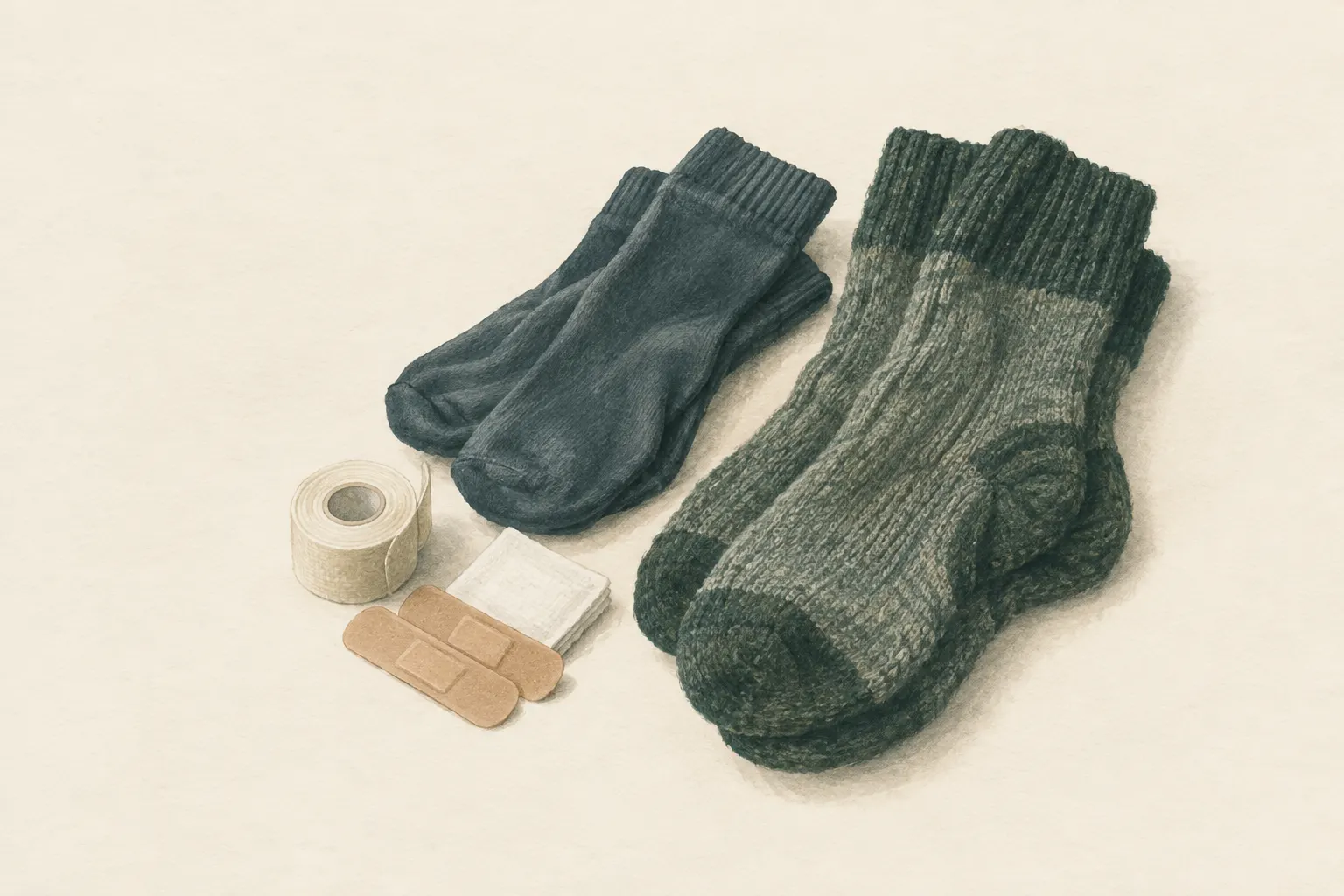
Many blisters and cold feet are caused not by the boot alone but by the wrong or wet socks. Well-fitting wool or synthetic socks, a dry spare pair, timely breaks and a small kit of tape and plasters prevent most problems. Cotton socks are unsuitable for longer trips.
- A few minutes per break
Explained simply
A blister on the foot forms when skin rubs again and again in the same spot – and this happens especially easily when the skin is damp and soft, like after a long bath. That is why socks matter much more than many people think. Good socks cushion the foot, keep it drier and stop it sliding back and forth in the shoe.
Socks made of wool or synthetic fibres are best for trips. Cotton soaks up water like a sponge, stays wet and chafes. Always pack a dry spare pair, and stop as soon as something burns or presses on your foot. That burning feeling is the warning sign before a blister forms.
Important in the cold: if feet become numb, very pale or painful, take it seriously, warm them up and get help if it does not improve.
How it works
A blister is the skin's response to friction. When the foot slides a little in the shoe with every step, the layers of skin rub against each other. At some point they separate and fluid collects in between. Damp, softened skin is much more prone to this than dry skin – which is why blisters often appear on hot or wet days.
Socks step in exactly here. They cushion areas under a lot of pressure, such as the heel and the ball of the foot. They move sweat away from the skin. And they fill the space between foot and shoe so the foot slides less. Wool and synthetics still keep you somewhat warm when damp because they hold air between their fibres. Cotton, in contrast, soaks up water, becomes heavy, sticks to the skin and cools down.
Cold feet are often linked to wet too. Wet socks carry heat away from the foot much faster than dry ones. Socks or shoes that are too tight and squeeze the foot can also slow the blood flow and let it get cold.
What really matters
The sock must suit the shoe. A thick sock in a close-fitting shoe presses; a thin sock in a roomy shoe lets the foot slide. So always test socks and shoes together, ideally on a few shorter walks before a long trip. Look for flat toe seams and make sure the sock does not wrinkle.
When putting socks on, pull them smooth so the heel of the sock really sits on your heel. Then lace the shoe so the foot does not slide forward when going downhill. Some people wear a thin second sock, called a liner sock, under the hiking sock. This can reduce friction but does not help everyone – try it on short trips.
The small foot kit belongs in every day pack: a dry spare pair in a stuff sack, some tape or blister plasters and small scissors. On multi-day trips an extra pair that you wear only at night is worth it. That way you always have something dry, however wet the day was.
On the way: act early
The most important rule is: stop at the first hot spot, not at the blister. A hot spot feels warm or burning, or looks red. Take off the shoe and sock, dry the spot and put a piece of tape over it. Also check for sand or grit in the shoe – even a tiny grain can cause a blister.
Use longer breaks to open your shoes and air your feet and socks. Damp skin dries out and becomes tougher again. You can dry wet socks on the outside of the pack during the day and on your body at night, for example inside the sleeping bag.
Many people hesitate to stop the group for a few minutes. But five minutes for a piece of tape is much less than days with a painful blister. Especially on long walks, for example when buses and trains are not running, the state of your feet decides how far you get.
Safety: what to watch out for
In the cold, feet are especially at risk because the body reduces blood flow to hands and feet to keep the core warm. Numb, very pale or painful feet are a warning sign. Then: get to a sheltered place, put on dry socks, warm the feet, end the trip and get medical help if the problem persists.
This entry describes gear and prevention, not wound care. A blister that is open, red, hot or swollen needs qualified care. Anyone with diabetes, circulation problems or existing foot injuries should seek medical advice before longer trips, because small injuries may then be noticed less or heal more slowly.
Good to know
The basic rules of foot care have hardly changed in decades: keep feet dry, act early, avoid cotton. Mountaineering handbooks therefore treat socks as part of the basic kit, on a par with the shoe.
Good socks wear out too. When they get thin at the heel or ball of the foot, or their cushioning is flattened, they protect less well. Which sock is right for you depends strongly on your foot and your shoe – trying things yourself is more reliable than any recommendation.
Step by step
Choose socks
Wool, wool blend or synthetic in a thickness that suits the footwear. No thick toe seams, no wrinkles. Break new socks in before the trip.
- 1
Choose socks
Wool, wool blend or synthetic in a thickness that suits the footwear. No thick toe seams, no wrinkles. Break new socks in before the trip.
- 2
Put on properly
Pull on smoothly with the heel in the heel. Lace the footwear so the foot does not slide forward.
- 3
Pack a small foot kit
A dry spare pair in a stuff sack, tape or blister plasters, small scissors. On multi-day trips a pair reserved for the night only.
- 4
Tape hot spots early
At burning or redness stop at once, take off the sock, dry the spot and protect it with tape. Remove grit such as sand.
- 5
Dry and air
On longer breaks open the footwear and air feet and socks. Dry wet socks on the pack during the day and on the body at night.
Common mistakes
- Cotton socks on long trips
- Ignoring hot spots until a blister forms
- No dry spare pair
- Socks that are too thick in close-fitting footwear
Quick view
Materials
Hiking and trekking socks
Sturdy closed shoes
First-aid kit (household)
Does not replace a first-aid course; check contents and expiry dates regularly.
Suitable for
- Day and multi-day trips
- Long walks during evacuation or transport failure
- Wet and cold conditions
Not suitable for
- Existing foot injuries, diabetes or circulation problems – seek medical advice
Prerequisites
- Broken-in footwear
- Socks tested together with the footwear before the trip
Safety
- Take numb, very pale or painful feet in the cold seriously: warm up, dry socks, end the trip and get medical help if the problem persists.
- This entry covers gear and prevention, not wound care. Inflamed or open blisters need qualified care.
How it works
Blisters are caused by friction on damp, softened skin. Socks cushion, move moisture away and reduce the foot sliding in the shoe. Wool and synthetics still insulate somewhat when damp; cotton soaks up water and chafes. Acting early – at the first hot spot – is the most important step.
Advantages
- Cheap and effective
- Fewer blisters and cold feet
Disadvantages
- Good socks wear out and need replacing
Deep knowledge
Background
Mountaineering handbooks such as "Mountaineering: The Freedom of the Hills" treat socks, footwear and foot care as part of the basic kit. The rules have been similar for decades: keep feet dry, act early, avoid cotton.
Which sock fits depends strongly on the foot and the footwear – trying is better than any recommendation.
Variants
- Two-sock system
- A thin liner sock under the hiking sock can reduce friction. Whether it helps is individual – test on short trips.
Common mistakes
- Cotton socks on long trips
- Ignoring hot spots until a blister forms
- No dry spare pair
- Socks that are too thick in close-fitting footwear
Limits and risks
- No treatment of blisters or frostbite
- No product recommendations
Sources
The Mountaineers Books (2017): Mountaineering: The Freedom of the Hills, 9th edition
Socks, footwear and foot care as basic equipment