Washing and drying down and synthetic insulation
Dirt and body oils make insulation clump and reduce its loft. Down and synthetic jackets or sleeping bags can usually be washed – gently, with a suitable detergent and according to the care label. Most important is drying completely, which for down often takes many hours with repeated shaking out.
- Washing 1–2 hours, drying several hours to days
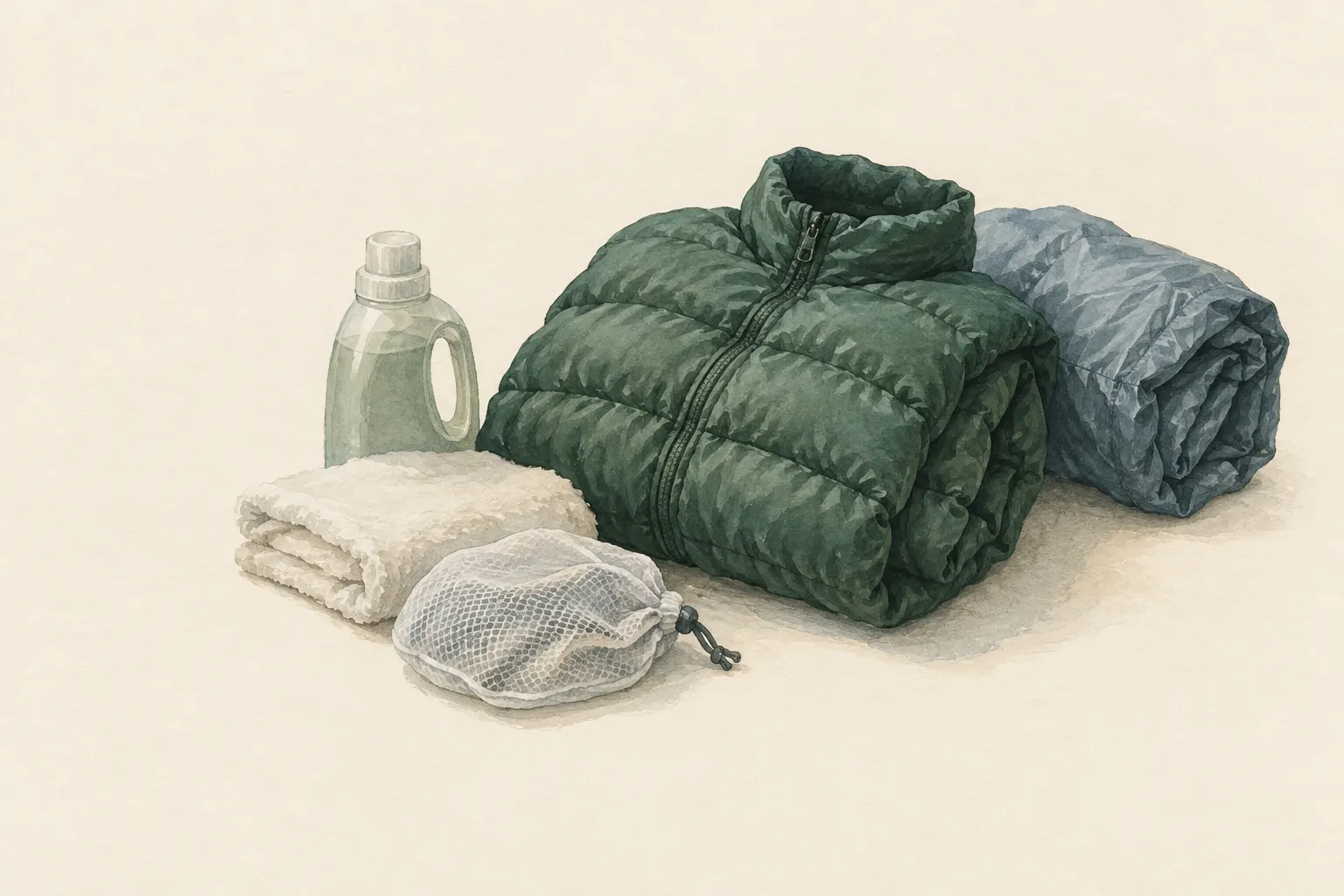
Explained simply
A down jacket or sleeping bag doesn't keep you warm because the filling itself is warm, but because a great deal of air is held between the down clusters or fibres. This still air holds in your body's warmth – like a plumped-up feather pillow that is thick and airy.
Over time sweat, skin oils and dirt get into the filling. Then the down or fibres stick together, the jacket goes flat and keeps you less warm. Careful washing can partly undo this. The most important part is drying: the filling must become completely dry and be loosened again and again so that it fluffs up again.
Important: read the care label first. What it says applies. And don't pack anything away while you can still feel clumps in the filling – otherwise it can go mouldy.
How it works
Insulation keeps you warm through trapped air. Down consists of fine, fluffy plumules without a hard quill, which loft into an airy cushion. Synthetic insulation imitates this with fine plastic fibres. This ability to puff up and fill space with still air is called loft. The more loft, the warmer at the same weight.
Sweat, skin oils and dirt make the down and fibres stick together. They then lie closer to each other, hold less air and insulate less well. A mild specialist detergent for down or technical textiles removes this dirt without stripping all the natural oils from the down. Ordinary detergent and fabric softener, on the other hand, can impair the down or the coating of the shell fabric.
Wet down clumps badly and takes a long time to dry. During drying the clumps must be broken up again and again, otherwise they stay stuck together and the loft does not return. Synthetic insulation dries faster and clumps less, but loses loft over time through frequent washing and compression.
What really matters: washing gently
Always start with the care label. It states temperature, spin speed, whether a dryer is allowed and which detergent is recommended. The instructions differ by product and shell fabric, so this entry deliberately gives no fixed temperatures or programmes. Close all zips and empty the pockets before washing.
Wash on a gentle cycle with a detergent for down or technical textiles and without fabric softener. A washing machine with an agitator in the middle of the drum, as found in some top-loaders, can damage seams and internal chambers; a machine without a central agitator or a large tub for hand washing is better. Rinse thoroughly, with an extra rinse if needed, so that no detergent remains in the filling.
Wet insulation is surprisingly heavy. Lift it out as a whole and support it with both arms instead of pulling it up by one corner. Otherwise the thin internal walls (baffles) that keep the filling in chambers can tear.
Drying: the most important step
If the label allows a dryer, dry on low heat. Many people add clean tennis balls or special dryer balls; as the drum turns they knock against the filling and break up the clumps. High temperatures can damage the shell fabric and synthetic fibres. Take the item out now and then, shake it out and feel for clumps.
Without a dryer, spread the item flat in an airy, shady place. Shake it out regularly and tease clumps apart with your fingers. With down this can take many hours to days. Patience pays: half-dry down turns musty and can go mouldy.
The insulation is only finished when it feels evenly loose everywhere and no more clumps can be felt. Then store it loosely and airily, for example hanging up or in a large, breathable bag – not in the small compression sack.
Safety and common mistakes
The manufacturer's instructions and the care label always take precedence over general tips. The wrong detergent, too high a temperature or harsh spinning can permanently damage insulation and coatings. If the label says an item must not be washed, stick to that.
The most common mistakes are: ordinary detergent or fabric softener, a machine with a central agitator, high dryer heat and packing away too early. The last mistake in particular often only shows weeks later, when the sleeping bag smells musty or shows mildew spots.
A sleeping bag that has lost a lot of warmth through incorrect washing can become a problem on a cold trip. So after washing, test it first in mild conditions or at home before you rely on it.
Good to know: washing less often
Washing rarely but carefully is usually better than washing often. Every wash stresses fabric and filling. Clean small stains locally with a damp cloth and a little specialist detergent instead of washing the whole item straight away.
Prevention is easiest: a thin liner in the sleeping bag or a clean base layer for sleeping keeps sweat and skin oils away from the insulation. The liner is easy to wash often. Airing after every night also helps get moisture out of the filling.
For expensive sleeping bags some specialist businesses offer professional cleaning. That can be worthwhile if you are unsure or have no suitable machine. A well-cared-for item lasts longer and stays warm.
Step by step
Read the label
Check temperature, spin speed, dryer suitability and recommended detergent. Close zips and empty pockets.
- 1
Read the label
Check temperature, spin speed, dryer suitability and recommended detergent. Close zips and empty pockets.
- 2
Wash gently
Use a detergent intended for down or technical textiles on a gentle cycle. Avoid fabric softener. Rinse thoroughly, with an extra rinse if needed.
- 3
Lift out carefully
Wet insulation is heavy. Support it as a whole, do not lift it by one corner, so the internal baffles do not tear.
- 4
Dry
If allowed, in a dryer at low heat, often with clean tennis balls to break up clumps; otherwise flat in an airy place, shaking out regularly and teasing clumps apart.
- 5
Store
Only store once completely dry, loosely and airily, not in the compression sack.
Common mistakes
- Ordinary detergent or fabric softener
- Washing machine with a central agitator
- Packing away too early
- High dryer heat
Quick view
Materials
Sleeping bag
Do not store compressed long-term; do not pack away damp.
Suitable for
- Visibly dirty or flattened insulation
- Before long-term storage
Not suitable for
- Items whose label rules out washing
- Small stains – clean the spot instead
Prerequisites
- Read the care label and manufacturer instructions
- Washing machine without a central agitator, or a large tub
- Space to dry flat
Safety
- Manufacturer instructions and the care label take precedence. The wrong detergent, too high a temperature or harsh spinning can damage insulation and coatings.
- Down that is not completely dry can turn musty and mouldy. Only store once no clumps can be felt.
How it works
Insulation keeps you warm through air trapped between the down clusters or fibres. Oil and dirt make the clusters and fibres stick together so they hold less air. A mild specialist detergent removes dirt without stripping all the natural oils from the down. When drying, the clumps must be broken up again so the loft returns.
Advantages
- Partly restores warmth
- Extends service life
Disadvantages
- Time-consuming drying
- Risk of damage if done wrong
Deep knowledge
Background
Manufacturers of down and synthetic products generally specify gentle washing with a specialist detergent and thorough drying in their care instructions. The instructions differ by product and shell fabric.
Washing rarely but carefully is usually better than washing often. A thin liner or base layer in the sleeping bag keeps dirt away from the insulation.
Variants
- Synthetic
- Synthetic insulation dries faster and clumps less, but loses loft over time through frequent washing and compression.
- Professional cleaning
- For expensive sleeping bags some specialist businesses offer cleaning.
Common mistakes
- Ordinary detergent or fabric softener
- Washing machine with a central agitator
- Packing away too early
- High dryer heat
Limits and risks
- No product-specific temperatures or programmes
- Manufacturer instructions take precedence
Material alternatives
Derived from material properties: a substitute must have all relevant properties. Observe the notes on the substitute.
- Sleeping bag
- Sleeping pad, Dry leaves, grass or conifer boughs (Collect only where allowed; no protected plants. Check for ticks and insects.), Backpack, Dry spare clothing (Carry it in waterproof packaging – wet clothing barely insulates.), Wool blanket / duvet (Keep away from candles, stoves and heaters.), Insulated cool box (Keeps cold only for a limited time; without ice packs or ice it is not a fridge.), Newspaper and cardboard (Flammable – keep away from candles, stoves, heaters and embers.), Insulated cooking box (hay box, thermal cooker) (Never put open flame or embers inside – only the hot, closed pot.)
Results come exclusively from structured entries. No improvised instructions are generated.
Sources
–