Basics for this situation
Navigating at night, in fog and in whiteout
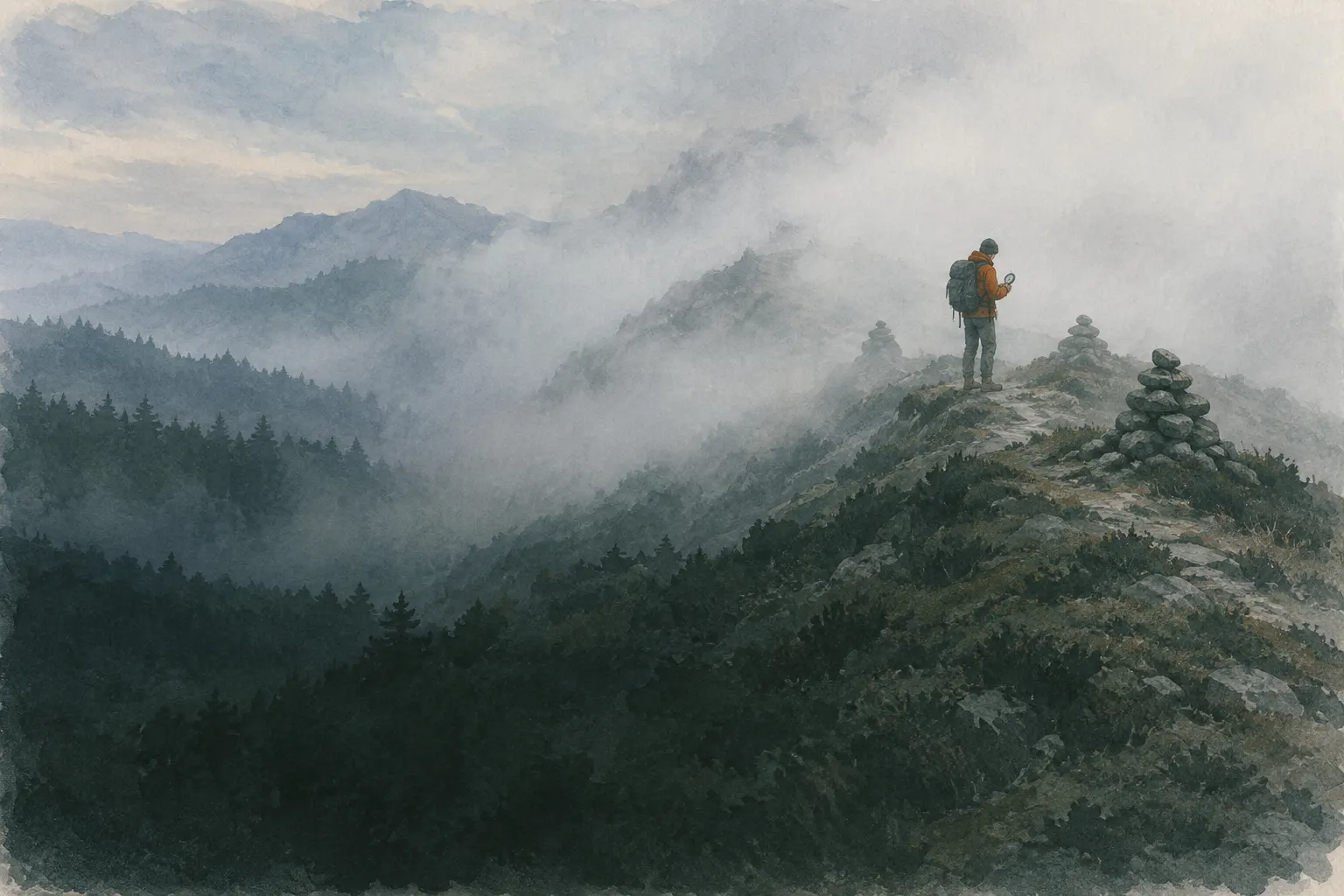
In poor visibility landmarks disappear, distances deceive and errors multiply. It is safer to walk short legs, use handrails, count paces and time, and keep the group close together – or deliberately stop and wait if the terrain is dangerous.
Lost: the STOP rule
When you realise you have lost your way, stop immediately instead of carrying on. STOP stands for Stop, Think, Observe, Plan. It is often safer to stay at an easy-to-find place, especially if someone knows your trip plan.
In the mountains: recognising weather changes and turning back in time
In the mountains the weather can change within a short time: thunderstorms, fog, wind and a sudden drop in temperature turn an easy outing into a serious situation. The most important skill is not stamina but setting a turnaround time and keeping to it – even just below the summit.