Skip to content
In an emergencyAustriaEmergency numbers →
SurviveBetter
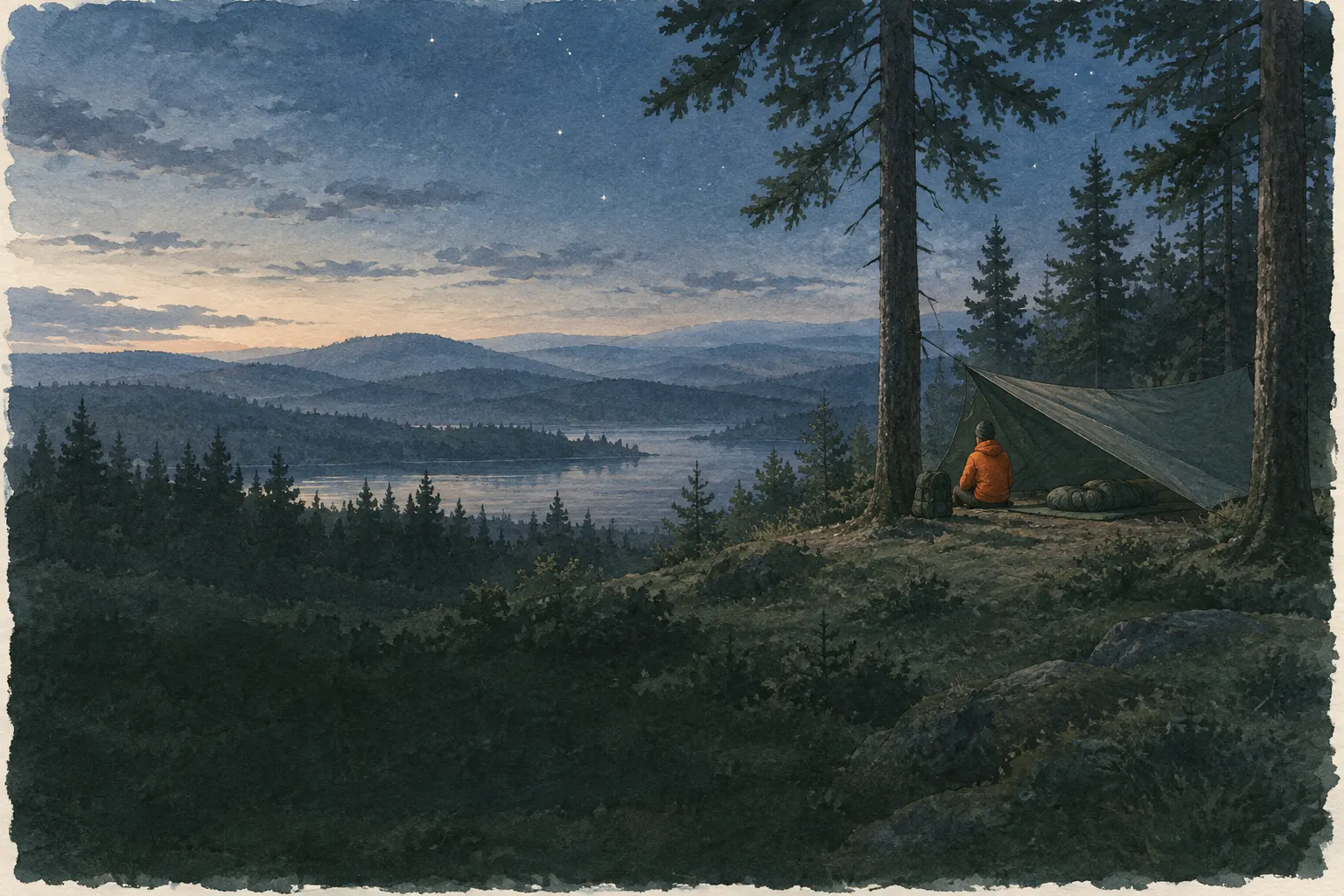
Small tarp camp at the edge of a forest at dusk

I need to plan a safe place to sleep

The trip is taking longer than planned or you want to sleep outdoors – where you lie down decides a lot about how safe and warm the night will be.

First

  1. Start looking early while there is still light.
  2. Check hazards above, below and around the spot: dead branches, flooding, rockfall, cold-air hollows.

Call emergency services if

  • Signs of hypothermia
  • Injury
  • Severe weather warning without a protected spot

What is happening

Whether it is a planned bivouac or the trip is taking longer than expected: a place to sleep is often only sought once dusk has fallen. Then there is no light, time or calm left to spot hazards, and people take the first reasonably flat patch.

It cools down at night, often more than expected – especially in hollows and valleys where cold air drains down, and on clear, still nights. The ground constantly draws heat from a lying body; without insulation underneath you will be cold even under a good cover.

The typical hazards come from above, below and the side: dead branches and rotten trees that break in wind; gullies and dry stream beds that can fill with water quickly in rain; rockfall below cliffs; avalanche slopes in winter. On top of that comes carbon monoxide if a stove is run inside a tent or under a tarp.

What matters: start early, check the spot thoroughly while it is light, set up insulation from the ground and protection from wind and wet, keep dry clothes ready for the night – and respect local rules on overnight stays and fires.
Step by step

  1. Phase 1

    Before dusk

    • Check how long until dark and start looking while the light is still good.
    • Refill water on the way and treat it later.
    • Look for a flat, dry, slightly raised spot sheltered from wind – not in the lowest hollow.
    • If thunderstorms are possible, avoid ridges, summits and isolated trees.
  2. Phase 2

    Checking the spot

    • Look up: dead branches, leaning or dead trees.
    • Check uphill: signs of rockfall, loose blocks, avalanche slopes in winter.
    • Check below: stream beds, gullies, debris or mud lines from earlier floods.
    • Check close by: ant hills, wasp nests, animal trails, distance from edges.
  3. Phase 3

    Setting up

    • Insulation from the ground first: mat, backpack, rope or a thick layer of dry material.
    • Set up protection from wind and wet – tarp, sheet, emergency blanket or bivvy bag – and allow for ventilation.
    • Swap wet clothing for dry and keep one dry layer just for the night.
    • Keep lamp, whistle, water and phone within reach and close to your body.
    • Use a stove only outside and at a distance from the shelter – never inside.
  4. Phase 4

    During the night and in the morning

    • If you get cold: eat something, tense your muscles, add layers – do not wait until you are shivering hard.
    • If there is a storm, rising water or sounds of rockfall: carry out plan B and call for help if in danger.
    • In the morning, only set off once there is enough light, and leave the spot without a trace.
    • Let your contact person know that all is well.

What to watch out for

  • Cold-air hollows

    Cold air flows downhill at night and collects in hollows and valley floors. A spot a little higher up is often noticeably warmer.

  • Dead wood above you

    Dead branches can fall without warning, especially in wind. Never camp directly below dead branches or damaged trees.

  • Dry stream beds

    They are flat and tempting but can fill quickly when it rains further up – even if it is not raining where you are.

  • Carbon monoxide

    Stoves, grills and embers produce odourless carbon monoxide. In an enclosed or small shelter it can be deadly.

  • Condensation

    Emergency blankets and waterproof bivvy bags keep out wind, but moisture from your body condenses inside. Leave some ventilation and protect down or insulating layers.

  • Fire and rules

    In dry periods the wildfire risk is high, and in many places fires and overnight stays outdoors are restricted. Check local rules.

  • Food and wildlife

    Do not keep food and strong-smelling items at your sleeping spot, especially in bear country. Follow local guidance.

Common mistakes

  • Only starting to look for a spot once it is dark.
  • Only covering yourself on top and lying directly on the cold ground.
  • Running a stove inside a tent, bivvy bag or under a low tarp.
  • Camping in a dry stream bed because it is flat.
  • Going to sleep in wet clothes although dry ones are available.

Prepare in advance

  • Carry a small emergency bivouac kit: emergency blanket or bivvy bag, sit mat, warm layer, headlamp.
  • Check the forecast, including the night-time temperature.
  • Pack spare clothes in a waterproof bag.
  • Practise putting up a tarp or emergency shelter calmly beforehand.
  • Find out the local rules on overnight stays and fires before the trip.

Special consideration

Children
Children cool down faster than adults and often notice late. Give them the best insulation, check hands and feet and keep them close to you.
Dogs
A dog also needs something to lie on against the cold ground. Keep it on a lead close to the sleeping spot at night.

Sources

  • FM 3-05.70 Survival · Headquarters, Department of the Army (USA), 2002
  • Wilderness Medical Society Clinical Practice Guidelines for the Out-of-Hospital Evaluation and Treatment of Accidental Hypothermia: 2019 Update · Wilderness & Environmental Medicine (Wilderness Medical Society), 2019
  • Carbon Monoxide Poisoning – Prevention guidance · Centers for Disease Control and Prevention
  • Bear Safety · U.S. National Park Service

Your situation

Weather
Equipment

Matching entries

0 rules apply

No AI decides here. Every recommendation is based on a visible rule.

Add details about your situation above to get more specific guidance.

Basics for this situation

Why: Always applies to this situation – regardless of your answers.

All rules of this situation (4)
  1. [not active] If Equipment = Tarp

    Orient the tarp to the wind: narrow end or back into the wind.

  2. [not active] If Equipment = Emergency blanket / bivvy bag

    Short-term protection; always combine with ground insulation.

  3. [not active] If Equipment = Carrying a stove

    Never run a stove inside the shelter.

  4. [not active] If Weather = Rain or Cold / frost

    Ventilation and dry clothing are decisive in wet conditions.