Preparedness without fear: turning worry into small plans
News about crises can trigger a sense of helplessness. Preparedness helps best when it is concrete, limited and achievable: name one worry, plan a small step and do it, then deliberately turn to something else. The goal is the ability to act, not constant alertness.
- Short fixed time slots, e.g. once a week
Explained simply
When you hear about crises – power cuts, floods, war – a feeling can creep in: “There is nothing I can do anyway.” This is called helplessness. It is frightening, and fear often makes you tired and frozen.
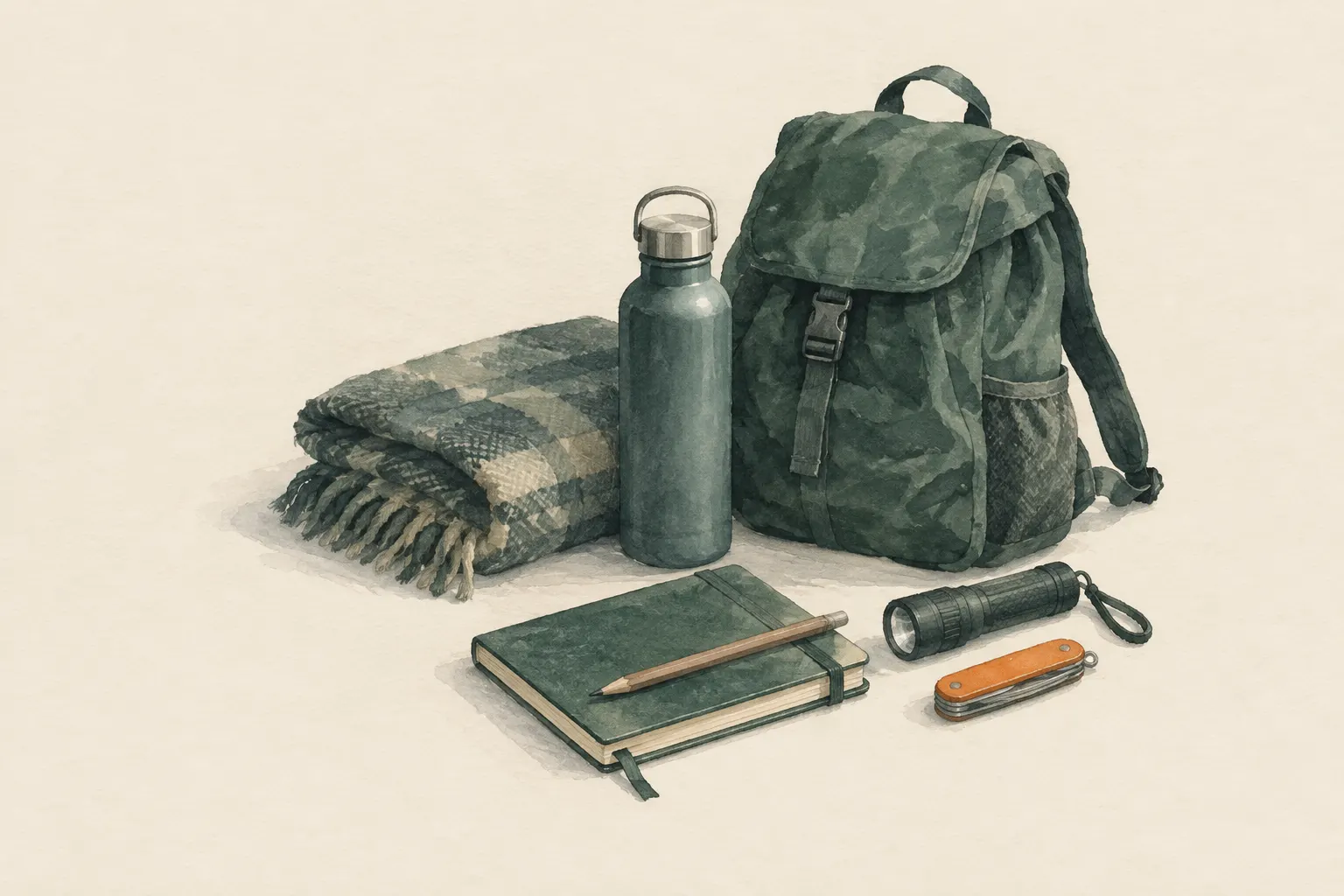
A good trick: turn a big worry into a small plan. Instead of brooding “What if the power goes off?”, today you check just one thing: does the torch work, and are there batteries? It is like a tall staircase – you do not jump to the top in one go, you take one step after another.
Afterwards you deliberately do something else. Preparedness is there to make you feel safer – not to make you think about disasters all the time. If the worries still do not stop, it is good to talk to someone about them.
How it works: worries and plans
Worries and plans feel similar but work very differently. A worry asks the same question again and again (“What if …?”) without reaching an answer. It often circles around things you cannot influence: whether and when something will happen. A plan, by contrast, ends with a next action that you can actually carry out.
A concrete step shifts your attention from what you cannot change to what you can. This strengthens the sense of being able to act – and that very feeling counters helplessness. Every completed step is a small proof: “I can do something.”
The limit matters too. Anyone who prepares without a fixed frame soon thinks about it constantly. A limited time slot – for example once a week – makes sure preparedness gets done without itself becoming a permanent burden.
How to go about it
Write the worry down in one sentence, for example: “What do we do in a power cut lasting several days?” Then split a sheet of paper into two columns. On the left goes what you can influence – supplies, plan, contacts. On the right goes what you cannot influence – cause, timing, duration. You do not work any further with the right-hand column.
From the left-hand column choose one step that can be done in less than an hour, and do it – for example check the torch and batteries, or write the most important phone numbers on paper. Then tick it off, note the next step for next time, and deliberately turn to something else.
This way your preparedness grows over the weeks almost by itself, without any day being dominated by it. You will find a full preparedness checklist in the family and household sections; this is about how to get started without overwhelming yourself.
What really matters
Preparedness is calming when it is concrete, limited and achievable. Typical mistakes are the opposite: trying to do everything at once and then giving up exhausted, “motivating” yourself with disaster videos, or putting preparedness off again and again because even thinking about it is frightening.
The amount of information matters too. Anyone who constantly reads crisis news rarely feels better prepared, but often more anxious. News at fixed times from a few reliable sources is enough. Official preparedness guides also rely on gradual, plannable measures rather than fear.
With children and family
Preparedness can be a family project that is more fun than frightening. Hand out small tasks playfully: one child is in charge of the torch check, another gets to choose the meeting point in case the family is separated. This makes preparedness a routine rather than a threat.
Explain the purpose to children calmly and without frightening images, for example: “We are doing this so that we are ready – just like the fire drill at school.” Children take strong cues from how calm the adults are. Answer their questions honestly but briefly, and ask whether there is anything else they want to know.
Safety: when preparedness becomes a burden itself
Sometimes preparedness tips over. Warning signs are: more and more purchases without the unease going away; checking the same things repeatedly; sleeplessness; constant thoughts of disaster; family arguments about supplies. Anyone who notices this in themselves should pause and talk to someone about it.
These tips do not replace psychological or medical help and are not a treatment for anxiety disorders. If anxiety or panic attacks dominate daily life, a family doctor, counselling service or mental health professional are the right people to talk to. In an acute crisis, local crisis and helplines can help; if you or others are in danger, call the local emergency number (112 in the EU).
Step by step
Name the worry
Write the worry down in one sentence, e.g. "What do we do in a power cut lasting several days?".
- 1
Name the worry
Write the worry down in one sentence, e.g. "What do we do in a power cut lasting several days?".
- 2
Split into two columns
What can I influence (supplies, plan, contacts)? What not (cause, timing)? Continue only with the first column.
- 3
One small step
Choose one step that can be done in under an hour and do it – e.g. check the torch and batteries.
- 4
Close deliberately
Tick off what is done, note the next step, then deliberately turn to something else.
- 5
Limit information
Read news at fixed times from a few reliable sources.
Common mistakes
- Trying to do everything at once
- "Motivating" preparedness with disaster videos
- Involving children through horror scenarios
- Putting off preparedness because it is frightening
Quick view
Suitable for
- People who feel burdened by crisis news
- Families wanting to start preparedness without frightening children
Not suitable for
- Anxiety disorders or panic attacks that dominate daily life – seek professional help
Prerequisites
- Willingness to split preparedness into small steps
Safety
- These tips do not replace psychological or medical help. If distress lasts for weeks or paralyses daily life, involve a family doctor, counselling service or mental health professional.
- Anyone who notices that preparedness leads to ever more purchases, checking or sleeplessness should pause and talk to someone about it.
How it works
Worries circle around what you cannot influence. A concrete step shifts attention to what you can influence and strengthens the sense of being able to act. Limited time slots prevent preparedness itself from becoming a constant burden.
Advantages
- Reduces helplessness
- Preparedness actually gets done
Disadvantages
- Slow progress
- Does not replace treatment of anxiety disorders
Deep knowledge
Background
The WHO booklet "Doing What Matters in Times of Stress" describes how to unhook from distressing thoughts and focus on what you can do in the moment. The CDC recommends, among other things, breaks from the news when stressed.
Official preparedness guides also rely on gradual, plannable measures rather than fear.
Variants
- As a family project
- Hand out small tasks playfully (torch check, choosing a meeting point) – this turns preparedness into routine rather than threat.
Common mistakes
- Trying to do everything at once
- "Motivating" preparedness with disaster videos
- Involving children through horror scenarios
- Putting off preparedness because it is frightening
Limits and risks
- No treatment of anxiety disorders
- No preparedness checklist (see family and household)
Sources
World Health Organization (2020): Doing What Matters in Times of Stress: An Illustrated Guide
Unhooking from difficult thoughts, focusing on what can be done
Centers for Disease Control and Prevention (CDC): Coping with Stress
Breaks from the news when stressed