Talking to children about preparedness – without causing fear
Children notice when adults stock up or talk about emergencies. A calm, age-appropriate conversation explains that preparedness is like a bike helmet: you hope you never need it, and are still glad to have it. The focus is on what the family can do – not on frightening scenarios.
- Short, repeated conversations
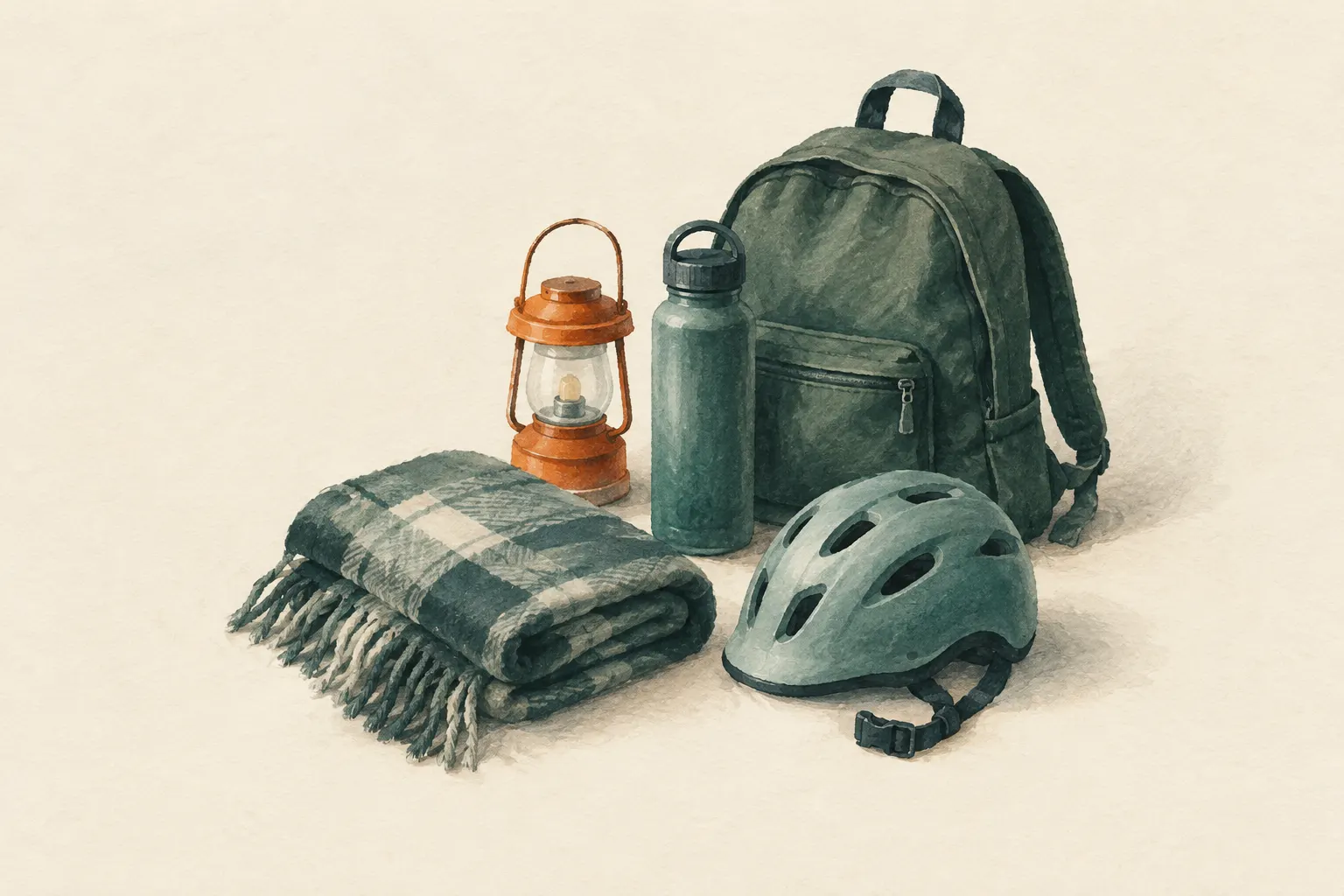
Explained simply
Children notice very clearly when adults are worried or suddenly carry supplies down to the cellar. If nobody explains why, they often make something up themselves – and that is usually much scarier than the truth.
Preparedness is like a bike helmet. You do not put it on because you expect to fall. You put it on so that it is not so bad if something does happen. It is the same with torches, a water supply and a family plan: you hope you never need them, and are still glad to have them.
It is best to talk about it calmly, while playing or cooking, and then let children do something themselves: pack their backpack, try out the torch or look at the meeting point.
How it works
Children take strong cues from the mood of the adults around them. When parents talk about something calmly and matter-of-factly, children conclude: this is something people can deal with. Vague hints, worried looks and half-heard conversations, on the other hand, leave room for imagination, and children's imagination likes to fill gaps with frightening pictures.
Honest, simple information and concrete tasks give children two things: the feeling of understanding what is going on, and the feeling of being able to do something themselves. Both work against fear. What you practise becomes familiar, and what is familiar loses its scariness – that applies to the smoke alarm test just as much as to the route to the meeting point.
Psychological guides such as Psychological First Aid stress that children draw security above all from calm, reliable caregivers. So you do not need to know all the answers. Much more important is that you are there and listen.
What really matters
Choose a calm moment – not right after worrying news and not just before bedtime, but for example while out walking, cooking or playing. Conversations held in passing often feel easier for children than a “We need to talk” at the kitchen table.
Ask first instead of giving a lecture: “What do you already know about power cuts?” or “Have you heard anything about fires at school?” That way you find out what the child already knows, what they have misunderstood and what is on their mind. Then you can respond to exactly that.
Explain briefly and honestly what can happen, and stress who takes care of it: the parents, the fire service, doctors, police and many other helpers. Leave out frightening details the child does not need. And then move quickly to doing: what can we do as a family?
Depending on age
Young children mainly need simple, fixed rules and play. Picture books, role play with soft toys and short sayings such as “When the smoke alarm beeps, we go outside” work well. A kindergarten child does not need abstract explanations of what causes disasters.
School-age children often want to know more exactly how something works. They can already take on real tasks: pack their own go bag, check torches, practise the emergency call or help choose the meeting point. Older children and teenagers can be given more background and responsibility and help shape the family plan – there is a separate entry on that.
Pay attention to news images. Pictures of disasters that a child sees alone and without explanation can stay with them for a long time. Watch the news together instead, explain what is being shown, and limit how much of it enters everyday life.
When more help is needed
It is normal for children to have a few questions or to be a little unsettled after a conversation about emergencies. Welcome questions at any time, even days later, and ask now and then how the child feels about the topic. Talking briefly and often is better than once and at length.
But if a child shows great fear for weeks, sleeps badly, withdraws or the topic weighs heavily on them in everyday life, talk to the paediatrician or a counselling service. That is not a failure, but exactly the right step. This entry does not replace psychological advice.
Avoid “motivating” children with frightening scenarios, and do not pass on your own fear unfiltered. If a topic worries you strongly yourself, first inform yourself well and talk it over with other adults before you talk to the children.
Step by step
Choose a calm moment
Not right after worrying news or just before bedtime, but while playing, cooking or out walking.
- 1
Choose a calm moment
Not right after worrying news or just before bedtime, but while playing, cooking or out walking.
- 2
Ask first
"What do you already know about power cuts/fires/storms?" – pick up on misunderstandings rather than giving a lecture.
- 3
Simple and honest
Briefly explain what can happen and that adults, the fire service and other helpers take care of it. No frightening details.
- 4
Let them do something
Pack the children's go bag together, check torches, practise the emergency call, look at the meeting point.
- 5
Repeat
Short and often is better than once and long. Welcome questions at any time and ask how the child feels about it.
Common mistakes
- "Motivating" with frightening scenarios
- Brushing off questions
- Passing on your own fear unfiltered
- Letting children watch news footage unaccompanied
Quick view
Materials
Comfort and activity items for children
Suitable for
- Children of kindergarten and school age
- Before drills at home
- When children ask about the news
Not suitable for
- Acute crises with heavy strain – then the entries on fears and bad news help
- Persistent anxiety – then professional help
Prerequisites
- Your own calm – inform yourself first
- A family emergency plan, at least in outline
Safety
- If a child shows great fear for weeks, sleeps badly or withdraws, talk to the paediatrician or a counselling service.
How it works
Children take their cue from the adults' mood. Honest, simple information and concrete tasks give them control and security; vague hints and frightening images cause fear. What you practise becomes familiar and loses its scariness.
Advantages
- Children feel safer
- Plans are actually carried out
Disadvantages
- Needs patience and sensitivity
Deep knowledge
Background
Ready Kids (Ready.gov) offers age-appropriate material for involving children in preparedness through play. Psychological guides such as Psychological First Aid stress that children draw security from calm, reliable caregivers.
Dealing with fears during an acute crisis is covered in the psychology world.
Variants
- Young children
- Picture books, role play with soft toys and simple rules ("When the smoke alarm beeps, we go outside").
- Older children
- More background, their own responsibility, joint planning – see also the entry on teenagers.
Common mistakes
- "Motivating" with frightening scenarios
- Brushing off questions
- Passing on your own fear unfiltered
- Letting children watch news footage unaccompanied
Limits and risks
- No psychotherapeutic advice
Sources
Ready.gov – U.S. Federal Emergency Management Agency (FEMA): Ready Kids
Age-appropriate preparedness material for children
National Child Traumatic Stress Network and National Center for PTSD (USA) (2006): Psychological First Aid: Field Operations Guide, 2nd Edition
Children need calm, reliable caregivers