Teenagers in a crisis: independence with clear agreements
Teenagers are often out on their own when something happens – at school, on the bus, at friends'. Instead of just setting rules you plan with them: they know the family plan, have their own tasks, know when they may decide for themselves and when not, and have a way to check in even when their phone is dead.
- One conversation, then occasional refreshers
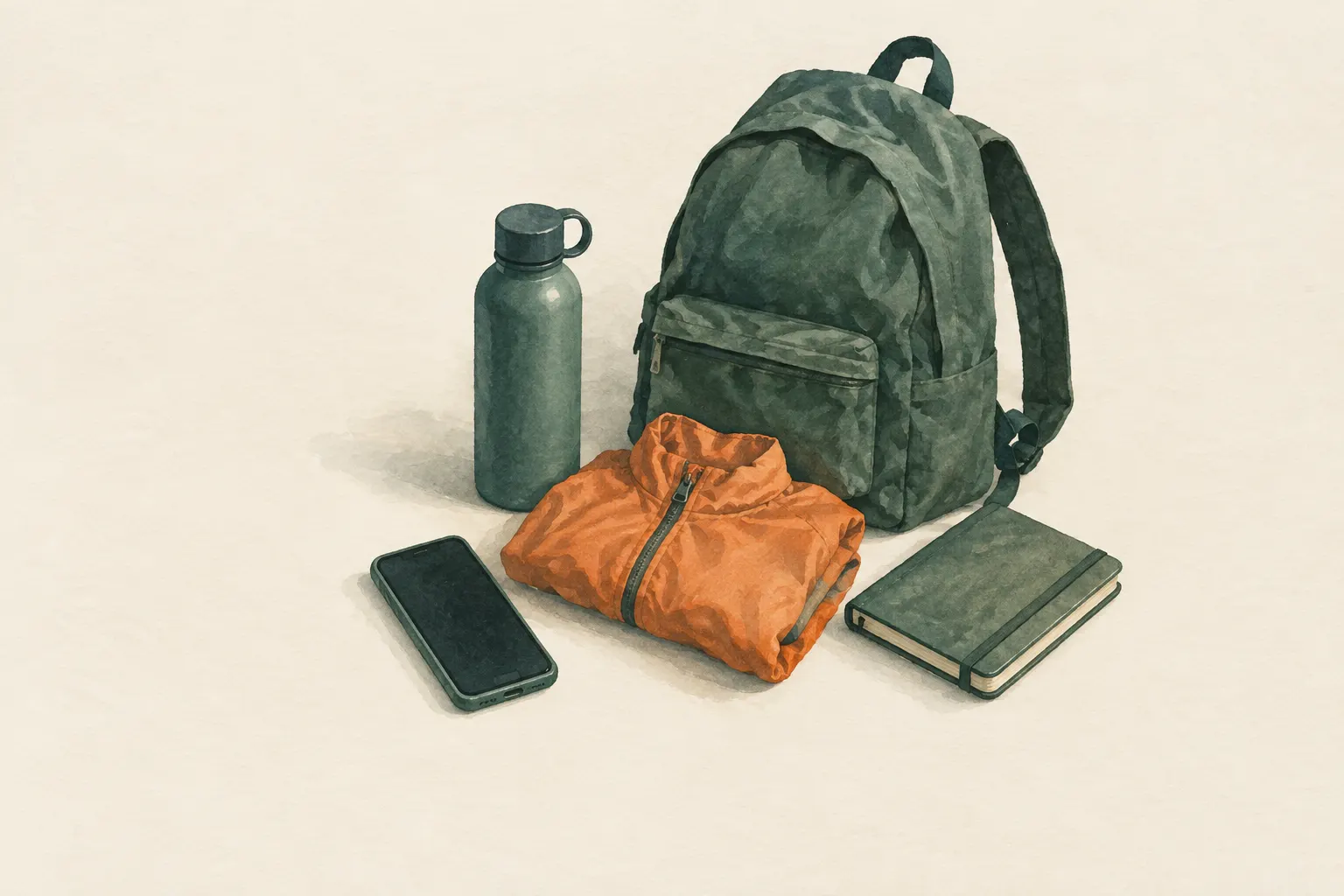
Explained simply
Teenagers are often out on their own: at school, on the bus, at sports or at friends'. If something happens then – a storm, a power cut, a major accident in town – the parents are not there. So it is good if teenagers not only know the family plan but have helped plan it themselves.
It is a bit like a team: everyone knows the moves and has their own position. Teenagers can, for example, pack their own go bag, check the torches or look after younger siblings. And they know in advance what to do if they cannot reach anyone.
The most important rule: instructions from the school, fire service, police and authorities come first – even before the wish to get home quickly. Never walk through floodwater, smoke or cordons.
Why plan together instead of just setting rules
Teenagers want to and should become independent. A plan that is simply handed to them feels like control and is easily ignored when it counts. A plan they have worked on is their plan too. They understand why a meeting point is where it is and can carry it out even when things do not go exactly as expected.
Sit down together and go through the family plan: where do you meet if the house cannot be reached? Who is the contact outside the region that everyone checks in with? Take questions and objections seriously. Teenagers often know their routes, habits and friends better than their parents and contribute good ideas.
Real tasks strengthen the feeling of being able to do something. Someone who has a meaningful task in a difficult situation feels less helpless and keeps a clear head more easily. At the same time, teenagers take load off the whole family.
Clear decision rules
The heart of it is rules in the form “if …, then …”. When do you stay where you are – for example at school, if the teachers say so? When do you go home? And above all: where do you go if you cannot reach anyone? Such rules give room to act without leaving teenagers alone. They do not have to think everything through from scratch in the moment.
Above everything: instructions from the school, emergency services and authorities come first. If the school says everyone stays, you stay – even if you would rather go home. You do not go through floodwater, smoke or cordons, however much shorter the route would be. Flowing water can be dangerous even when it is shallow, and cordons are always there for a reason.
With parents who live apart, there need to be arrangements for both homes: meeting points, contacts and the question of where the teenager goes when in doubt. This answer should be clear to everyone involved before anything happens.
Checking in when the network fails
In crises mobile networks are often overloaded because everyone wants to call at once. Short text messages then often get through more easily than calls. So agree: whoever can sends a short message to the contact person – for example “At school, all okay” – instead of calling again and again.
Important numbers also belong on paper, such as a small card in the wallet. If the battery is dead or the phone is lost, hardly anyone knows phone numbers by heart. A power bank in the backpack helps but does not replace the paper card.
During crises, rumours and fake pictures spread quickly on social media. Agree together which official sources count – such as radio, warning apps or the authorities' websites. And: do not post locations publicly, neither your own nor the family's.
Skills and limits
Teenagers can learn a lot that helps in a crisis: take a first-aid course, make an emergency call properly, know where water and power are shut off in the house, and know the way home on foot – not just the bus route. Skills like these give a confidence that lasts.
Just as important is not to overburden them. Teenagers do not replace adults in caring for relatives who need help. Dangerous tasks, such as running a generator, do not belong in their hands without instruction and supervision. Well-chosen tasks fit age and maturity and leave room to say “I can't do this”.
Refresh the plan now and then, for example at the start of the school year or when routes change. A short conversation is often enough: is the meeting point still right? Is the number on the card up to date?
Step by step
Involve them in planning
Go through the family plan together, set meeting points and an out-of-area contact, and take questions seriously.
- 1
Involve them in planning
Go through the family plan together, set meeting points and an out-of-area contact, and take questions seriously.
- 2
Decision rules
Agree: when do you stay where you are? When do you go home? Where do you go if you cannot reach anyone?
- 3
Checking in without a network
A short text to the contact person rather than a call. Key numbers also on paper in the wallet.
- 4
Their own tasks
Hand over suitable tasks: pack their own go bag, check torches, look after younger siblings, follow the news on the radio.
- 5
Build skills
First-aid course, making an emergency call, being able to shut off water and power, knowing the way home on foot.
Common mistakes
- Plan known only to the parents
- Putting too much on teenagers
- No rule for "nobody reachable"
- All numbers only in the phone
Quick view
Materials
Power bank
Do not use damaged or swollen batteries; do not charge while covered.
Emergency card (contacts and health details)
Key numbers on paper
Note only necessary data; for children do not display the address visibly on clothing but carry the card in a pocket.
Suitable for
- Families with teenagers
- Teenagers who commute alone or are home alone
- Blended families with several homes
Not suitable for
- Overburdening: teenagers do not replace adults in caring for dependent people
- Dangerous tasks like running a generator without instruction
Prerequisites
- A family emergency plan
- Willingness to hand over responsibility
Safety
- Teenagers should know: instructions from the school, emergency services and authorities come first – even before the wish to get home. Do not walk through floodwater, smoke or cordons.
- Rumours circulate on social media during crises. Agree which official sources count and not to post locations publicly.
How it works
Teenagers act more safely when they understand the plan and helped shape it rather than just knowing it. Clear decision rules ("If you cannot reach anyone, then …") give room to act without leaving them alone; real tasks strengthen the sense of being able to do something.
Advantages
- More safety when parents are not there
- Builds self-confidence
- Relieves the family in a crisis
Disadvantages
- Requires trust and regular conversations
Deep knowledge
Background
Ready.gov advises actively involving children and teenagers in emergency planning and giving them tasks; Ready Kids offers material for different age groups.
Dealing with fears and discussing bad news is covered by the entries in the psychology world.
Variants
- Two homes
- With separated parents, set meeting points and contacts for both homes and agree where the child goes when in doubt.
Common mistakes
- Plan known only to the parents
- Putting too much on teenagers
- No rule for "nobody reachable"
- All numbers only in the phone
Limits and risks
- No legal statements on duty of supervision
- No substitute for first-aid training
Sources
Ready.gov – U.S. Federal Emergency Management Agency (FEMA): Make A Plan
Involving children and teens in planning, out-of-area contact, text messages
Ready.gov – U.S. Federal Emergency Management Agency (FEMA): Ready Kids
Preparedness material for children and teens