Skip to content
In an emergencyAustriaEmergency numbers →
SurviveBetter
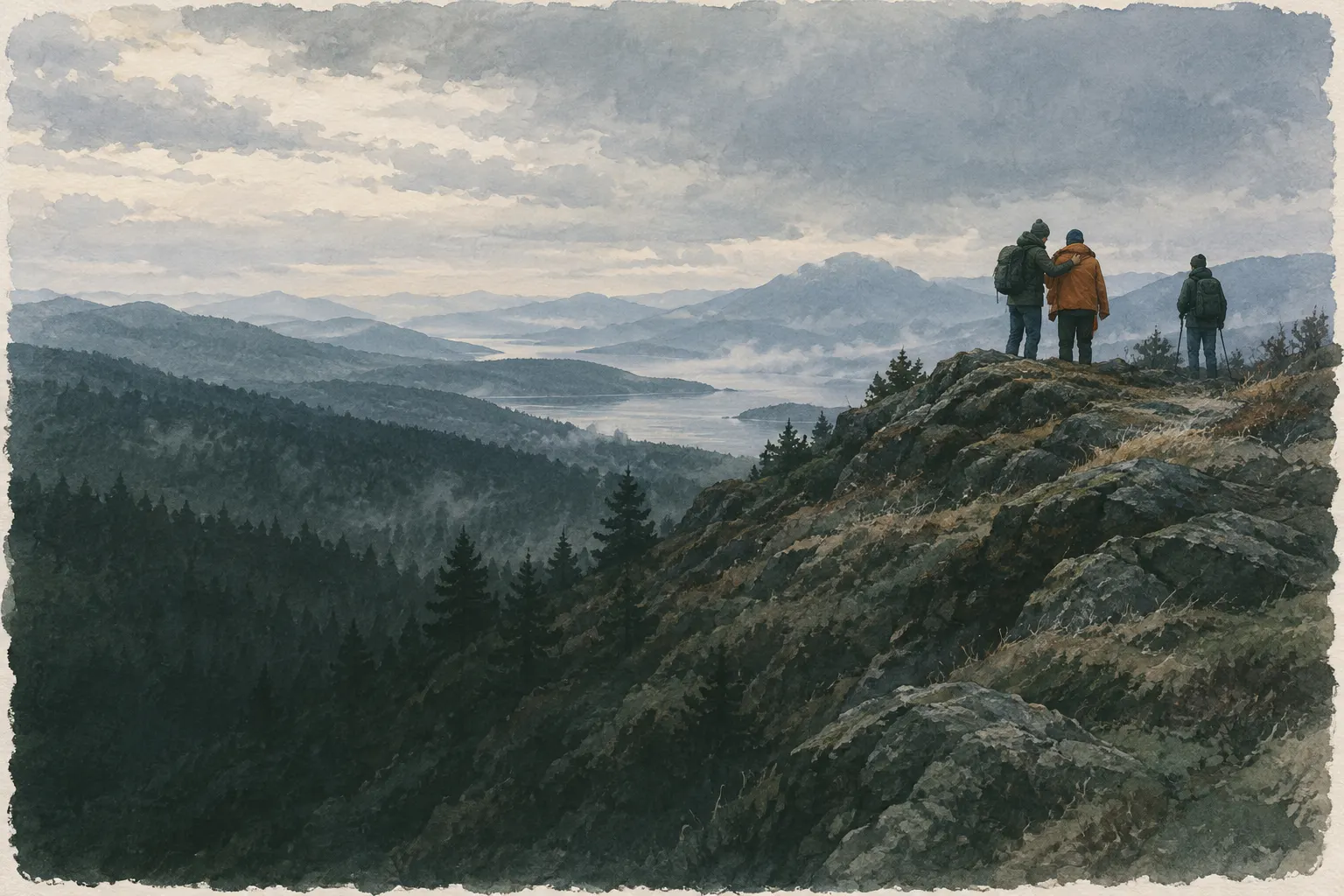
Hiking group on a cold ridge, one person given an extra jacket

Someone in the group is getting very cold

Someone is lagging behind, shivering and saying “I'm fine” – getting cold starts quietly, and acting early usually stops it becoming an emergency.

First

  1. Stop further cooling: get out of wind and wet, into a building or vehicle if one is within reach.
  2. Insulate from below (mat, backpack, clothing), replace wet clothing with dry clothing out of the wind, wrap up and cover the head.
  3. If there is confusion, drowsiness, shivering that stops while still cold, or injury: call the local emergency number (112 in the EU) at once.
  4. Handle the person gently, do not leave them alone, and watch consciousness and breathing.

Call emergency services if

  • Confusion, drowsiness, slurred speech
  • Shivering stops although the person is still cold
  • Unconsciousness or no normal breathing
  • The person cannot get to warmth on their own or is injured

What is happening

Getting cold starts quietly. Someone lags behind, talks less, hunches their shoulders and says “I'm fine”. Often it is not bitter cold behind it, but a combination of wet, wind, exhaustion and too little food – even at temperatures above freezing.

At first the body shivers hard, fingers get clumsy, zips and laces no longer work. If the cooling is not stopped, stumbling, slurred speech, confusion and apathy follow. A particularly serious sign: the shivering eases although the person is still cold.

The danger is that people affected can hardly judge their own condition – confusion is part of it. The responsibility lies with the group: watching closely and acting early prevents freezing from becoming an emergency in most cases. Severely hypothermic people are also fragile: rough handling can endanger their circulation.

What matters: stop further heat loss – wind, wet, cold ground – insulate and wrap up, call the emergency number at once if there are warning signs, handle the person gently and do not leave them alone. Actively rewarming a severely hypothermic person is a job for the emergency services.

Step by step

  1. Phase 1

    As soon as you notice

    • The whole group stops – nobody goes ahead or back alone.
    • Out of wind and wet: shelter behind rock, in the forest, in a building or vehicle if within reach.
    • Insulate from below: put a mat, backpack or clothing under the person.
    • Put on a hat, gloves and a dry layer.
    • Assess: is the person shivering but alert and clear – or confused, drowsy, clumsy?
  2. Phase 2

    If the person is shivering but alert and clear

    • Swap wet clothing for dry quickly and layer by layer, out of the wind.
    • Let them eat something; give warm, sweet drinks only if the person can swallow safely.
    • If it does not improve quickly: end the trip and go together by the shortest safe route to warmth.
    • Keep watching the person, even if they say they are fine.
  3. Phase 3

    If there are warning signs

    • If there is confusion, drowsiness, slurred speech, shivering that stops while still cold, or injury: call the local emergency number (112 in the EU) at once.
    • Do not let the person walk any further; lay them down if possible and handle them very gently.
    • Wrap up: insulation underneath, all available layers, emergency blanket or bivvy bag on the outside, cover head and neck.
    • If you have heat packs, place them on the torso, never directly on the skin. Do not rub, do not massage, give no alcohol.
    • If the person does not respond: check breathing and follow the dispatcher's instructions; use the recovery position only if you are trained in it.
  4. Phase 4

    Until help arrives – and afterwards

    • Stay with the person, talk to them and watch consciousness and breathing.
    • Look after the rest of the group: helpers also get cold while waiting.
    • Make your location findable for rescuers: give coordinates, use light, whistle, bright clothing.
    • After the trip, have a doctor check the person if there were warning signs, and discuss together what should happen earlier next time.

What to watch out for

  • Early signs get missed

    Stumbling, mumbling, fumbling with the fingers and grumbling are often the first clues. Do not only ask “All right?” – watch what the person does.

  • Above freezing, wind and wet

    Wet clothing loses much of its insulation, and wind increases heat loss. That is why hypothermia is possible even above freezing.

  • When the shivering stops

    If someone stops shivering while still cold, it is not a sign of improvement but a warning sign. Call for help at once.

  • Move gently

    In severely hypothermic people, rough handling can disturb the heart rhythm. Position them carefully and do not carry them around unnecessarily.

  • Burns from heat sources

    Chilled skin senses heat poorly. Never put heat packs or hot-water bottles directly on the skin.

  • The helpers

    Anyone who gives away their jacket and stands in the wind for a long time becomes the next case. The whole group needs to stay warm.

Common mistakes

  • Letting a confused person keep walking “so they warm up”.
  • Only covering them on top and leaving them lying on the cold ground.
  • Leaving wet clothing on although dry clothing is available.
  • Rubbing arms and legs or giving alcohol to warm up.
  • Delaying the emergency call until the person no longer responds.
  • Leaving the person alone to fetch help when a phone call would be possible.

Prepare in advance

  • Carry a sit mat, emergency blanket or bivvy bag, hat, gloves and a dry spare layer packed waterproof.
  • Pack a flask with a warm drink and enough food.
  • Check weather, wind and temperature at altitude before the trip.
  • Agree in the group: anyone who is cold says so at once – and turning back is always fine.
  • Take a first aid course, ideally with an outdoor focus.

Special consideration

Children
Children cool down faster than adults and often do not say so. Regularly check hands, face and mood, and take breaks earlier.
Older people and people with health conditions
Older people and people with certain illnesses or medications can sense and compensate for cold less well. Act especially early with them.
Dogs
Small and short-haired dogs cool down fast, especially after swimming. Dry them off and protect them from the wind.

Sources

  • Wilderness Medical Society Clinical Practice Guidelines for the Out-of-Hospital Evaluation and Treatment of Accidental Hypothermia: 2019 Update · Wilderness & Environmental Medicine (Wilderness Medical Society), 2019
  • European Resuscitation Council Guidelines 2021: First Aid · European Resuscitation Council – Resuscitation (journal), 2021
  • International First Aid, Resuscitation, and Education Guidelines 2020 · International Federation of Red Cross and Red Crescent Societies (IFRC) – Global First Aid Reference Centre, 2020

Your situation

Signs
Shelter within reach
Equipment

Matching entries

0 rules apply

No AI decides here. Every recommendation is based on a visible rule.

Add details about your situation above to get more specific guidance.

Basics for this situation

Why: Always applies to this situation – regardless of your answers.

All rules of this situation (5)
  1. [not active] If Signs = Does not respond

    Call the emergency number at once and follow the dispatcher's instructions. Check breathing; move very gently and protect from further cold.

  2. [not active] If Signs = Confused, clumsy, drowsy

    Warning signs: call the emergency number. Do not let the person walk any further, insulate, wrap up and stay with them.

  3. [not active] If Signs = Shivering, alert and clear

    Act early: rest out of the wind, put on dry layers, eat. If it does not improve, end the trip.

  4. [not active] If Shelter within reach = Open terrain only

    Find a spot out of the wind, ground insulation first, emergency blanket outside all layers. Make your position findable for rescuers.

  5. [not active] If Equipment = Hardly anything

    Insulate with whatever is there: backpacks, the group's clothing, plastic bags against wind and wet.