Skip to content
In an emergencyAustriaEmergency numbers →
SurviveBetter
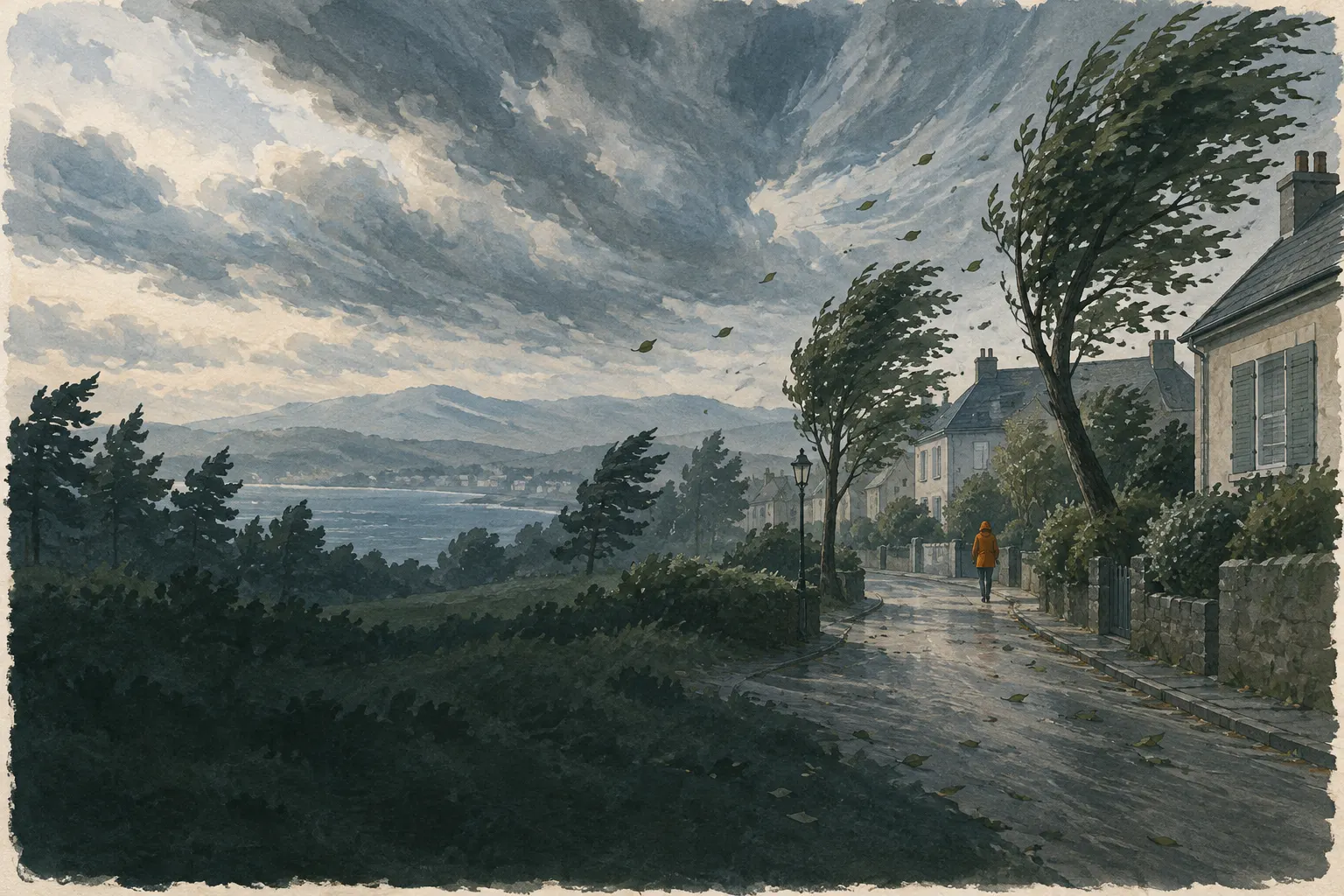
Storm bending trees along a residential street, shutters closed

There is a storm warning (wind)

The weather service warns of hurricane-force gusts – secure what can blow away now and sit out the storm indoors.

First

  1. Follow severe weather warnings from the weather service and official advice via radio and warning app.
  2. Secure or bring in loose objects in the garden and on the balcony, close windows and doors.
  3. During the storm stay in a substantial building, away from windows; avoid forests and journeys.
  4. After the storm keep away from fallen power lines; in danger call the local emergency number (112 in the EU).

Call emergency services if

  • Someone has been hit by branches, trees or debris
  • A fallen power line near people
  • Roof or building badly damaged
  • Fire or smell of gas

What is happening

Storm warnings usually come with a few hours to days of lead time. The wind picks up, then come gusts much stronger than the average wind – often sudden and from changing directions. In severe storms, roof tiles, branches, bins, trampolines and garden furniture fly through the air, trees snap or are uprooted, and scaffolding and construction cranes are at risk.

Most injuries happen outdoors: from falling trees, falling branches and flying objects; in cars from trees on the road or crosswinds on bridges and exposed stretches. It is also dangerous to try to secure something on the roof, balcony or in the garden during the storm.

After the storm it is not immediately safe. In forests, broken branches hang in the crowns, fallen trees are under tension, and a second storm may follow. Power lines lie on roads; power and mobile networks can be out for a long time. Anyone then using generators, gas grills or heaters indoors risks carbon monoxide poisoning.

What realistically matters most: secure and prepare before the storm, stay in a substantial building during it and avoid journeys and forests, and afterwards keep away from lines and damaged trees.

Step by step

  1. Phase 1

    When the warning comes

    • Check the warning level and time window with the weather service or in the warning app; follow official advice.
    • Secure or bring in garden furniture, parasols, trampolines, bins and window boxes.
    • Close windows, doors, roof windows and shutters; do not park the car under trees or next to scaffolding.
    • Charge your phone and power banks, have torches and a battery-powered radio ready – expect a power cut.
    • Cancel or postpone journeys and hikes for the period of the storm.
  2. Phase 2

    During the storm

    • Stay in a substantial building, away from windows and glass doors.
    • Do not go onto roofs, balconies or into the garden to secure anything.
    • If you are outdoors: leave the forest at once, keep away from trees, scaffolding, walls and overhead lines and get into a substantial building.
    • If you must drive: slowly, both hands on the wheel, especially on bridges and exposed roads; expect branches and trees on the road and do not stop under trees.
    • On the coast avoid promenades, piers and beaches and heed storm surge warnings.
  3. Phase 3

    After the storm

    • Only go out once the warning is lifted – further gusts often follow.
    • Do not touch fallen lines, keep well away – also from puddles or fences near them – and report them to the grid operator or emergency number.
    • Avoid forests and parks for a few days; watch for hanging branches and leaning trees.
    • Leave work on storm-damaged trees and chainsaw work to professionals.
    • Look at damage to the house from the ground and photograph it; do not climb onto the roof.
  4. Phase 4

    If the power stays off

    • Use torches instead of candles; never leave candles unattended.
    • Never run grills, gas heaters or generators in living spaces, garages or basements.
    • Never connect a generator to the house wiring yourself – only power appliances directly with suitable cables.
    • Keep the fridge and freezer closed; follow food safety advice.
    • Check on neighbours who depend on power for medical devices.

What to watch out for

  • Forests and trees

    During a storm the forest is one of the most dangerous places. Even days later, hanging branches can fall, and fallen trees can spring back suddenly when walked on or cut.

  • Flying objects

    Roof tiles, sheet metal, branches and garden furniture become projectiles. Windows are the weak point inside – so keep your distance and close curtains or shutters.

  • Fallen power lines

    Every line may be live, even if it lies still. Do not touch it, do not drive over it and do not let anything touch it; report it at once.

  • Crosswinds and obstacles on the road

    Gusts can suddenly push cars sideways, especially with a trailer, roof box or high body. Trees may lie on the road around bends and in wooded stretches.

  • Carbon monoxide

    During power cuts, the risk rises from generators, grills and heaters indoors. Headaches, dizziness and nausea in several people are a warning sign – get into fresh air at once and call the emergency number.

  • The lull between gusts

    A brief lull does not mean the storm is over. Only the official lifting of the warning is the signal to go back outside.

Common mistakes

  • Going onto the roof or into the garden during the storm to save something.
  • Driving or hiking through forests despite the warning.
  • Parking the car under trees or next to scaffolding.
  • Going for a walk in the forest right after the storm.
  • Cutting up storm-damaged trees yourself without training and protective gear.
  • Running a generator or grill in the house or garage.

Prepare in advance

  • Install a warning app and enable severe weather warnings for your location.
  • Have the roof, gutters and trees on your property checked regularly; have rotten branches removed in good time.
  • Decide on a fixed place where garden furniture and loose objects can be stowed quickly.
  • Keep torches, batteries, power banks and a battery-powered radio ready.
  • Keep a supply of water and food for a few days without power.

Special consideration

People with powered medical devices
Anyone who relies on ventilators, oxygen concentrators or other devices needs a plan for long power cuts: spare batteries, arrangements with the care service or device supplier and somewhere to go if necessary.
Pets
Bring animals in before the storm. Many animals are frightened by storms and run off when doors open – make sure they wear a collar with contact details.

Sources

  • Ratgeber für Notfallvorsorge und richtiges Handeln in Notsituationen · Bundesamt für Bevölkerungsschutz und Katastrophenhilfe (BBK), Deutschland
  • Power Outages · Ready.gov – U.S. Federal Emergency Management Agency (FEMA)
  • Carbon Monoxide Poisoning – Prevention guidance · Centers for Disease Control and Prevention
  • Wetter- und Klimalexikon · Deutscher Wetterdienst (DWD)

Your situation

Situation
Where you are

Matching entries

0 rules apply

No AI decides here. Every recommendation is based on a visible rule.

Add details about your situation above to get more specific guidance.

Basics for this situation

Why: Always applies to this situation – regardless of your answers.

All rules of this situation (6)
  1. [not active] If Situation = Warning, storm coming

    Secure and prepare beforehand: charge devices, have lamps ready, expect a power outage.

  2. [not active] If Situation = Storm is here

    Stay indoors; do not go onto roofs or into the garden to secure anything. Keep away from windows and glass doors.

  3. [not active] If Situation = Storm over

    Only go out once the warning is lifted. Avoid forests, never touch lines, leave chainsaw work on storm-damaged trees to professionals.

  4. [not active] If Where you are = Outdoors, forest or open country

    Leave or avoid the forest at once, get to a substantial building quickly; keep away from trees, scaffolding and overhead lines.

  5. [not active] If Where you are = On the road by car

    Postpone journeys if possible. If driving: slowly, especially on bridges and exposed roads; do not stop under trees.

  6. [not active] If Where you are = On the coast

    In a storm on the coast avoid seafronts, piers and beaches; heed storm surge warnings.