Skip to content
In an emergencyAustriaEmergency numbers →
SurviveBetter
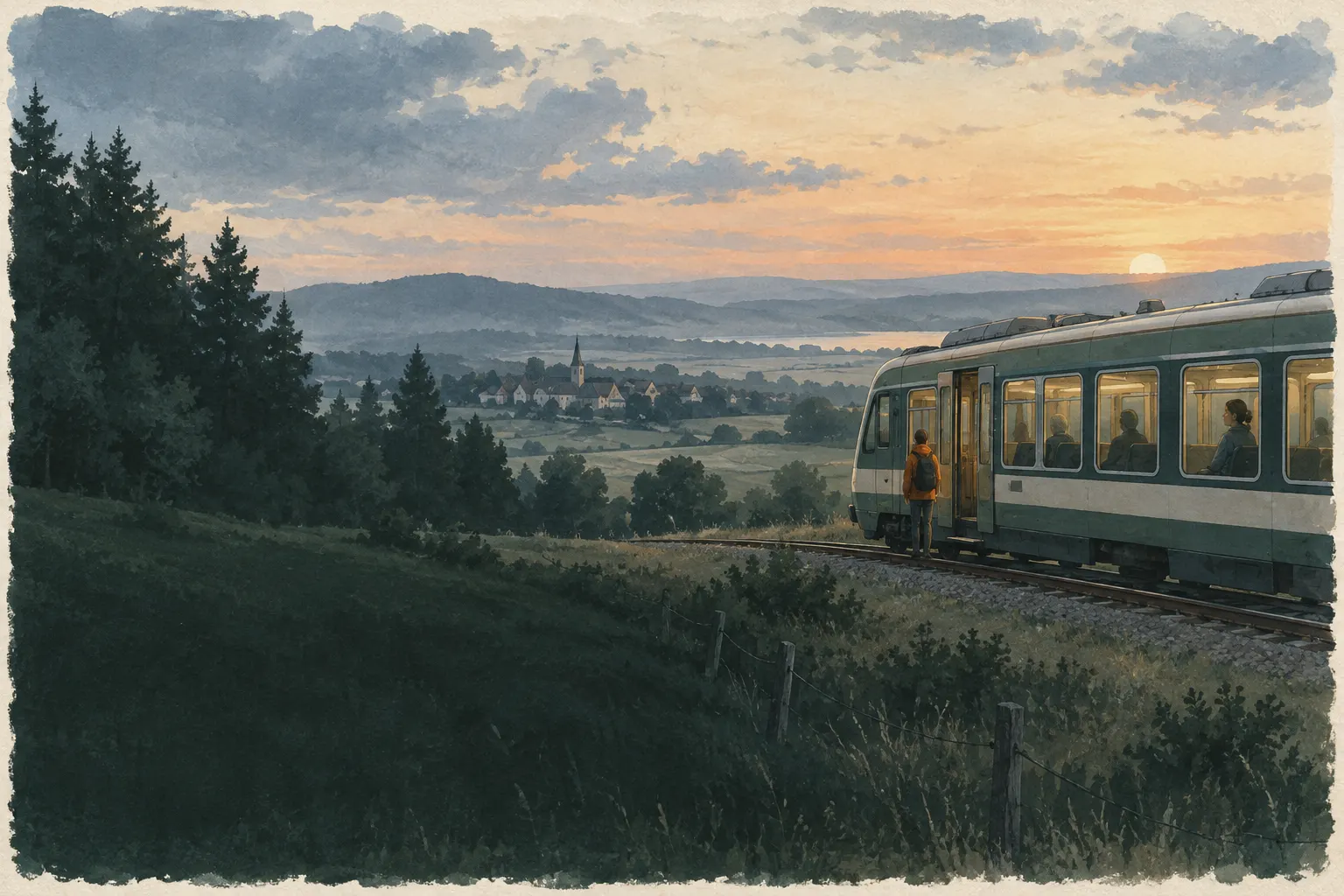
Regional train standing on open track in evening light

My train has stopped on the line or is being evacuated

Your train stops on open track or in a tunnel – no announcement, no movement, and minutes turn into hours.

First

  1. Stay on the train and wait for staff announcements – the train is usually the safest place.
  2. Never go onto the tracks on your own: other trains, conductor rails and overhead lines can kill.
  3. Only get off if there is immediate danger inside the train (fire, smoke) or on instruction.
  4. In case of fire, injuries or a medical emergency alert staff or use the emergency intercom; if needed call the local emergency number (112 in the EU).

Call emergency services if

  • Fire or smoke and no staff reachable
  • Injuries or a medical emergency
  • Someone has gone onto the tracks
  • Heat or cold endangers passengers

What is happening

The train brakes, rolls to a halt and stops. At first everyone thinks of a brief signal stop. After a while a short announcement comes – or none at all. Causes range from signal or interlocking faults, power failure in the overhead line, technical defects and storms to people on the track. Often even the train crew do not know right away how long it will take.

Outside is more dangerous than it looks: trains may keep running on the adjacent track, fast and almost silently. Overhead lines and conductor rails can be live even while the train is stationary. The ballast is uneven, the embankment is often steep, and in a tunnel it is dark and narrow. That is why the train is usually the safest place.

During a longer stop other things become important: if the power fails, air conditioning, heating, lights and toilets may stop working. In summer the carriage can quickly get very warm, in winter cold. Impatience grows, rumours spread, and some people want to get out on their own – one of the most dangerous decisions in this situation.

What matters: stay on the train, listen to announcements and staff, ration water and battery, look out for fellow passengers and only get off if there is immediate danger such as fire or smoke, or on instruction. An evacuation is organised by staff and can take time, because the line has to be made safe first.

Step by step

  1. Phase 1

    In the first minutes

    • Stay seated or hold on until the train has completely stopped.
    • Listen for announcements; take off headphones so you can hear them.
    • Look at the emergency exits, intercoms, fire extinguishers and emergency hammers in your carriage.
    • Never open doors on your own or step onto the tracks.
  2. Phase 2

    If it takes longer

    • Ration water and snacks, save phone battery, inform relatives by message.
    • In heat: drink plenty, wear light clothing, find shade in the carriage; in cold: put on warm clothing and sit close together.
    • Look out for older people, children, pregnant women and sick people nearby and fetch staff if there are problems.
    • Move important medication from your suitcase into your hand luggage.
    • Stay calm, do not pass on rumours and ask staff if you have questions.
  3. Phase 3

    In case of fire, smoke or evacuation

    • If there is smoke or fire use the emergency handle or intercom as signed and move into the next carriage, away from the smoke; close the connecting doors.
    • Alert staff; if nobody is reachable, call the local emergency number (112 in the EU) and give the train, direction and last stop.
    • During an evacuation follow instructions exactly, leave luggage behind if asked and help others to get off.
    • Walk beside the track only where staff lead you, and never touch the rails or conductor rails.
    • In a tunnel follow the escape-route signs and the staff; do not set off on your own.
  4. Phase 4

    Afterwards

    • Keep your ticket and receipts; ask about passenger rights and refunds – the rules differ by country and operator.
    • Anyone who feels unwell, is exhausted after heat or cold, or has breathed in smoke should be checked.
    • Tell relatives that you are continuing your journey or have arrived.

What to watch out for

  • Traffic on the adjacent track

    Even while your train is stopped, trains can pass at high speed on other tracks. You often hear them very late.

  • Electricity

    Overhead lines and conductor rails carry high voltage, even when the train is stopped or the lights are out. Only staff can say whether a section has been switched off and made safe.

  • Emergency brake in a tunnel

    On many modern trains the emergency handle first alerts the driver, who can continue to a safe stopping place outside a tunnel or off a bridge. Use it only in real danger.

  • Heat in the carriage

    If the air conditioning fails and the windows cannot be opened, it gets hot quickly in the sun. Watch for dizziness, headache and nausea – in yourself and others – and tell staff.

  • Getting off on your own

    If someone gets off anyway, operations on other tracks often have to be stopped – the wait gets longer for everyone. Report it to staff at once; if nobody is reachable, call the emergency number.

Common mistakes

  • Opening doors with the emergency release and stepping onto the tracks when there is no danger inside the train.
  • Pulling the emergency brake because it is taking too long.
  • Draining the phone battery with videos in the first hours.
  • Leaving important medication and water in the suitcase.
  • Passing on unconfirmed rumours and unsettling others.

Prepare in advance

  • On train journeys always carry water, a snack and a power bank.
  • Pack important medication and a warm layer in your hand luggage.
  • When boarding, take a quick look at where the emergency exits, intercoms and fire extinguishers are.
  • Install the operator's app for disruption updates.
  • When a severe weather warning is out, consider whether the trip can be postponed.

Special consideration

Children
Long waits are hard for children. Things to do, drinks and snacks help; explain calmly why you are staying on the train.
Limited mobility
An evacuation over ladders and ballast is difficult for wheelchair users or people with walking difficulties. Tell staff early so that they can plan for it.

Sources

Your situation

Where is the train?
Situation
Weather

Matching entries

0 rules apply

No AI decides here. Every recommendation is based on a visible rule.

Add details about your situation above to get more specific guidance.

Basics for this situation

Why: Always applies to this situation – regardless of your answers.

All rules of this situation (6)
  1. [not active] If Where is the train? = In a tunnel / underground

    In a tunnel staff instructions matter even more; note escape-route signs and do not set off on your own.

  2. [not active] If Situation = Long wait

    Ration water and snacks, save battery, inform relatives by message and look out for fellow passengers.

  3. [not active] If Situation = Evacuation announced

    Follow instructions exactly, leave luggage behind if asked and help others to get off. Walk beside the track only where staff lead you.

  4. [not active] If Situation = Smoke or fire

    Use the emergency handle or intercom as signed, move away from the smoke into the next carriage and follow staff.

  5. [not active] If Weather = Hot

    In heat without air conditioning drink plenty and look out for older people, children and the sick.

  6. [not active] If Weather = Cold / frost

    Put on warm clothing and sit close together if the heating fails.