Skip to content
In an emergencyAustriaEmergency numbers →
SurviveBetter
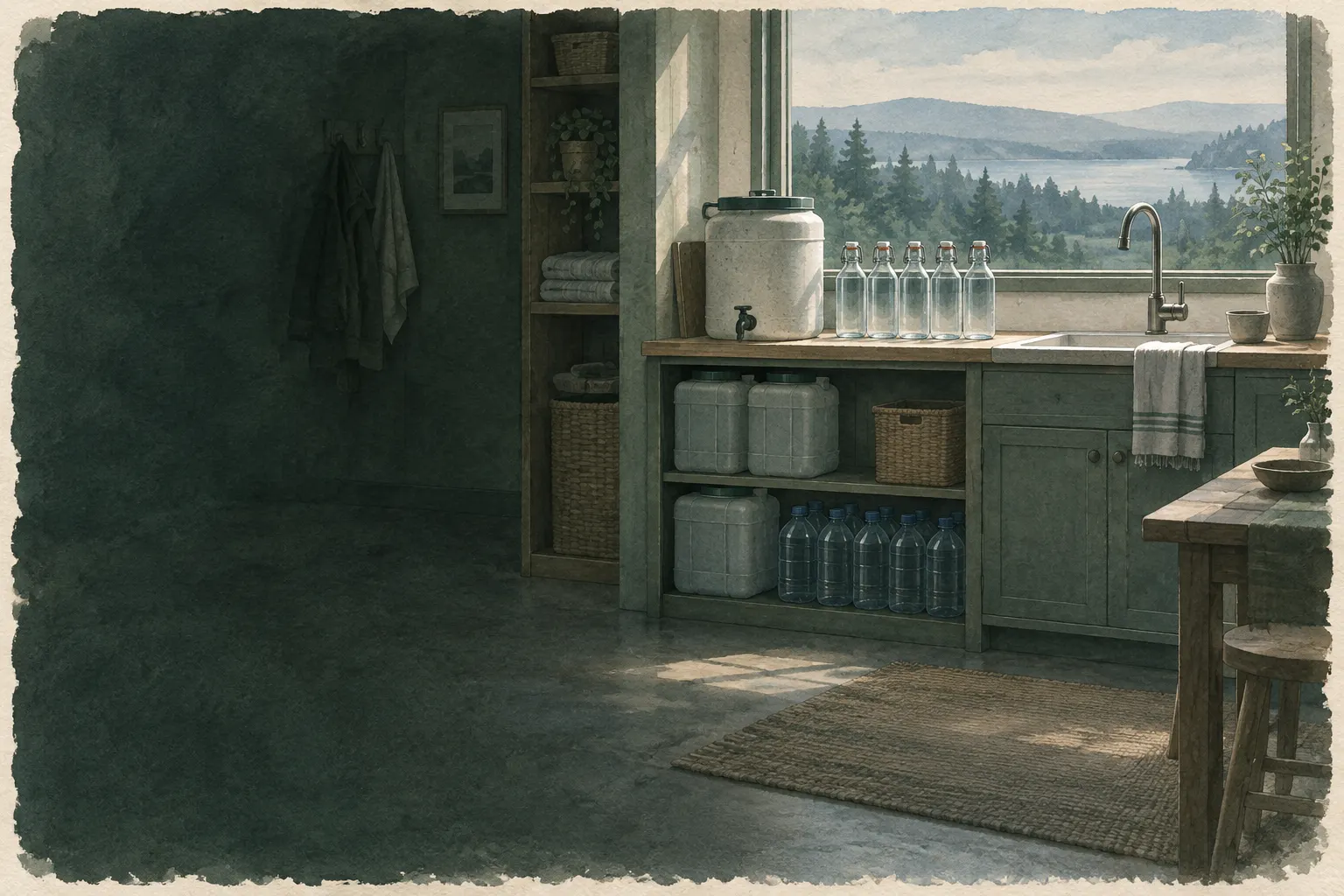
Filled water canisters and bottles lined up next to a dry tap

No water is coming out of our taps

The tap stays dry: no drinking water, no toilet flush, no shower – for hours or even days.

First

  1. Find out whether only your home is affected (stop valve, ask neighbours) or the supply has failed.
  2. Follow information from the water supplier or local council.
  3. Reserve the drinking water you have for drinking and cooking; separate water by use.
  4. When the water comes back: check the supplier's advice on whether it is safe to drink straight away.

Call emergency services if

  • Signs of severe dehydration or heat illness
  • Confusion or impaired consciousness
  • Someone depends on water for medical equipment or treatment and has none

What is happening

When no water comes out of the tap, the cause is often harmless: construction work, a burst main in the street or a closed stop valve. Larger outages result from things like power cuts at pumping stations, frost, flooding or network damage. In high-rise buildings the upper floors are often affected first, because pumps create the necessary pressure there.

Only without water do you notice how much you need it: drinking and cooking, washing hands, the toilet, dishes, personal hygiene. The toilet can usually be flushed only once more – with the water still in the cistern. After a few hours hygiene and the toilet become the main problem, after days also the amount of drinking water – especially in hot weather, with small children, sick people and pets.

A water outage becomes dangerous mainly indirectly: through dehydration in the heat, through poor hygiene and stomach infections, and through water from unsafe sources. Rainwater, ponds and streams can contain germs and pollutants; a filter alone does not make such water safe. When tap water returns it may be cloudy at first, and sometimes a boil-water notice applies afterwards.

What realistically matters: quickly find out whether only your household is affected, reserve the drinking water you have for drinking and cooking, separate water by use and reuse it, and follow the supplier's information. In longer outages authorities usually set up distribution points – bring clean containers that are easy to carry.

Step by step

  1. Phase 1

    In the first minutes

    • Check whether only one tap or the whole home is affected and whether the stop valve for your flat or the building is open.
    • Ask neighbours and check the water supplier's website, fault line or channels.
    • If no fault is known, report the outage to the supplier – not via the emergency number.
    • Close any open taps so there is no flooding when the water returns.
    • If only your home is affected and you see signs of a burst pipe (water on walls or ceiling): shut the main stop valve and call the building management or a plumber.
  2. Phase 2

    In the first hours

    • Count the drinking water and drinks in the home and reserve them for drinking and cooking.
    • Do not waste the water in the cistern and flush the toilet only when necessary.
    • No laundry, no dishwasher, no showers; wash hands with a little water and soap.
    • Collect or wipe dishes instead of washing them.
    • In hot weather make sure everyone drinks enough.
  3. Phase 3

    If it lasts for days

    • Use official distribution points and bring clean containers that are easy to carry – a litre of water weighs about one kilogram.
    • Separate water by use: drinking water, washing water, utility water. Pour used water directly into the toilet bowl to flush.
    • If sewage is also disrupted or the supplier advises against flushing, use an emergency toilet with a bucket, strong bags and absorbent.
    • Use hidden reserves such as the contents of a hot-water cylinder only if you know how to do it safely and the appliance has been switched off first; when in doubt, ask a professional.
    • Use water from rain barrels, ponds or streams only as utility water for the toilet or cleaning; for drinking only after boiling and following the authorities' advice – a filter alone is not enough.
    • Check on neighbours who cannot fetch or carry water themselves.
  4. Phase 4

    When the water comes back

    • Wait for the supplier's advice on whether the water is safe to drink straight away or must be boiled for the time being.
    • Open one tap first; if air or cloudy water comes out, let cold water run until it is clear.
    • Clean the aerators (the small screens on the tap) if the flow is irregular.
    • Check the water heater and heating according to the manufacturer's instructions, or have a professional check them if you are unsure.
    • Refill your water supply.

What to watch out for

  • Unsafe water sources

    Rainwater, ponds, streams and wells of unknown quality can contain germs and pollutants. Mechanical filters alone do not make such water safe; for drinking, at least boil it and follow the authorities' advice.

  • Hygiene and diarrhoea

    When hand washing suffers, stomach bugs spread more easily. Wash hands before eating and after using the toilet; hand sanitiser works poorly on visibly dirty hands.

  • Dehydration

    In heat, with fever or diarrhoea the body needs more water. Little or dark urine, dizziness or confusion are warning signs; with severe dehydration or confusion, call the emergency number.

  • Flooding when the water returns

    Taps left open or disconnected fittings can cause flooding when the water suddenly comes back.

  • Boil-water notice after the outage

    After a loss of pressure or repairs, germs can enter the network. Only drink once the supplier has cleared the water.

  • Heavy carrying

    Water is heavy. Carry smaller containers more often, take care on stairs and accept help.

Common mistakes

  • Refilling the cistern with drinking water although supplies are low.
  • Calling the emergency number instead of the water supplier to report the outage.
  • Drinking rainwater or pond water that has only been filtered, without boiling it.
  • Fetching water in dirty or non-food-grade containers.
  • Drinking cloudy water right after it returns without waiting for the supplier's advice.
  • Skipping hand washing to save water.

Prepare in advance

  • Build up a drinking water supply: Germany's BBK calculates about two litres per person per day, Ready.gov about one gallon (just under four litres) per person per day including hygiene.
  • Clean, food-grade jerrycans or collapsible water containers for fetching water.
  • Know where the main stop valve and the stop valve for your flat are and how to operate them.
  • An emergency toilet (bucket, strong bags, absorbent), hand sanitiser, wet wipes and disposable tableware.
  • Know the information channels of your water supplier and local council.

Special consideration

Babies
Use only suitable bottled water or boiled water for infant formula, and provide for babies first when sharing out water.
People who need water for medical reasons
Anyone who, for example, does home dialysis or needs water for medical equipment contacts their doctor, dialysis centre or equipment supplier at once. If there is no water: call the emergency number.
Pets
Animals need drinking water too; include their needs in your supplies.

Sources

Your situation

Expected duration
Housing
In the household

Matching entries

0 rules apply

No AI decides here. Every recommendation is based on a visible rule.

Add details about your situation above to get more specific guidance.

Basics for this situation

Why: Always applies to this situation – regardless of your answers.

All rules of this situation (6)
  1. [not active] If Expected duration = A few hours

    Save water: no laundry, no dishwasher. Use stored drinks first.

  2. [not active] If Expected duration = Days or unknown

    Use official distribution points, know the hidden reserves in your home (water heater, pipes) and organise hygiene without running water.

  3. [not active] If Housing = High-rise / pump failed

    Upper floors lose water first when pumps stop. Carry water in smaller containers and help neighbours with limited mobility.

  4. [not active] If Housing = House or flat

    Know where the main stop valve is. Use rainwater only as utility water (flushing, cleaning) unless it is treated.

  5. [not active] If In the household = Infants, older or sick people

    Provide for infants, older and sick people first and check on neighbours who live alone.

  6. [not active] If In the household = Pets

    Include pets' needs when calculating water.