Hailstorms: protecting yourself, your vehicle and your home
Hail usually falls from strong thunderstorms and can damage people, cars, roofs and windows. A solid building away from windows and skylights offers protection. If caught in a car, stop safely and stay inside. Because hail usually comes with lightning, thunderstorm rules apply too.
- 15–30 minutes of preparation when a severe-weather warning is issued
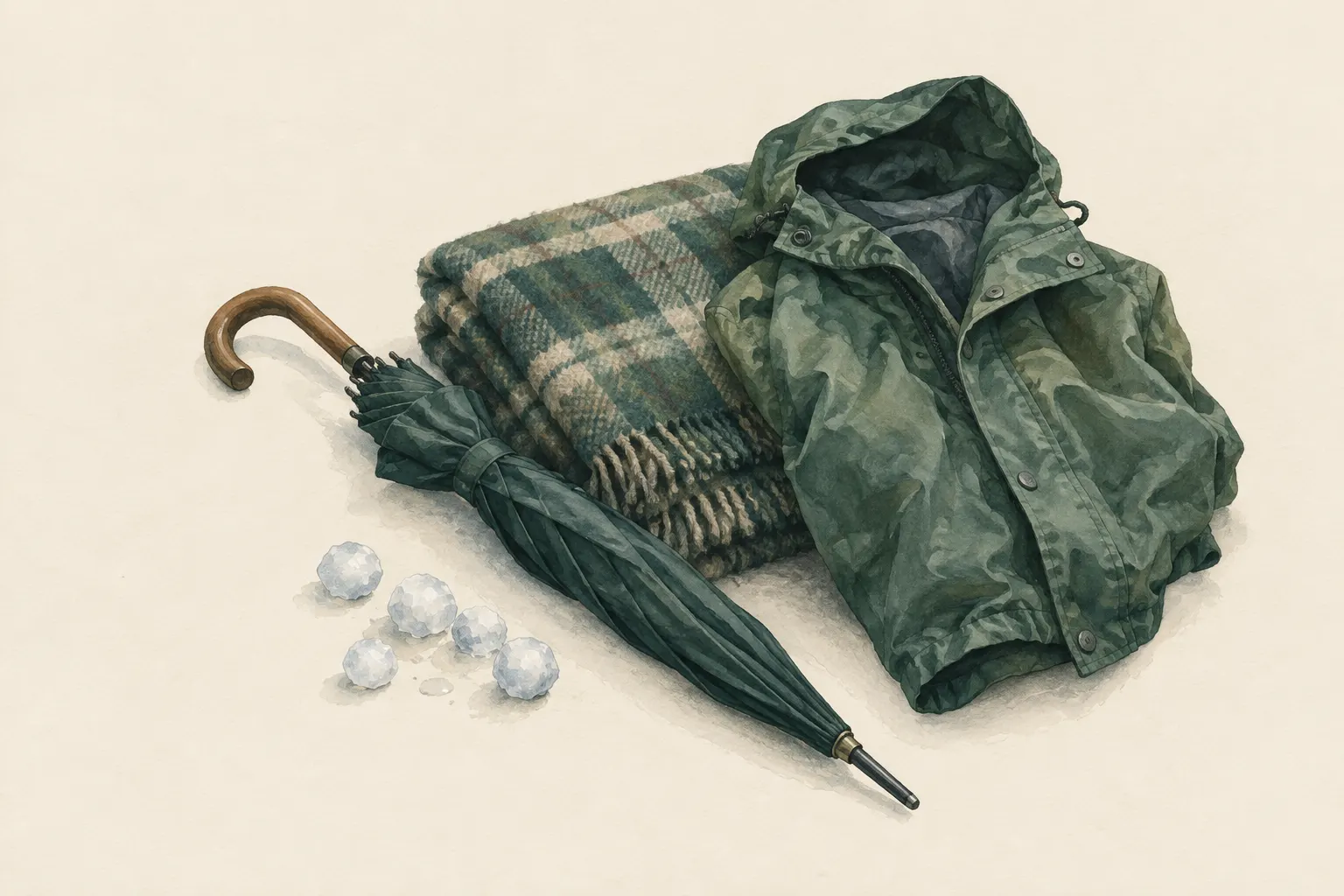
Explained simply
Hail is balls of ice that fall from the sky during a strong thunderstorm. They form high up in the thundercloud, where it is very cold. Strong winds blowing upwards hold the frozen drops up there, and they keep getting bigger – a bit like a snowball rolled through snow. When they get too heavy, they fall.
Small hailstones are harmless; large ones can smash car windows, damage roofs and injure people. The best protection is a solid roof over you and distance from windows. If you are in a car, the driver stops safely off the road and everyone stays inside, turning their faces away from the windows.
The most important point: hail usually comes together with lightning. So never stand under a lone tree; go into a building or a closed car instead.
How hail forms
Thunderclouds can reach very high, up to heights where it is far below freezing. Inside them are powerful updrafts – air that streams rapidly upwards. These updrafts carry water droplets into the cold zones, where they freeze. An ice pellet floating there collects more supercooled water droplets, which freeze onto it, and it grows layer by layer.
The stronger the updraft, the longer a stone can stay in the cloud and the bigger it becomes. Only when it is too heavy to be carried does it fall to the ground. Large stones fall fast and hit with a lot of force. How big hail gets and exactly where it falls depends strongly on the individual storm cell. That is why hail is hard to forecast locally.
Hail often falls in a narrow strip. So it can hail heavily in one part of town while a few streets away it only rains. This is explained in meteorological teaching resources such as the U.S. National Weather Service's JetStream.
Preparing when a warning comes
Severe-weather warnings often mention hail explicitly. There is then usually some time you can use well: put the car in a garage or car park, bring in garden furniture, parasols and potted plants, retract awnings and close shutters. Shutters protect the window panes, and retracted awnings do not get shredded.
Postpone outdoor plans if you can. If you are out and about, plan a route to a solid building. Timing matters: these preparations are for before the hail starts. Once the first stones are falling, you no longer run to the car to move it – that is a typical mistake in which people get hurt.
In the garden, sensitive plants can be covered with nets or fleece. Greenhouse panes are especially vulnerable; keep away from them during hail.
Caught by hail in a car
The car is reasonable protection as long as you stay inside. Slow down, because visibility gets poor and the road can become slippery with hailstones. Stop safely off the carriageway and switch on your hazard lights.
Do not stop on the carriageway or hard shoulder under a bridge, however tempting it seems. Other drivers have the same idea, traffic backs up and following cars can crash into you.
In the stationary car, turn your face away from the windows and cover yourself with a jacket or blanket in case glass breaks. Protect children the same way, for example by having them lean forward with a blanket over their heads. Sunroofs and large panoramic roofs are the most vulnerable spots.
Safety: what to watch out for
Because hail almost always falls from thunderstorms, the lightning rules apply too. Outdoors, do not shelter under isolated trees or masts; get into a solid building or closed car as quickly as possible. Until then, protect your head with a backpack or your arms. On mountain tours in thunderstorm conditions, abort the tour or do not start it at all.
Indoors, keep away from windows, glass doors and skylights. Standing at the window filming is dangerous if the pane breaks.
After the hail, new dangers appear: roads can be as slippery as in winter, hailstones can block drains, and the heavy rain can lead to flooding. Do not climb onto damaged or slippery roofs; look at damage from the ground.
After the storm: recording damage
Hail damage to cars, roofs, facades and windows is sometimes only noticed at a second glance. Photograph it with the date, ideally before repairing anything, and report it to your insurer. A photo with an object for scale later shows how large the stones were.
You can temporarily cover broken windows or roof spots so that no more rain gets in – but only if that can be done safely from the ground or from inside. Work on the roof is for specialist firms. This entry gives no insurance advice; the terms of your policy are what count.
Step by step
Take the warning seriously
Follow severe-weather warnings mentioning hail via radio or warning app and postpone time outdoors.
- 1
Take the warning seriously
Follow severe-weather warnings mentioning hail via radio or warning app and postpone time outdoors.
- 2
Secure beforehand
Put the car in a garage or car park, bring in garden furniture and potted plants, retract awnings, close shutters.
- 3
Indoors away from glass
Stay in a solid building, keep away from windows, glass doors and skylights.
- 4
In the car
Slow down, stop safely off the carriageway and stay in the car. Turn your face away from the windows, cover with a jacket or blanket, protect children.
- 5
Outdoors without shelter
Get into a building as quickly as possible. Until then protect your head with a backpack or your arms; avoid isolated trees and masts.
- 6
Afterwards
Watch for slippery roads, blocked drains and possible flooding. Photograph damage and report it to your insurer.
Common mistakes
- Running to the car to move it while hail is already falling
- Stopping on the carriageway under a bridge
- Standing at the window filming
- Climbing onto the roof after the hail
Quick view
Materials
Battery or crank radio
Check batteries regularly and keep spares.
Wool blanket / duvet
In the car against glass fragments
Keep away from candles, stoves and heaters.
Mobile phone
The battery drains quickly in cold and with continuous screen and GPS use.
Do not plan on it as your only means of navigation or emergency calls.
Suitable for
- Summer thunderstorms with hail warnings
- Driving during severe weather
- Home and garden preparation
Not suitable for
- Mountain tours in thunderstorm conditions – abort or do not start
Prerequisites
- Follow severe-weather warnings
- Know a covered parking spot
Safety
- Do not stop on the carriageway or hard shoulder under bridges – risk of congestion and rear-end collisions. Pull off the road safely and switch on hazard lights.
- After hail, do not climb onto damaged or slippery roofs; inspect damage from the ground.
How it works
Hailstones form in strong updrafts of thunderclouds, where water droplets freeze and keep growing until they are too heavy. Large stones fall fast and can break glass and injure people. Protection means: a roof between you and the hail, distance from glass, and moving things outdoors to safety beforehand.
Advantages
- Simple measures
- Prevents injuries from glass
Disadvantages
- Hail is hard to forecast locally
- Property damage cannot always be avoided
Deep knowledge
Background
Ready.gov treats hail as part of severe thunderstorms and recommends staying indoors and away from windows. How hail forms in thunderclouds is explained in meteorological teaching resources such as the U.S. National Weather Service's JetStream.
How large hailstones get and where they fall depends strongly on the individual storm cell.
Variants
- Garden and greenhouse
- Sensitive crops can be covered with nets or fleece; greenhouse panes are especially vulnerable – keep away from them during hail.
Common mistakes
- Running to the car to move it while hail is already falling
- Stopping on the carriageway under a bridge
- Standing at the window filming
- Climbing onto the roof after the hail
Limits and risks
- No hail forecasting
- No insurance advice
Material alternatives
Derived from material properties: a substitute must have all relevant properties. Observe the notes on the substitute.
- Wool blanket / duvet
- Sleeping pad, Dry leaves, grass or conifer boughs (Collect only where allowed; no protected plants. Check for ticks and insects.), Backpack, Dry spare clothing (Carry it in waterproof packaging – wet clothing barely insulates.), Insulated cool box (Keeps cold only for a limited time; without ice packs or ice it is not a fridge.), Sleeping bag (Do not store compressed long-term; do not pack away damp.), Newspaper and cardboard (Flammable – keep away from candles, stoves, heaters and embers.), Insulated cooking box (hay box, thermal cooker) (Never put open flame or embers inside – only the hot, closed pot.)
- Mobile phone
- Headlamp / flashlight, Battery lantern / LED light
Results come exclusively from structured entries. No improvised instructions are generated.
Sources
Ready.gov – U.S. Federal Emergency Management Agency (FEMA): Thunderstorms & Lightning
Behaviour in severe thunderstorms: stay indoors, keep away from windows
U.S. National Weather Service (NOAA): JetStream – An Online School for Weather
Formation of hail in thunderclouds