Documenting damage for insurance – before and after
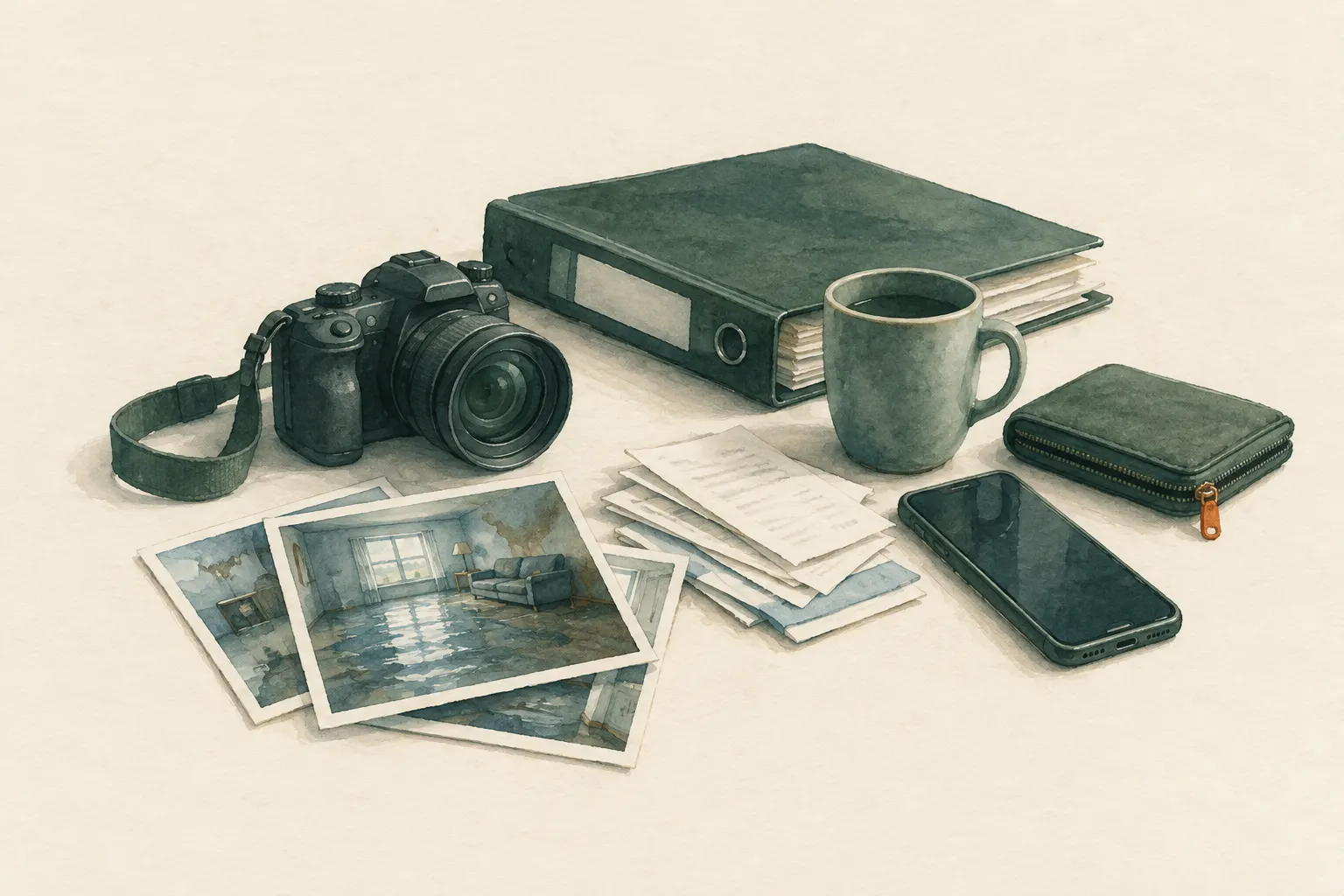
A good claim starts before the event: with an inventory, photos of every room and receipts and policies stored safely. After damage, safety comes first; then inform your insurer early, photograph everything before cleaning up, prevent further damage within reason and record every expense and every conversation.
- Inventory 2–4 hours; ongoing after damage
Explained simply
Imagine your bike is wrecked in a storm and someone is supposed to pay for a new one. That person will ask: 'Which bike was it? Can you show it was yours and what it looked like before?' An insurance company works exactly the same way. It pays for what you can prove. That is why it is smart to take photos of your things in advance and keep receipts.
If something really does happen, for example through a flood, storm, hail or fire, your safety comes first. After that you inform the insurer and photograph everything before you clean up – because after cleaning up, the damage can no longer be seen. You also write down whom you spoke to and when.
The most important point: photos can wait. If you smell gas, see large cracks in walls or there is water near electrics, stay outside.
Why documentation makes such a difference
Insurers reimburse damage that can be proven. For that they need three things: proof that an item existed, an idea of its value, and evidence of the extent and cause of the damage. Photos and videos from before cover the first two points; photos from afterwards cover the third.
After a disaster, many people are exhausted and just want to clear up. That is understandable, but if you shovel out the mud first and photograph afterwards, you often have no pictures left of how high the water was or which furniture was affected. So the rule is: document first, then remove – unless there is a hazard.
Good documentation usually leads to faster, more complete settlement and fewer disputes. It can also be useful for aid programmes or tax questions. Which damage is covered and what your obligations are, however, is set by your policy and national law. This entry is not legal or insurance advice.
Before: creating an inventory
An inventory sounds like a lot of work but can be done in a few hours. Walk through every room with your phone and film or photograph everything – with cupboards and drawers open too. While filming, feel free to say what you see, such as 'television, bought three years ago'. For valuable devices, also photograph the rating plate with the serial number.
Collect purchase receipts, invoices and warranty cards, at least for more expensive items. Photos of jewellery, art, bicycles or tools help too. Do not forget the basement, attic, garage and garden shed – that is often where the first damage occurs in floods and storms.
Also look in your policy to see which perils are covered. Natural hazards such as flooding or heavy rain are often covered separately depending on country and policy. If you are unsure, ask your insurer – before any damage is the best time to do so.
Storing it safely
The best inventory is useless if it is lost along with the house. That is why you keep the inventory, policies and important receipts in two places: for example a copy outside the home with relatives and an encrypted digital copy. A common mistake is keeping all documents only in the affected house.
Update the inventory once a year – add new purchases, remove things you have sold. A fixed date helps, such as the new year or a warning test day. Also note your insurer's contact details and your policy number somewhere you can reach in an emergency.
Afterwards: step by step
Report the damage as soon as possible. Note the claim number and the name of your contact person, and ask about the next steps: will someone come to inspect? What may you already throw away? Keep to the deadlines in your policy.
Then photograph – overview shots of every room and close-ups of individual damage, water marks on the walls and damaged items with their rating plates. Make a list of the damaged items. Dispose of items only once this has been agreed with the insurer or if they are a health hazard, such as spoiled food or mouldy mattresses – but photograph them first.
As far as it is safely possible, prevent further damage: have a hole in the roof covered with a tarp, have water pumped out, ventilate and dry. Keep the receipts for such emergency measures. And for every conversation, write down the date, the person you spoke to and what was said, and keep copies of all letters.
Safety and beware of fraud
Enter damaged buildings only when they have been cleared. With a gas smell, cracks in load-bearing parts or water near electrics, stay outside – you can take photos later or photograph from outside. With flood damage, wear gloves and sturdy shoes, because mud can be contaminated.
Unfortunately, dubious tradespeople and fraudsters also appear after disasters, promising quick help. Do not pay strangers in advance, get quotes in writing and, if in doubt, ask your insurer before you sign anything.
If you rent, report damage to the building to your landlord and damage to your own contents to your own insurer. Document both with the same care.
Step by step
Before: create an inventory
Record every room on video or in photos with cupboards open, photograph rating plates and serial numbers of valuable devices, collect receipts.
- 1
Before: create an inventory
Record every room on video or in photos with cupboards open, photograph rating plates and serial numbers of valuable devices, collect receipts.
- 2
Store safely
Keep inventory, policies and receipts in two places: a copy outside the home or encrypted digitally. Update yearly.
- 3
Know your cover
Check which perils are covered. Natural hazards such as flooding are often covered separately depending on country and policy – ask your insurer.
- 4
After: report early
Report the damage as soon as possible, note the claim number and contact person and ask about next steps.
- 5
Photograph before cleaning up
Overview and detail photos, water marks on walls, damaged items with rating plates. Make a list of damaged items; dispose of them only when agreed with the insurer or if they are a health hazard.
- 6
Prevent further damage
As far as safely possible: cover the roof with a tarp, have water pumped out, ventilate and dry. Keep receipts for emergency measures.
- 7
Record everything
Note date, contact person and content of every conversation, keep copies of all letters.
Common mistakes
- Cleaning up first, photographing later
- No 'before' inventory
- Keeping receipts only in the affected house
- Advance payment to unknown tradespeople
- Not documenting conversations
Quick view
Materials
Mobile phone
Dated photos and videos
The battery drains quickly in cold and with continuous screen and GPS use.
Do not plan on it as your only means of navigation or emergency calls.
Document folder (waterproof)
Store securely – contains sensitive personal data.
Encrypted storage device
Without the password the data is lost to you too – keep the password safe and separate.
Storage media age; test and renew the backup regularly.
Field notebook and pencil
Suitable for
- Flood, storm, hail and fire damage
- Tenants and owners
- Preparation as part of household preparedness
Not suitable for
- Legal or insurance advice in individual cases
Prerequisites
- Insurance policies and contact details at hand
Safety
- After disasters, dubious tradespeople and fraudsters appear. No advance payments to strangers, get quotes in writing, ask your insurer if in doubt.
- With flood damage wear gloves and sturdy shoes; mud can be contaminated.
How it works
Insurers reimburse what can be proven. An inventory with 'before' photos makes value and existence plausible; 'after' photos show extent and cause. Because damage is no longer visible after clean-up, documentation comes before removal – unless there is a hazard.
Advantages
- Faster and more complete settlement
- Fewer disputes
- Also helps with aid programmes and tax questions
Disadvantages
- The inventory takes time once
- Needs to be kept up to date
Deep knowledge
Background
As part of financial preparedness, Ready.gov recommends keeping insurance documents and an inventory safe, and after an event advises photographing damage and contacting the insurer.
Which damage is covered and what obligations policyholders have is set by the contract and national law.
Variants
- Tenants
- Report damage to the building to the landlord and damage to your own contents to your own insurer. Document both.
Common mistakes
- Cleaning up first, photographing later
- No 'before' inventory
- Keeping receipts only in the affected house
- Advance payment to unknown tradespeople
- Not documenting conversations
Limits and risks
- No legal or insurance advice
- Check contractual duties and deadlines in your own policy
Material alternatives
Derived from material properties: a substitute must have all relevant properties. Observe the notes on the substitute.
- Mobile phone
- Headlamp / flashlight, Battery lantern / LED light
- Document folder (waterproof)
- Tarp, Plastic sheet / large bin bag (Tears easily; never pull over the head (suffocation risk).), Emergency blanket (Tears easily once punctured; short-term shelter only.), Rain poncho (When used as a shelter, it no longer protects your body from rain.), Bivy bag (Never fully close off the face.), Tent (Do not cook or heat inside the tent (fire and carbon monoxide danger).), Heavy-duty bin bag (large) (Suffocation risk: never pull plastic bags over the head or face and keep them away from small children.), Group shelter bag (Airtight – ventilate regularly.)
Results come exclusively from structured entries. No improvised instructions are generated.
Sources
Ready.gov – U.S. Federal Emergency Management Agency (FEMA): Financial Preparedness
Keeping insurance documents and an inventory safe
Ready.gov – U.S. Federal Emergency Management Agency (FEMA): Recovering from Disaster
Photographing damage and contacting the insurer after the event