Preparedness on a small budget, step by step
Preparedness does not have to be expensive. If you start with what is already at home, buy one or two extra items you eat anyway on each shopping trip and cover the most important areas first – water, medication, light, information – you build a solid stock over months. A small financial emergency fund belongs to it too.
- In passing while shopping, over a few months
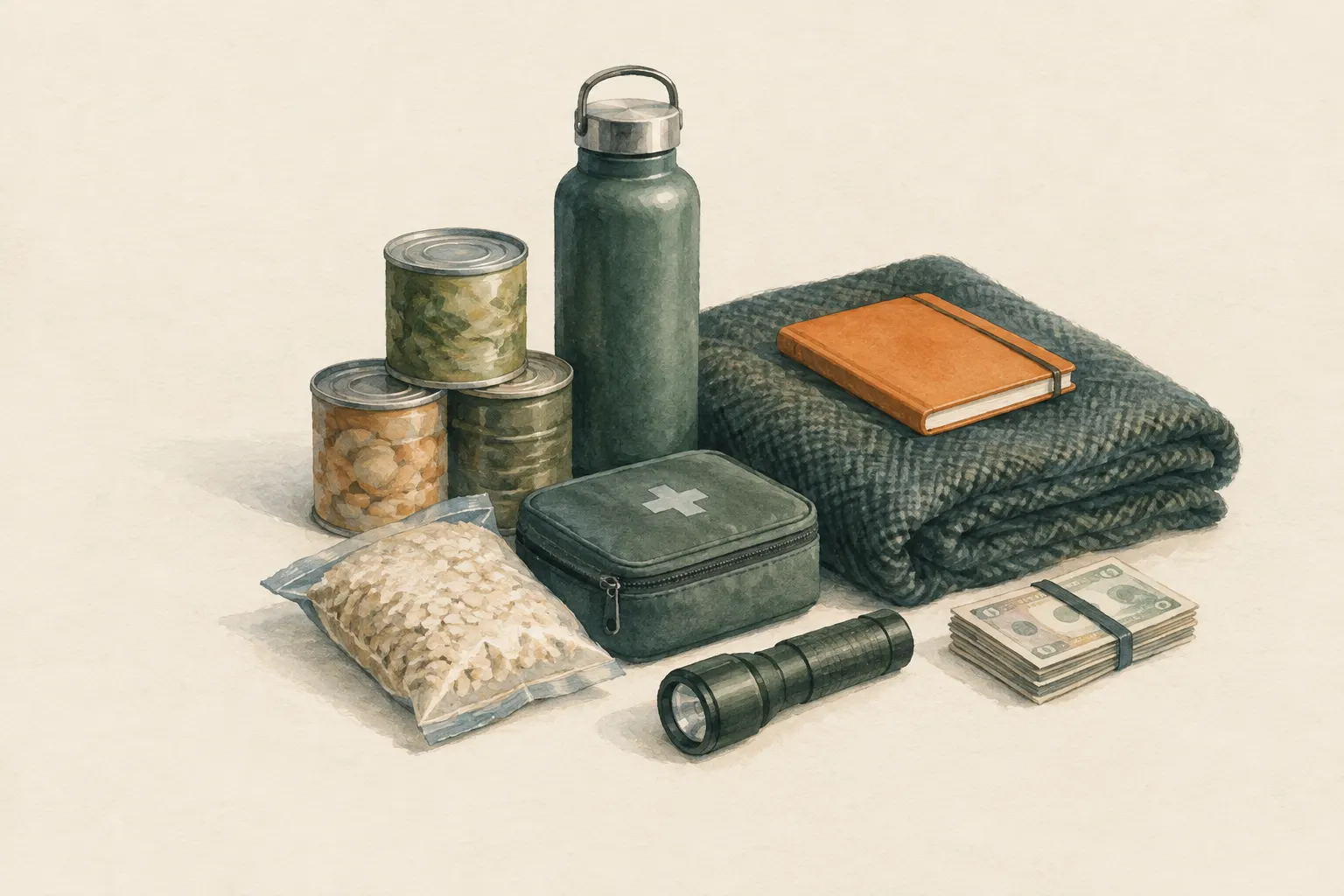
Explained simply
Preparedness does not mean spending a lot of money at once. Imagine a piggy-bank pantry: every time the family goes shopping, one extra packet of pasta or tin of beans goes into the trolley. After a few months a real stock has built up without it hurting.
The important thing: you only buy things you eat anyway. The oldest packets are used first and replaced on the next shopping trip. This is called “first in, first out”. That way nothing goes bad, and in the end the stock costs hardly more than normal shopping.
And you start with the most important things: water, medication, light and a radio. Expensive special gadgets come last – or not at all.
How it works
A stock of everyday food is not an extra cost but shopping done earlier. The tin of tomatoes you buy extra today you would have bought in a few weeks anyway. The only real difference is that you pay a little earlier, once – spread over many shopping trips this is hardly noticeable.
For this to work, the stock has to keep moving. New packets go to the back, old ones to the front. Whoever cooks always takes from the front. That keeps the stock fresh, and nothing expired ends up in the bin – because thrown-away food is what really makes preparedness expensive.
Preparedness also includes a small financial buffer: a small fixed amount put aside regularly, and some cash in small notes at home. In a power outage, card payments and cash machines may not work.
What really matters: the order
With little money you have to set priorities. The guiding question is: what runs out fastest in an emergency, and what is hardest to replace? At the very top are drinking water and the medication someone in the family really needs. Then come light and a battery or crank radio, so you can see in the dark and hear warnings.
Next is food that can be eaten without cooking, and things for hygiene. Only then come warmth, equipment and comfort. This order protects you from putting money into an expensive gadget while there is still no water in the cellar.
For prescription medication: do not hoard or ration on your own. Ask the doctor's practice or pharmacy whether and how a small reserve is possible. The answer depends on the medicine and on the rules in your country.
Saving money without saving on safety
Start with an inventory. Many households already have torches, blankets, tins, dressings and perhaps a camping stove for outdoor use. What is there does not need to be bought – it just needs to be found, checked and gathered in a fixed place.
Water can be stored cheaply. Bought bottled water is simplest. If you fill tap water yourself, use clean, food-grade containers and renew the water regularly; your authority's recommendations set the framework. Supermarket offers are good – but only for things the family actually eats.
Larger items can be shared: not every household in a building needs its own crank radio or camping stove for outdoor use if you agree with neighbours or relatives. Bulk packs can be split too.
Traps and typical mistakes
Be careful with expensive “crisis packages” and advertising that works with fear. Good preparedness consists mostly of perfectly ordinary products from the supermarket and DIY store. Anyone who tells you that you are lost without a particular product mainly wants to sell.
A common mistake is wanting to buy everything at once. That overstretches the budget, and many then give up altogether. Another mistake: storing food nobody likes and never touching it until everything has expired. Then you have paid twice.
Panic buying just before or during a crisis is the most expensive and least fair form of preparedness. It makes shortages worse for everyone. Those who prepare early and steadily do not need to go to the shops at all when it counts.
Good to know
Once a year it is worth looking at your insurance documents: what is covered for flood, storm or fire, and what is not? Asking costs nothing but can make a big difference when damage happens. If anything is unclear, get advice, because this entry is not financial or insurance advice.
How much of what you should store is set by the recommendations of the authority in your country; they differ by region. More important than a perfect amount is getting started: a small, well-kept stock is worth far more than a big plan that is never carried out.
Step by step
Take stock
What is already there? Torches, blankets, tins, alternatives to candles, first-aid supplies, a camping stove for outdoor use. Much does not need to be bought.
- 1
Take stock
What is already there? Torches, blankets, tins, alternatives to candles, first-aid supplies, a camping stove for outdoor use. Much does not need to be bought.
- 2
Set priorities
Order by urgency: drinking water, necessary medication, light and radio, food that needs no cooking, hygiene, then warmth and equipment.
- 3
A little more on every shopping trip
Buy one or two extra long-life products the family likes on each shopping trip. Use special offers, but only for things that will actually be used.
- 4
Store water cheaply
Bottled water is the simplest. Renew tap water you have filled yourself in clean, food-grade containers regularly.
- 5
A small emergency fund
Regularly put aside a small fixed amount, plus some cash in small notes at home. Check insurance once: what is covered for flood, storm or fire?
- 6
Use and replace
Use the oldest products first and replace them on the next shopping trip. That way nothing spoils, and the stock costs no extra money.
Common mistakes
- Wanting to buy everything at once and then giving up
- Storing food nobody eats
- Buying expensive gadgets before water and light
- Never using the stock until everything has expired
- Panic buying in a crisis
Quick view
Materials
Non-perishable food
Prefer food that can be eaten without cooking; consider allergies and dietary needs; do not forget a can opener.
Cash reserve
Store securely and discreetly.
Labels and permanent marker
Suitable for
- Households on a tight budget
- Beginners in preparedness
- Students and small flats
Not suitable for
- Panic buying shortly before or during a crisis
- Buying expensive specialist gear before the basics are in place
Prerequisites
- An overview of existing supplies and equipment
Safety
- For prescription medication, clarify with the doctor or pharmacy whether and how a small reserve is possible – do not hoard or ration on your own.
- Be wary of expensive "crisis packages" and offers that sell through fear. Good preparedness consists mostly of everyday products.
How it works
A stock made of food you eat anyway costs hardly more in the long run than normal shopping: you just buy earlier and use it on the principle "first in, first out". Priorities follow the question of what runs out fastest in an emergency and is hardest to replace.
Advantages
- Hardly any extra cost thanks to rotation
- Without pressure or rush
- Financial preparedness at the same time
Disadvantages
- Takes a few months until the stock is complete
- Needs some storage space
Deep knowledge
Background
The BBK recommends building up supplies gradually and choosing food you also eat in everyday life. Ready.gov advises building supplies over time and including financial preparedness – savings, cash, an insurance review.
Panic buying in acute crises makes shortages worse for everyone. Those who prepare early and steadily do not need to go to the shops when it counts.
Variants
- Preparing together
- Share larger items with neighbours or family, such as a crank radio or a camping stove for outdoor use, and split bulk packs.
Common mistakes
- Wanting to buy everything at once and then giving up
- Storing food nobody eats
- Buying expensive gadgets before water and light
- Never using the stock until everything has expired
- Panic buying in a crisis
Limits and risks
- No financial or insurance advice
- No quantities – your own authority's recommendations apply
Sources
Bundesamt für Bevölkerungsschutz und Katastrophenhilfe (BBK), Deutschland: Ratgeber für Notfallvorsorge und richtiges Handeln in Notsituationen
Building supplies gradually, choosing everyday food
Ready.gov – U.S. Federal Emergency Management Agency (FEMA): Build A Kit
Building and maintaining supplies over time
Ready.gov – U.S. Federal Emergency Management Agency (FEMA): Financial Preparedness
Savings, cash, reviewing insurance