Household checklists by season
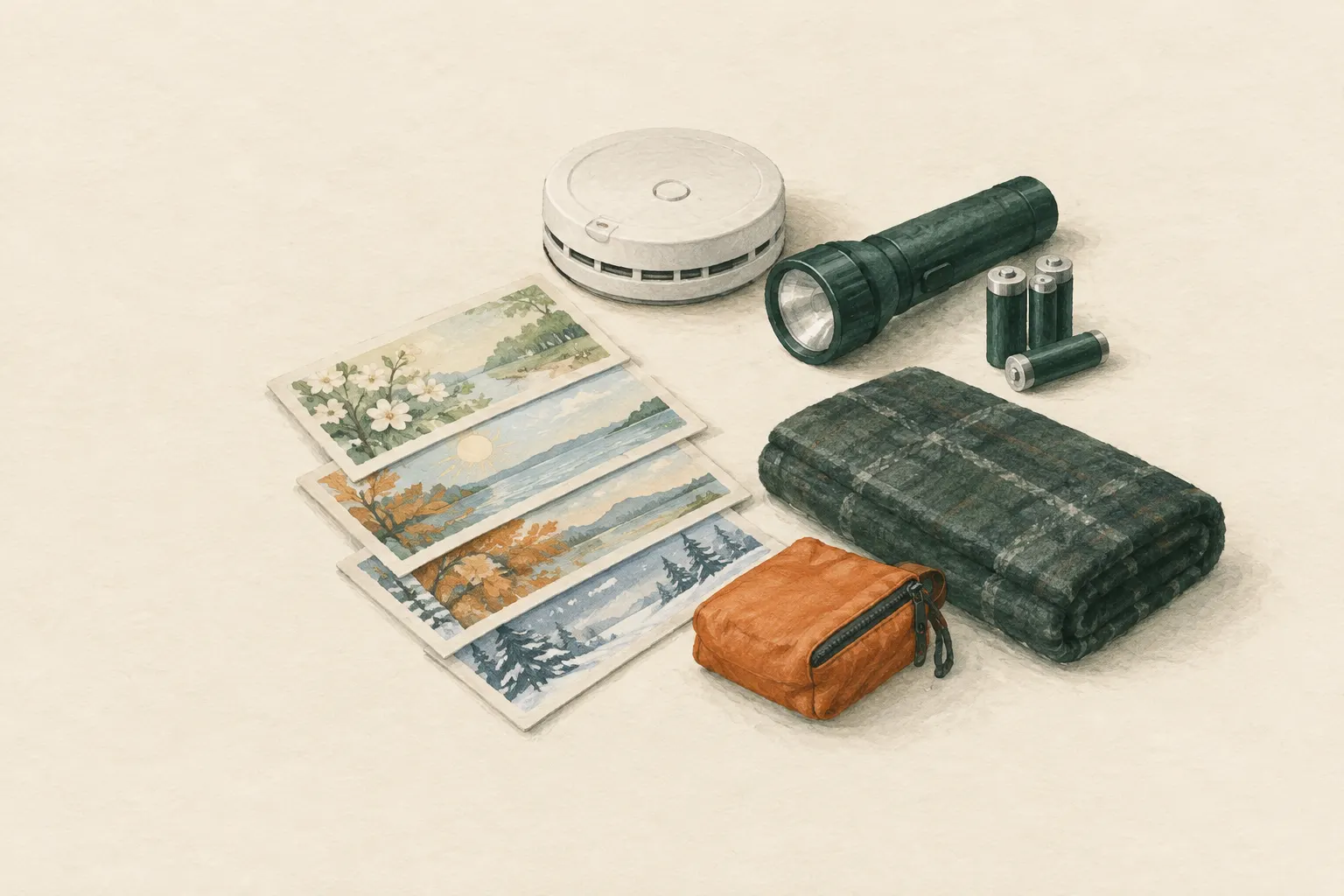
Preparedness stays alive when it is tied to fixed dates. Four short checklists – spring, summer, autumn, winter – combine maintenance (smoke alarms, batteries, supplies) with the risks of each season: heat, thunderstorms, storms, cold and snow.
- About 1 hour per season
Explained simply
Preparedness is a bit like a bicycle: if you buy it once and leave it in the cellar for a year, the tyre is flat when you need it. Batteries run down, food goes past its date, and the winter jacket in the go bag suddenly no longer fits. That is why you check regularly – most simply four times a year, once each season.
Each season brings its own dangers. In summer it can get very hot, in autumn storms come, in winter snow and frost. So the checklist always has two parts: things you check every time (for example whether the smoke alarm beeps when you press the test button) and things that matter right now.
The most important safety point: test smoke alarms and carbon monoxide alarms regularly. Carbon monoxide is a poisonous gas you can neither see nor smell – only an alarm notices it in time.
How it works
The trick is a fixed anchor in the calendar. People forget tasks that are meant to be done “some time”, but they remember dates linked to something familiar. Good anchors are the start of a season, the clock change (where there is one), the start of school after the holidays or a family birthday. Put the next date in the calendar straight after ticking off the list, so you do not have to remember it.
Each list has a fixed basic part and a seasonal part. The basic part is always the same: look at expiry dates of supplies and medication, check the water stock, charge batteries and power banks, test smoke alarms, update the contact list and the go bag. The seasonal part changes and follows what is likely to happen in the coming months.
This keeps the effort small: about an hour per season. Instead of sacrificing a whole day once a year, the work is spread out, and nothing stays broken or expired for long without anyone noticing.
What belongs to which season
Spring: after the winter it is worth looking at gutters and drains, because melting snow and spring rain bring a lot of water. It is also a good time to check the flood risk of your area and your insurance cover. Winter gear comes out of the car, is cleaned and stored for autumn, and after the long break the family practises the escape route once.
Summer: heat is an underestimated danger, especially for older people, small children and the sick. A heat plan sets out which room is coolest, how to keep it shaded during the day, that there is enough to drink and who checks on older neighbours or relatives. On trips, thunderstorm rules apply, and in dry spells you watch for wildfire warnings and barbecue bans – local rules take precedence.
Autumn and winter: before the storm season, loose things on the balcony and in the garden are secured. Before the heating season, have the heating, stove and chimney checked by professionals where this is required or recommended, and test the carbon monoxide alarm. In winter add a snow shovel, grit and winter gear for the car, protect water pipes in unheated rooms from frost, and have a plan for a heating failure: one room where everyone can keep warm.
Safety: what to watch out for
Smoke alarms and carbon monoxide alarms are the most important devices on the list. Test them as the manufacturer says, and replace batteries or whole devices in good time – alarms have a limited lifespan, usually stated on the device or in the instructions. An alarm that does not work only gives a false sense of safety.
Carbon monoxide forms when something burns incompletely, for example in a badly adjusted gas boiler or a blocked chimney. The gas is invisible and odourless. That is why the professional check before the heating season matters so much, and why testing the CO alarm belongs on the autumn list. Work on gas, heating and electrics belongs in the hands of professionals.
The checklist does not replace warnings. When the authorities warn of a storm, flood or heat, their instructions apply – even if your own list says something else at that moment.
Adapting it to your region
The four lists are a suggestion for a temperate climate with distinct seasons. If you live by the coast, put more weight on storm surges; by a river, on floods; in the mountains, on snow and roads being cut off. In regions with rainy and dry seasons or a hurricane season, the dates follow those periods instead of spring and autumn.
A good way to learn about your own risks is the information from your municipality, civil protection agency or weather service. Many authorities publish hazard maps, for example for floods. Also ask older neighbours what happened in past decades – they often remember events that appear on no list.
How to make it a habit
Make the check a small family ritual. Children can test torches, try on the clothes in the go bag or read out expiry dates. Those who join in also know afterwards where everything is. Afterwards there can be something nice – that way the family links the date with something pleasant.
Write the date of the check on the list or in a notebook and note what was missing or replaced. Over time you will see what regularly expires or breaks and can plan your shopping better. Food that will soon expire moves to the kitchen and is eaten over the next few weeks.
Step by step
Every time
Expiry of supplies and medication, water stock, charge batteries and power banks, test smoke alarms, update contact list and go bag, check children's clothing in the bag for size.
- 1
Every time
Expiry of supplies and medication, water stock, charge batteries and power banks, test smoke alarms, update contact list and go bag, check children's clothing in the bag for size.
- 2
Spring
Check gutters and drains, review flood risk and insurance, take winter gear out of the car and clean it, an escape-route drill after the winter break.
- 3
Summer
Heat plan: coolest room, shading, drinking supply, include neighbours and older relatives. Thunderstorm rules for trips, observe wildfire danger and barbecue bans.
- 4
Autumn
Storm preparation: secure loose objects on the balcony and in the garden. Have the heating checked, test carbon monoxide alarms, put blankets and warm clothing ready, top up winter supplies.
- 5
Winter
Winter gear in the car, grit and snow shovel, a plan for heating failure (one warm room), protect water pipes in unheated areas from frost.
- 6
Tick off and note
Note the date of the check and put the next date in the calendar.
Common mistakes
- Setting up preparedness once and then forgetting it
- Not knowing the seasonal risks of your own region
- Never testing smoke alarms
- Looking for winter gear only at the first snow
Quick view
Materials
Labels and waterproof marker
For expiry dates
Spare batteries
Store cool and dry, observe the expiry date; keep button cells out of children's reach.
First-aid kit (household)
Does not replace a first-aid course; check contents and expiry dates regularly.
Suitable for
- All households
- Families who want to anchor preparedness in everyday life
- Regions with distinct seasons
Not suitable for
- A substitute for acute warnings – in concrete danger the authorities' instructions apply
Prerequisites
- Basic supplies and an emergency plan
- Knowing the typical risks of your own region
Safety
- Test smoke and carbon monoxide alarms according to the manufacturer and replace batteries or devices in good time.
- Have heating systems, stoves and chimneys checked by professionals before the heating season where this is required or recommended – carbon monoxide danger.
How it works
Fixed dates prevent preparedness from falling asleep. The clock change or the start of each season are good anchors. Each checklist has two parts: what is always checked (supplies, batteries, alarms, plan) and what becomes important seasonally now.
Advantages
- Keeps supplies fresh and devices working
- Spreads effort over the year
- Links preparedness with everyday routines
Disadvantages
- Must be adapted to your own region
- Requires discipline with the dates
Deep knowledge
Background
Ready.gov and the BBK recommend checking and replenishing supplies regularly and preparing for the typical hazards of your own region. Linking this to fixed dates is a proven way to make sure maintenance is not forgotten.
The lists here are suggestions for a temperate climate with four seasons; the local authorities' advice is what counts.
Variants
- Adapt to climate and region
- In regions without a marked winter or with rainy and dry seasons, adapt the checklists to local risks, such as hurricane season or monsoon.
Common mistakes
- Setting up preparedness once and then forgetting it
- Not knowing the seasonal risks of your own region
- Never testing smoke alarms
- Looking for winter gear only at the first snow
Limits and risks
- No complete list of all risks
- No legal maintenance obligations – these differ by region
Sources
Ready.gov – U.S. Federal Emergency Management Agency (FEMA): Build A Kit
Checking and replenishing supplies regularly
Bundesamt für Bevölkerungsschutz und Katastrophenhilfe (BBK), Deutschland: Ratgeber für Notfallvorsorge und richtiges Handeln in Notsituationen
Regular checks of supplies, preparation for severe weather and cold