Heavy snow and ice storms
Snowstorms and freezing rain paralyse traffic and power grids, make roofs collapse under snow load and trees break under ice, and make every step risky. If you stay home, are prepared, know the carbon monoxide dangers and do not climb onto roofs, you get through safely.
- Preparation in autumn; 30 minutes when warned
Explained simply
Snow looks light and soft. But when a lot of it falls, it becomes really heavy – especially wet snow. Then branches can snap, power lines can break and even roofs can carry too much weight. Freezing rain is even trickier: rain falls and freezes the moment it lands, coating everything in a glassy layer of ice.
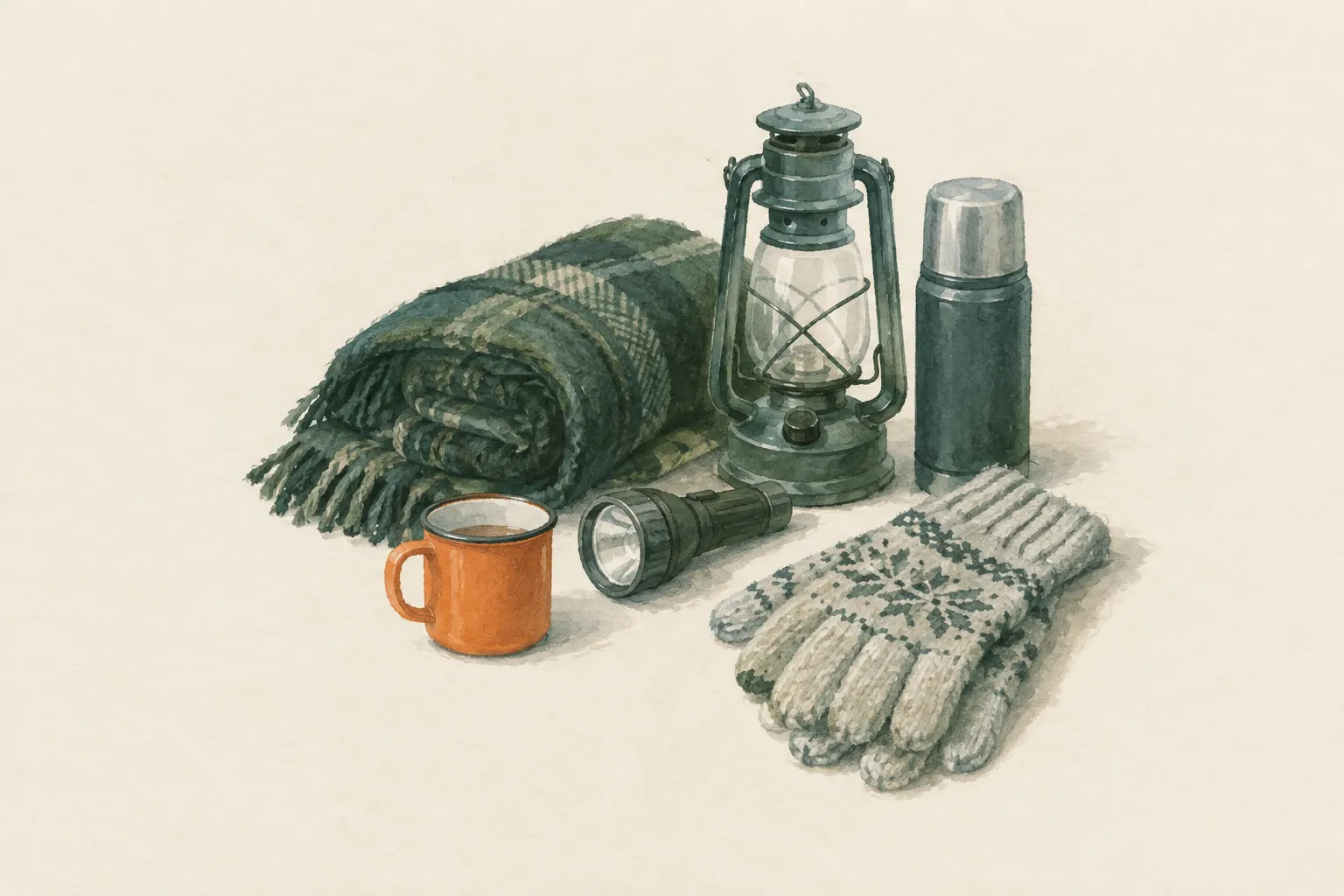
In weather like this the best thing is: stay at home, keep warm and wait. Outside every step is slippery, and driving becomes dangerous. It is good to have enough food, drinks, blankets and torches in the house so you do not have to go shopping for a few days.
One very important rule: never use a grill, gas heater or camping stove inside your home for heating. They produce an invisible gas with no smell, carbon monoxide, and it is poisonous. If someone gets a headache, feels dizzy or sick, go out into fresh air at once and call the local emergency number (112 in the EU).
How it works
Snow and ice act mainly in two ways: through their weight and through slipperiness. Wet, heavy snow weighs considerably more than light powder snow, and when rain falls into a snow cover, it soaks it up like a sponge. The load on roofs, trees and lines therefore grows with every hour. How much a roof can bear depends on its construction and the type of snow – only professionals can judge that.
Freezing rain forms when rain falls through a warm layer of air and then meets cold air and frozen ground near the surface. The drops are supercooled and freeze the moment they hit something. This forms a smooth, often barely visible layer of ice on roads, pavements, branches and lines. Under this load branches break and lines snap – which is why freezing rain often leads to power cuts.
At the same time the risk of falling rises, both on foot and in the car. Many accidents in winter storms are therefore not dramatic events but falls, overexertion when shovelling snow and poisonings from improperly used heat sources. Exactly these accidents can be avoided with simple rules.
What really matters
Preparation starts in autumn. Lay in supplies for a few days, plus blankets, torches, a battery-powered radio, grit and a snow shovel. Equip the car for winter and protect water pipes in unheated rooms from frost. Think about what you will do if the heating fails – because in a power cut many modern heating systems stop working too.
When there is a warning, stay at home if possible. Postpone journeys, charge devices and check that there is enough medication. Ask older neighbours whether they need anything. If the heating fails, keep one room warm, close the doors to the other rooms and wear several layers of clothing.
When clearing snow: little and often is better than a lot at once. Shovel small amounts, take breaks and keep not only the paths but also the heating's vent openings clear. When walking, small steps, sturdy shoes with tread and free hands help, so you can catch yourself. Under eaves, watch out for sliding snow and icicles.
Safety: what to watch out for
Carbon monoxide is one of the greatest dangers in winter. It is produced by any burning, is colourless, odourless and can be deadly indoors. Never use a grill, gas heater, camping stove or generator for heating in the home, the garage or a tent. Keep flues and the exhaust of a stationary car clear of snow. With headache, dizziness or nausea, get into fresh air at once and call the local emergency number (112 in the EU). A carbon monoxide alarm is a sensible addition.
Do not climb onto snowy or icy roofs – the risk of falling is high. If there is creaking under a heavy snow load, cracks appear or ceilings sag, leave the building and call professionals or the fire service. In freezing rain, avoid paths under trees and overhead lines, because branches and lines can break under the weight of the ice.
Shovelling snow is heavy physical work, especially with wet snow and in the cold. Take breaks and dress warmly. If you have chest pain, stop at once and get help. If you get stuck in your car, stay in the vehicle and keep the exhaust clear so that no exhaust fumes get into the car.
Typical situations
A typical scenario: freezing rain overnight, everything is as smooth as glass in the morning, and the power is out in several places. If you have supplies at home, you can simply stay inside until gritting has been done. If you have to go out, walk slowly, avoid paths under trees and expect buses and trains not to be running.
Another scenario: days of snowfall in an upland region. Roads are closed at times, and getting to the supermarket is no longer possible. A stock for a few days, a radio for news and a plan for heating failure make the difference between inconvenience and real danger.
Older people and people living alone are particularly at risk. They fall more easily, get cold faster and often cannot clear snow or go shopping themselves. A phone call or a short visit, a shovelled path or some shopping brought along are simple but very effective forms of help.
Step by step
Beforehand: winter preparedness
Supplies for a few days, blankets, torches, radio, grit, snow shovel. Car with winter equipment. Protect water pipes in unheated rooms from frost.
- 1
Beforehand: winter preparedness
Supplies for a few days, blankets, torches, radio, grit, snow shovel. Car with winter equipment. Protect water pipes in unheated rooms from frost.
- 2
When warned: stay home
Postpone journeys, charge devices, check medication. Ask older neighbours whether they need anything.
- 3
Keep warm
If the heating fails, keep one room warm, close doors, wear layers. See the entry on heating failure.
- 4
Clear paths sensibly
Keep paths and vent openings clear, shovel small amounts, take breaks. Not onto the roof.
- 5
Walk safely
Small steps, hands free, sturdy shoes with tread. Watch out for roof avalanches and icicles under eaves.
- 6
If driving is necessary
Only with winter equipment, a full tank and an emergency kit. If stranded, stay in the vehicle and keep the exhaust clear.
Common mistakes
- Heating the home with a grill or gas heater
- Climbing onto the roof to clear snow
- Shovelling large amounts of snow without breaks
- Setting off despite a warning
- Letting the heating's vent openings get snowed in
Quick view
Materials
Wool blanket / duvet
Keep away from candles, stoves and heaters.
Battery or crank radio
Check batteries regularly and keep spares.
Snow shovel
Always take it inside when digging a snow shelter.
Sturdy closed shoes
With good tread, possibly ice cleats
Carbon monoxide alarm
Does not replace the rule never to run combustion devices indoors. Choose battery-powered or with battery backup.
Suitable for
- Snowy regions and low mountain ranges
- Freezing-rain events in lowlands
- Households with older people
Not suitable for
- Shovelling roofs yourself without fall protection
- Unnecessary car journeys during the warning
Prerequisites
- Supplies for a few days without shopping
- A plan for heating failure
Safety
- Shovelling snow is heavy physical work. Take breaks, dress warmly, stop at once and get help if you have chest pain.
- In freezing rain branches and lines break under the weight of ice. Avoid paths under trees and overhead lines.
How it works
Snow and ice act through weight and slipperiness. The load on roofs, trees and lines increases every hour, especially with wet snow and freezing rain. At the same time the risk of falls rises. Staying indoors, keeping warm and not using improvised heat sources avoids the most common accidents and poisonings.
Advantages
- Prevents common accidents and poisonings
- Preparation helps all winter
Disadvantages
- Several days of restrictions are possible
Deep knowledge
Background
For winter weather Ready.gov recommends staying home, avoiding carbon monoxide dangers from generators and improvised heating, avoiding overexertion when shovelling snow and equipping vehicles with emergency kits. The CDC points out that carbon monoxide poisonings are common during winter storms and power outages.
How much snow a roof can bear depends on its construction and the type of snow; when in doubt, professionals assess the situation.
Variants
- Freezing rain
- In freezing rain plan especially for power outages and ice. If possible do not go out at all until gritting has been done.
Common mistakes
- Heating the home with a grill or gas heater
- Climbing onto the roof to clear snow
- Shovelling large amounts of snow without breaks
- Setting off despite a warning
- Letting the heating's vent openings get snowed in
Limits and risks
- No figures on roof load capacity
- No avalanche knowledge – see the mountain entries
Material alternatives
Derived from material properties: a substitute must have all relevant properties. Observe the notes on the substitute.
- Wool blanket / duvet
- Sleeping pad, Dry leaves, grass or conifer boughs (Collect only where allowed; no protected plants. Check for ticks and insects.), Backpack, Dry spare clothing (Carry it in waterproof packaging – wet clothing barely insulates.), Insulated cool box (Keeps cold only for a limited time; without ice packs or ice it is not a fridge.), Sleeping bag (Do not store compressed long-term; do not pack away damp.), Newspaper and cardboard (Flammable – keep away from candles, stoves, heaters and embers.), Insulated cooking box (hay box, thermal cooker) (Never put open flame or embers inside – only the hot, closed pot.)
Results come exclusively from structured entries. No improvised instructions are generated.
Sources
Ready.gov – U.S. Federal Emergency Management Agency (FEMA): Winter Weather
Staying home, carbon monoxide, overexertion when shovelling, vehicle emergency kit
Centers for Disease Control and Prevention: Carbon Monoxide Poisoning – Prevention guidance
No combustion devices indoors, keeping vents clear