Keeping distance from wildlife and behaviour in encounters
Most dangerous encounters with wildlife happen because people get too close, surprise animals or feed them. Keeping your distance, not crowding animals, keeping dogs on a lead and making yourself noticed in terrain with poor visibility prevent this. How to behave in an encounter with large animals such as bears, moose or wild boar depends on the species and region – the guidance of the local park or wildlife authority is decisive.
- 15 minutes of research before the trip; attention on the way
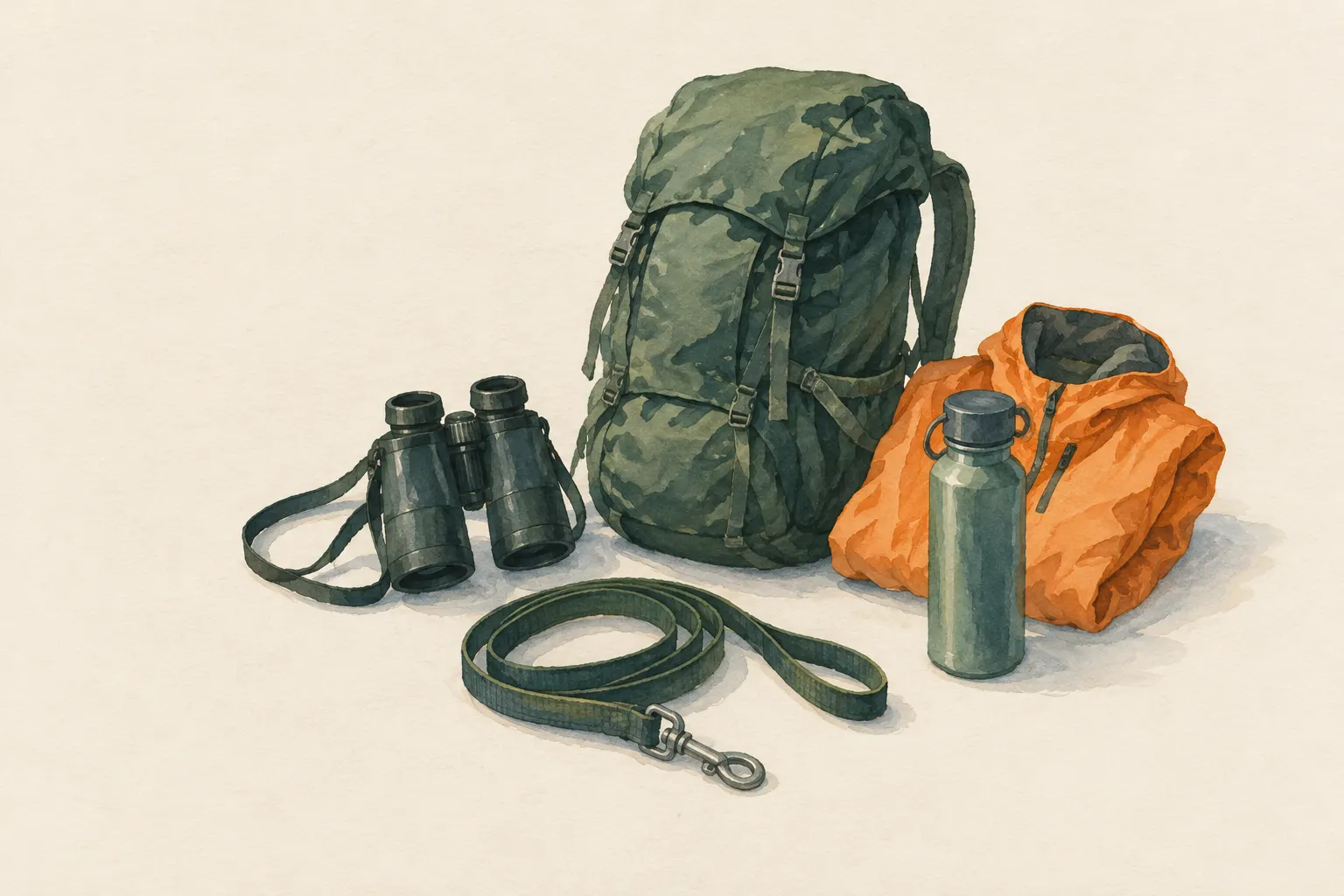
Explained simply
Wild animals are not pets. Most of them are afraid of people and run away when they notice us. Danger almost always arises when people get too close, surprise an animal or feed it. Imagine a stranger suddenly standing right in front of you – you would get a fright too.
So there is a simple rule: keep your distance. Watch animals through binoculars rather than walking closer. If an animal changes its behaviour because it has noticed you – it raises its head, stops eating or becomes restless – then you are too close. Calmly move back a bit.
Very important: never feed wild animals, even if they seem tame and cute. And what exactly to do if you meet a large animal such as a bear or a wild boar differs by animal and region. The experts on site explain that – read their guidance before your trip.
How it works
Most wild animals react to people by fleeing. Every animal has a kind of invisible bubble around it: when something unfamiliar enters, it becomes alert, and if it comes closer still, the animal runs away. How large this bubble is depends on the species, the season and the animal's experience with people. As long as the animal has room to move away, an encounter usually resolves itself.
Things become difficult when an animal cannot or will not move away. That happens when it is surprised, when its escape route is blocked or when it is defending something important – its young or its food. Then even a normally shy animal may defend itself. Distance gives the animal the choice to leave, and attentiveness keeps you from surprising it at close range.
Animals that have been fed are a special case. They lose their natural shyness and associate people with food. Such animals come closer, beg or become pushy. That is dangerous for people and often fatal for the animals, because in the worst case the authorities then have to kill them.
What really matters
Preparation is the most important part. Before your trip, read the guidance of the local park or wildlife authority: which large animals live there? Which distances are recommended? Is certain equipment required? These rules differ greatly from area to area, which is why this entry deliberately gives no fixed numbers in metres.
On the way, it helps to make yourself noticed where visibility is poor – in dense forest, by noisy streams or before blind bends. Talk loudly or call out now and then. That way animals hear you early and can move away before you suddenly come face to face.
If you bring a dog, keep it on a lead. Dogs running free can flush and chase wild animals. Some animals then turn round and chase the dog – which may well run straight back to you, bringing the animal along. Lead requirements in protected areas exist for exactly this reason.
Safety: what to watch out for
Three situations are especially delicate: mothers with young, animals at food or at a carcass, and animals you surprise at close range. Avoid them by a wide margin. Never get between a mother and her young – even if the young animal seems alone, the mother is often nearby.
If an encounter does happen, the first rule is: stay calm, increase the distance, leave the animal a way out and keep it in view. Do not walk towards the animal to drive it away. What else is right – standing still, making yourself look big, backing away slowly or using spray – depends on the species. Only the local authority's rules apply here, because a misapplied rule can make an encounter worse.
If a wild animal bites or scratches you, have the wound checked by a doctor even if it looks small. For serious injuries call the local emergency number (112 in the EU). Report animals that have lost their shyness, seem sick or pester people to the park administration or the relevant authority.
Typical situations
The classic example is the photo. An animal stands by the path, everyone pulls out a phone, and step by step the distance shrinks. Better: stand still, use binoculars or zoom and leave the animal in peace. A photo from a distance shows a natural, calm animal – a close-up usually shows a stressed one.
You also meet wildlife on roads, especially at dusk along forest edges. Drive more slowly there. If an animal stands on the road, brake, dip your headlights, sound the horn and do not swerve dangerously – swerving can be more dangerous than the animal itself.
In the forest a young animal sometimes looks abandoned. Often the mother has only left it lying there and will come back. Do not touch it and do not take it with you. If you are worried, report it to the relevant authority and move on.
Good to know
The US National Park Service and the Leave No Trace principles agree: observe wildlife from a distance, never feed it and do not crowd it. For bears, the National Park Service publishes detailed, area-specific guidance.
You may have heard general rules such as “run away” or “play dead”. Rules of thumb like these are right for some animals in some situations and exactly wrong for others. That is why this entry leaves them out and refers you to the local authority, which knows its animals best.
Step by step
Find out beforehand
Read the guidance of the park or wildlife authority: which animals are there, which distances and rules of behaviour apply, which equipment is recommended or required?
- 1
Find out beforehand
Read the guidance of the park or wildlife authority: which animals are there, which distances and rules of behaviour apply, which equipment is recommended or required?
- 2
Make yourself noticed
In dense forest, by streams or around bends with poor visibility, talk or call out occasionally so animals notice you early and can move away.
- 3
Keep your dog on a lead
Dogs running free can flush, chase or lead wild animals back to you. Observe lead requirements.
- 4
Observe from a distance
Use binoculars or a telephoto lens instead of approaching. Never get between a mother and her young, never block an animal's escape route.
- 5
During an encounter
Stay calm, increase the distance, leave the animal a way out and keep it in view. What else to do – for example whether to stand still, make yourself look big or use spray – depends on the species: the local authority's rules apply here.
Do not walk towards the animal to drive it away.
- 6
Report unusual behaviour
Report animals that have lost their shyness, seem sick or pester people to the park administration or relevant authority.
Common mistakes
- Getting closer for a photo
- Feeding wildlife
- Letting dogs run free
- Standing between a mother and her young
- Applying rules from another region
Quick view
Materials
Binoculars
Observe without approaching
Never look directly at the sun.
Suitable for
- Hiking, camping and nature watching
- Travel to areas with large wildlife
- Walks with a dog
Not suitable for
- Species-specific rules of behaviour – these are set by the local authority
Prerequisites
- Information from the local park or wildlife authority about the area
- Knowing which large wild animals live there
Safety
- How to react to an encounter with a specific species differs by animal and region. Before the trip, read and follow the guidance of the local park or wildlife authority.
How it works
Wild animals mainly react to people by fleeing – as long as they have room to do so and are not surprised. It becomes dangerous when an animal feels threatened, defends its young or its food, or has lost its shyness of people through being fed. Distance gives the animal the chance to move away; attentiveness prevents surprises at short range.
Advantages
- Protects people and animals
- No effort
- Better observation because animals stay calm
Disadvantages
- Requires preparation for each region
- No guarantee against encounters
Deep knowledge
Background
The US National Park Service and the Leave No Trace principles consistently stress observing wildlife from a distance, never feeding it and not crowding animals. The National Park Service gives detailed, area-specific behaviour guidance for bears.
Precisely because the right reaction in an encounter depends on the species, this entry deliberately gives no general rules such as “run away” or “play dead”. Misapplied rules can make an encounter worse.
Variants
- Wildlife on roads
- Drive more slowly at dusk along forest edges. If an animal stands on the road, brake, dip the headlights, sound the horn and do not swerve dangerously.
Common mistakes
- Getting closer for a photo
- Feeding wildlife
- Letting dogs run free
- Standing between a mother and her young
- Applying rules from another region
Limits and risks
- No species-specific rules of behaviour
- No minimum distances in metres – they differ by area
Sources
Leave No Trace Center for Outdoor Ethics: The Seven Principles of Leave No Trace (Principle 5: Minimize Campfire Impacts)
Observe wildlife from a distance, do not feed, do not follow
U.S. National Park Service: Bear Safety
Keep distance, do not feed bears, area-specific behaviour guidance