Interpreting feeding signs, scat, rubs and trails
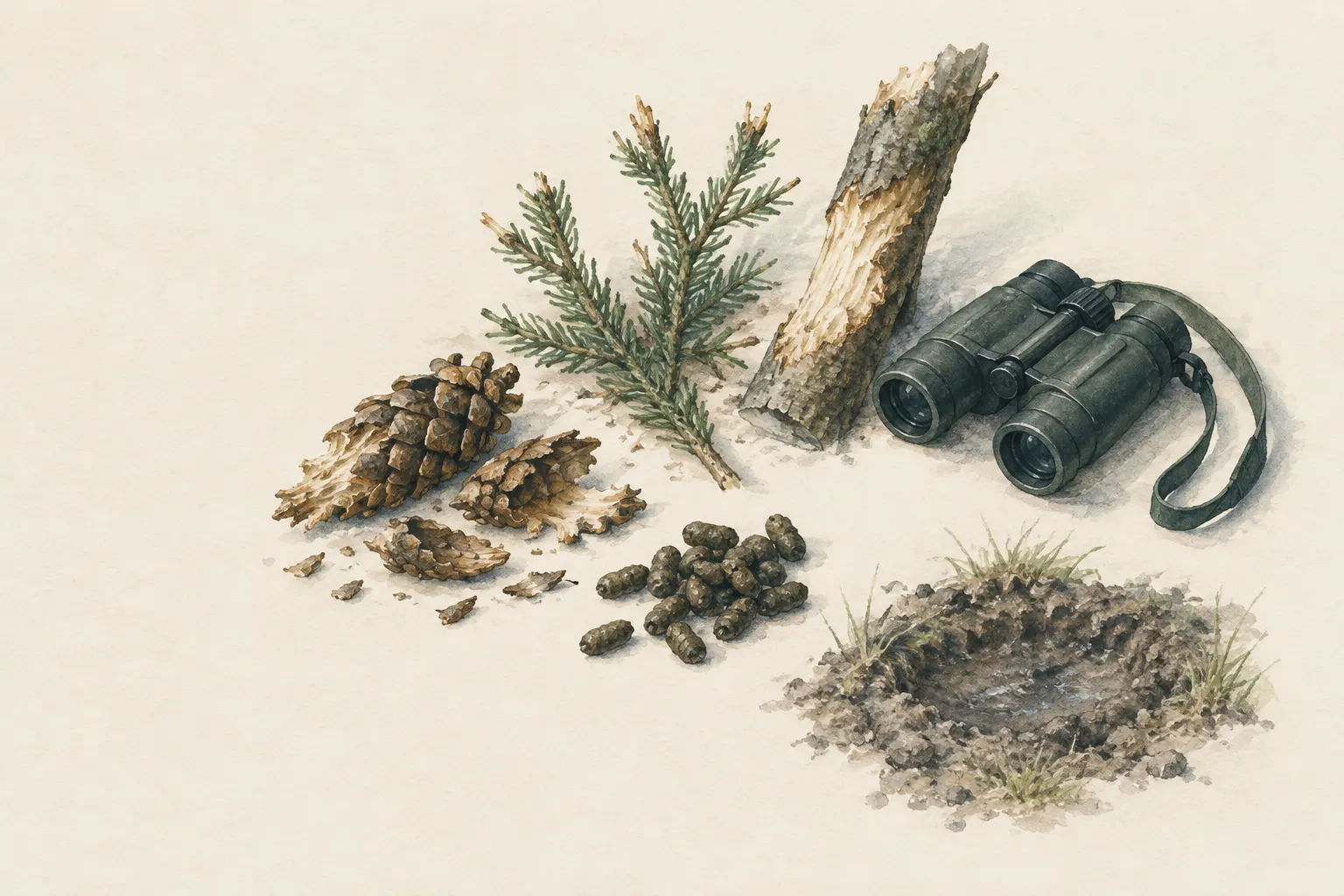
Even without footprints the landscape shows who lives there: gnawed cones and nuts, browsed shoots, stripped bark, rubs on trees, wallows, rooted-up ground, well-worn trails and scat. These signs are looked at and photographed – not touched. They show how intensively an area is used and help in choosing rest and camp sites.
- Along the way on any hike
Explained simply
Animals leave more than footprints. They nibble, bite, scratch and rub – and you can see it. A cone reduced to a gnawed stalk, a twig with its tip bitten off, or a patch of ground that looks ploughed: all of these are signs that animals have fed here.
Animal droppings, which trackers call scat, are also such a sign. They show that an animal was here. But careful: you never touch scat and you do not sniff it either. It can contain germs and worm eggs that make people ill. Looking and photographing are quite enough.
One more important rule: just because an animal eats something does not mean it is edible for people. Animals tolerate many plants and fungi that are poisonous to us. Feeding signs tell you who lives here – not what you can eat.
How it works
Every group of animals feeds in its own way, and that leaves characteristic signs. Rodents have sharp incisors and leave fine tooth marks on nuts, cones or bark. Hoofed animals such as roe deer or red deer have no upper front teeth and tend to tear shoots rather than cut them cleanly – so the break looks ragged. Wild boar root up the ground with their snouts to get at roots and small creatures.
Besides feeding signs there are markings. Deer rub their antlers and foreheads on young trees, scraping off bark; these are called rubs. Some animals roll in mud holes known as wallows. Hair on fences or tree trunks shows where animals have rubbed or squeezed through.
Frequently used game trails are narrow, worn paths that often lead to water, cover or food. They sometimes cross hiking trails at right angles or run under fences. Together, all these signs give a picture of how heavily an area is used – even where the ground is too hard for footprints.
Safety: what to watch out for
Never touch scat, pellets – balls of hair and bone coughed up by owls and other birds –, carcasses or hair with bare hands, and do not sniff them. They can contain pathogens and parasite eggs, in Central Europe for example those of the fox tapeworm. Do not poke at anything with sticks, break anything apart or take anything with you. After the outing and before eating, wash your hands thoroughly.
A fresh carcass is a warning sign. It may be guarded or revisited by a large predator – an animal that eats other animals. Leave the spot immediately and give it a wide berth. Also do not follow drag marks leading to a carcass.
And once more, because it matters so much: the fact that an animal eats a plant, berry or fungus says nothing about whether it is edible for people. Many animals tolerate things that are poisonous to us. Only eat what you know for certain – and feeding signs are never proof of that.
What really matters
Look at two heights: on the ground and at eye level. Under trees you find gnawed cones and nut shells, on shrubs bitten-off shoots, on trunks stripped bark or rubs, on fences hair. Narrow, flattened paths and gaps under fences show you game trails.
Photograph every sign with an object of known size beside it. With a bitten twig it helps to photograph the break up close – cleanly cut or ragged? At home, compare with a regional field guide. Attribution to a particular species often remains uncertain, and that is fine.
Above all, pay attention to quantity and freshness. A single gnawed cone says little. Many fresh signs in one place, on the other hand, mean: there is regular activity here. Such places are exciting to watch from a distance, but not a place for your tent.
Typical situations
Feeding signs often remain visible much longer than footprints and also work on hard ground. On a dry summer day in the forest you may not find a single print, but under a spruce a pile of stripped cones and on a young beech bitten-off buds. That is already enough to know that animals move through here.
On the banks of streams and lakes, food remains such as opened shells, fish remains or gnawed trunks show which animals use the water. Here too: observe only, touch nothing.
With children it becomes a game: who finds the first gnawed cone, the first rub, the first game trail? It is important to make the rule clear from the start: we look with our eyes and take photos – nothing gets touched.
Good to know
Tracking guides such as Mark Elbroch's standard work on North American mammal tracks cover feeding signs, scat, markings and trails in detail, because they are often found more often than clear footprints.
In this knowledge base these signs serve awareness and nature experience. You will deliberately not find identification keys for scat or feeding signs here. For exact identification, regional field guides, conservation organisations or wildlife authorities are the right contacts.
Step by step
Search at eye level and on the ground
Look for browsed twigs, stripped bark, rubs, hair on fences and gnawed cones or nuts beneath trees.
- 1
Search at eye level and on the ground
Look for browsed twigs, stripped bark, rubs, hair on fences and gnawed cones or nuts beneath trees.
- 2
Recognise trails
Narrow, worn paths crossing hiking trails, gaps under fences and flattened vegetation indicate regularly used trails.
- 3
Only with eyes and camera
Photograph scat and feeding signs with an object of known size beside them. Do not touch, pick up or break apart with sticks.
- 4
Estimate usage
Many fresh signs in one place mean regular traffic. Such places are not campsites.
- 5
Wash hands
After the outing – and before eating – wash or disinfect hands thoroughly, especially after contact with the ground in heavily used areas.
Common mistakes
- Touching or smelling scat
- Inferring edible plants from feeding signs
- Camping directly on a game trail
- Approaching a fresh carcass
Quick view
Materials
Mobile phone
Photos with a size reference
The battery drains quickly in cold and with continuous screen and GPS use.
Do not plan on it as your only means of navigation or emergency calls.
Binoculars
Never look directly at the sun.
Suitable for
- Nature observation in forests and at forest edges
- Judging whether a campsite lies in heavily used wildlife habitat
- Nature education
Not suitable for
- Collecting or examining scat with bare hands
- Conclusions about plant edibility (“animals eat it, so it is safe”)
Prerequisites
- Willingness to touch nothing
- Knowledge of the area's path rules
Safety
- The fact that an animal eats a plant or fungus says nothing about whether it is edible for humans.
- A fresh carcass may be guarded or revisited by a large predator – leave the area immediately and give it a wide berth.
How it works
Animals feed, mark and move in characteristic ways. Rodents leave tooth marks, hoofed animals tend to tear shoots rather than cut them cleanly, wild boar root up the ground, deer rub antlers and foreheads on young trees. Frequently used trails are narrow, worn paths that often lead to water, cover or food. The amount and freshness of such signs show how heavily an area is used.
Advantages
- Signs remain visible longer than footprints
- Works on hard ground
- Shows how an area is used
Disadvantages
- Attribution to species is often uncertain
- Health risk if handled carelessly
Deep knowledge
Background
Tracking guides cover feeding signs, scat, markings and trails in detail alongside prints, because they are often found more often than clear footprints.
In this knowledge base these signs serve awareness and nature experience. For identification, regional field guides, conservation organisations or wildlife authorities are the right contacts.
Variants
- On coasts and waters
- On the shore, food remains such as opened shells, fish remains or gnawed trunks show which animals use the water. Here too: observe only.
Common mistakes
- Touching or smelling scat
- Inferring edible plants from feeding signs
- Camping directly on a game trail
- Approaching a fresh carcass
Limits and risks
- No identification keys for scat or feeding signs
- No statements about the edibility of plants or fungi
Material alternatives
Derived from material properties: a substitute must have all relevant properties. Observe the notes on the substitute.
- Mobile phone
- Headlamp / flashlight, Battery lantern / LED light
Results come exclusively from structured entries. No improvised instructions are generated.
Sources
Mark Elbroch – Stackpole Books (2003): Mammal Tracks & Sign: A Guide to North American Species
Feeding signs, scat, markings and trails as animal sign
Leave No Trace Center for Outdoor Ethics: The Seven Principles of Leave No Trace (Principle 5: Minimize Campfire Impacts)
Do not disturb wildlife, keep your distance