Making an emergency contacts card for travel
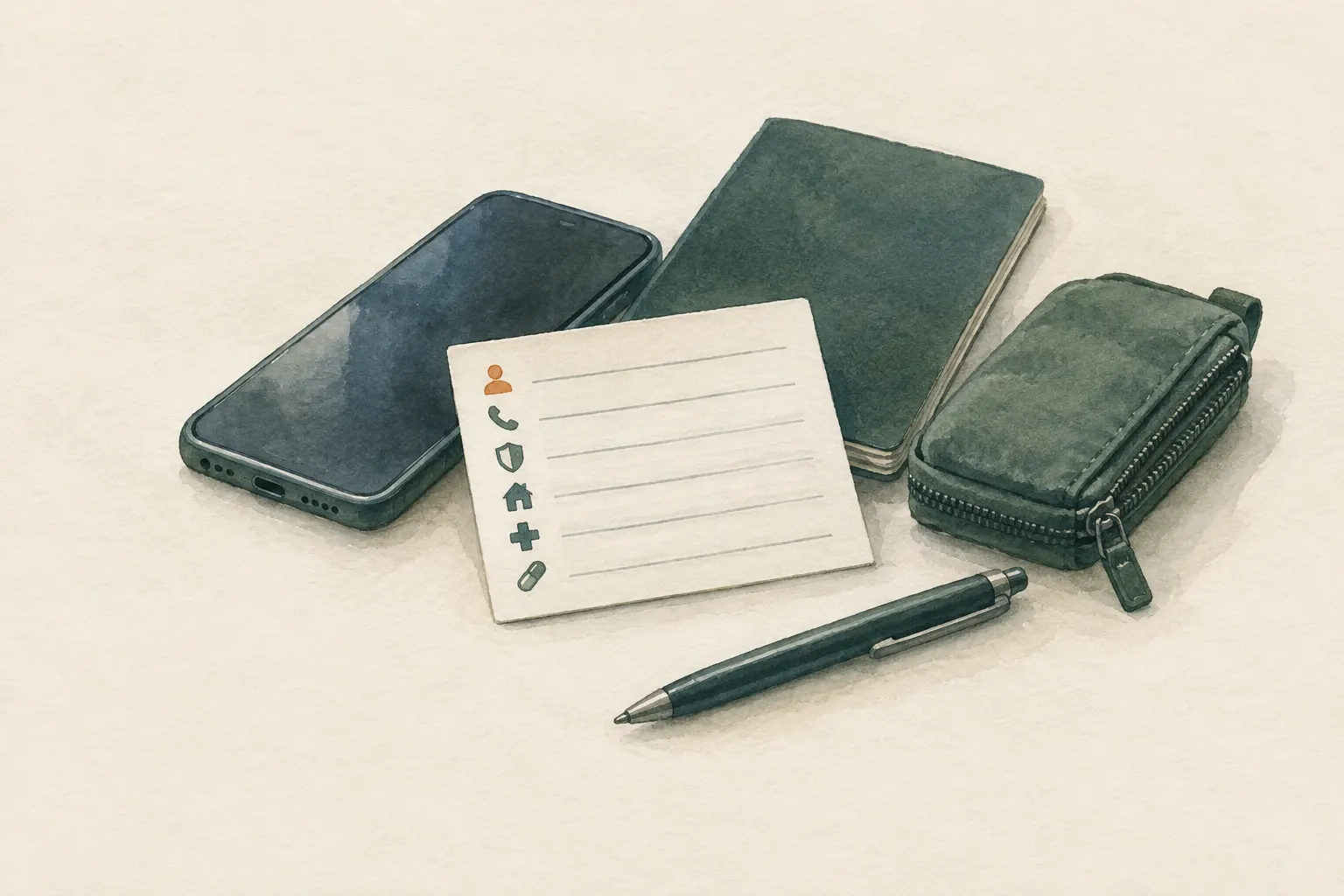
If the phone is flat, stolen or locked, all numbers are suddenly gone. A small paper card with emergency contacts (with country codes), the local emergency number, embassy, insurer, lodging and allergies and essential medication helps you and those helping you.
- 20–30 minutes
Explained simply
Today almost all phone numbers are stored only in the phone. But what if the battery is flat, the phone has been stolen or you are not able to unlock it right now? Then all the numbers are gone at once. A small paper card is like a spare key: you rarely need it, but when you do, you are very glad to have it.
The card holds the numbers of two people who should be told in an emergency, the emergency number of the destination country, the embassy, the insurer and your lodging. Add a short note on any allergies or important medication. That way even strangers who help you can reach the right people – even if you cannot speak yourself at that moment.
The most important point: never write passwords, PINs or full card numbers on the card. And look up before the trip which emergency number applies in the destination country – in the EU it is 112.
How it works
Paper needs no battery, no network and no unlock code. It works in the cold, after a fall and when the phone has ended up in water. In exactly the situations where things go wrong, technology often fails first – so here the simple solution is the robust one.
The card speaks for you when you cannot. After an accident, when unconscious or simply in a country whose language you do not speak, helpers find the key information in a fixed place – wallet or passport. That is where people helping you are most likely to look for clues about relatives or medical conditions.
Two contacts are better than one, and one of them should be outside the destination country. If you travel as a pair and both of you are affected, your travel partner's number is of little use. A person at home stays reachable even if networks fail at the destination, and can collect and pass on information.
What goes on the card
Contacts: two emergency contacts with the international dialling code, for example +49 instead of the leading zero. Without the country code a helper abroad dials a number that does not work there. Local numbers: the emergency number of the destination country, your country's embassy or consulate, and the address and phone number of your lodging.
Insurance: the policy number and the insurer's 24-hour emergency number. For bigger problems this number is often the most important call after the emergency services, because the insurer helps with costs, hospital and transport home. Health: allergies, important conditions and medication as keywords. If possible, also write these details in the local language or in English.
What does not belong on the card: passwords, PINs, full credit card numbers or login details. Whoever finds the card should be able to help you, not get access to your money. The card is also not an official medical ID, but an aid for those helping you.
Keeping it safe and up to date
Always carry the card in the same place, for example in your wallet or passport, and put a copy in your luggage. If the wallet is stolen, the copy is still there. For fellow travellers it is worth giving each one their own card, including children.
Many smartphones offer an emergency information feature that also appears on the lock screen, and you can save a contact as “ICE” (In Case of Emergency). That is a good supplement but does not replace the paper card, because it does not help without a working phone.
Check the card before every trip: are the numbers and lodging still correct? Is the insurance still valid? Outdated contacts are one of the most common mistakes. Write clearly, ideally in capital letters, and protect the card from moisture, for example with a sleeve or a small resealable bag.
Good to know
The European emergency number 112 works in all EU states. Outside the EU other numbers often apply, sometimes separate ones for police, ambulance and fire service. Look them up before the trip from official sources, such as your foreign ministry's travel advice, and write them on the card.
The idea behind the card comes from general emergency planning: sources such as Ready.gov recommend carrying contact information in writing and choosing a contact person outside the affected region. What applies to families at home fits travel just as well.
Tell your emergency contacts that they are on your card and give them your travel details. Then they know what it is about if a call suddenly comes from abroad, and can react sensibly.
Step by step
Contacts
Two emergency contacts with international dialling codes, including one outside the destination country.
- 1
Contacts
Two emergency contacts with international dialling codes, including one outside the destination country.
- 2
Local numbers
Emergency number of the destination country, embassy or consulate, lodging.
- 3
Insurance
Policy number and the insurer's 24-hour emergency number.
- 4
Health
Briefly note allergies, important conditions and medication; also in the local language if possible.
- 5
Keep it
Keep the card in the wallet or passport; a copy in the luggage. Many smartphones also offer emergency information on the lock screen.
Common mistakes
- Numbers without country codes
- Digital only
- Outdated contacts
- Sensitive login data noted
Quick view
Materials
Emergency card (contacts and health details)
Note only necessary data; for children do not display the address visibly on clothing but carry the card in a pocket.
Copies of travel documents
Keep separate from the originals; store digital copies only in protected form.
Suitable for
- Every trip
- Solo travellers
- People with allergies or chronic conditions
Not suitable for
- Storing PINs or passwords
Prerequisites
- Current contact details
Safety
- Do not write down passwords, PINs or full card numbers.
- Look up the local emergency number of the destination in advance; in the EU it is 112.
How it works
Paper works without battery, network or unlock code. Carrying the key information in a fixed place makes you reachable for helpers even if you cannot speak yourself.
Advantages
- Works without technology
- Helps rescuers
Disadvantages
- Must be updated
- Can be lost
Deep knowledge
Background
Ready.gov recommends carrying emergency contact information in writing and designating a contact person outside the affected region. The European emergency number 112 works in all EU states.
Outside the EU emergency numbers differ; look them up before travelling.
Variants
- ICE in the phone
- Save a contact as "ICE" (In Case of Emergency) and fill in the smartphone's emergency information – as a supplement to the paper card.
Common mistakes
- Numbers without country codes
- Digital only
- Outdated contacts
- Sensitive login data noted
Limits and risks
- Not a formal medical ID in a legal sense
Sources
Ready.gov – U.S. Federal Emergency Management Agency (FEMA): Make A Plan
Written contact list and an out-of-area contact
European Commission: 112 – the European emergency number
European emergency number 112