Safety on ferries and boats: briefing, life jackets, muster station
On ferries, excursion boats and small craft the first minutes after departure matter: listen to the safety briefing, locate life jackets and the muster station and on small boats wear the life jacket. Better not to board overloaded or obviously unsafe boats.
- 5–10 minutes after boarding
Explained simply
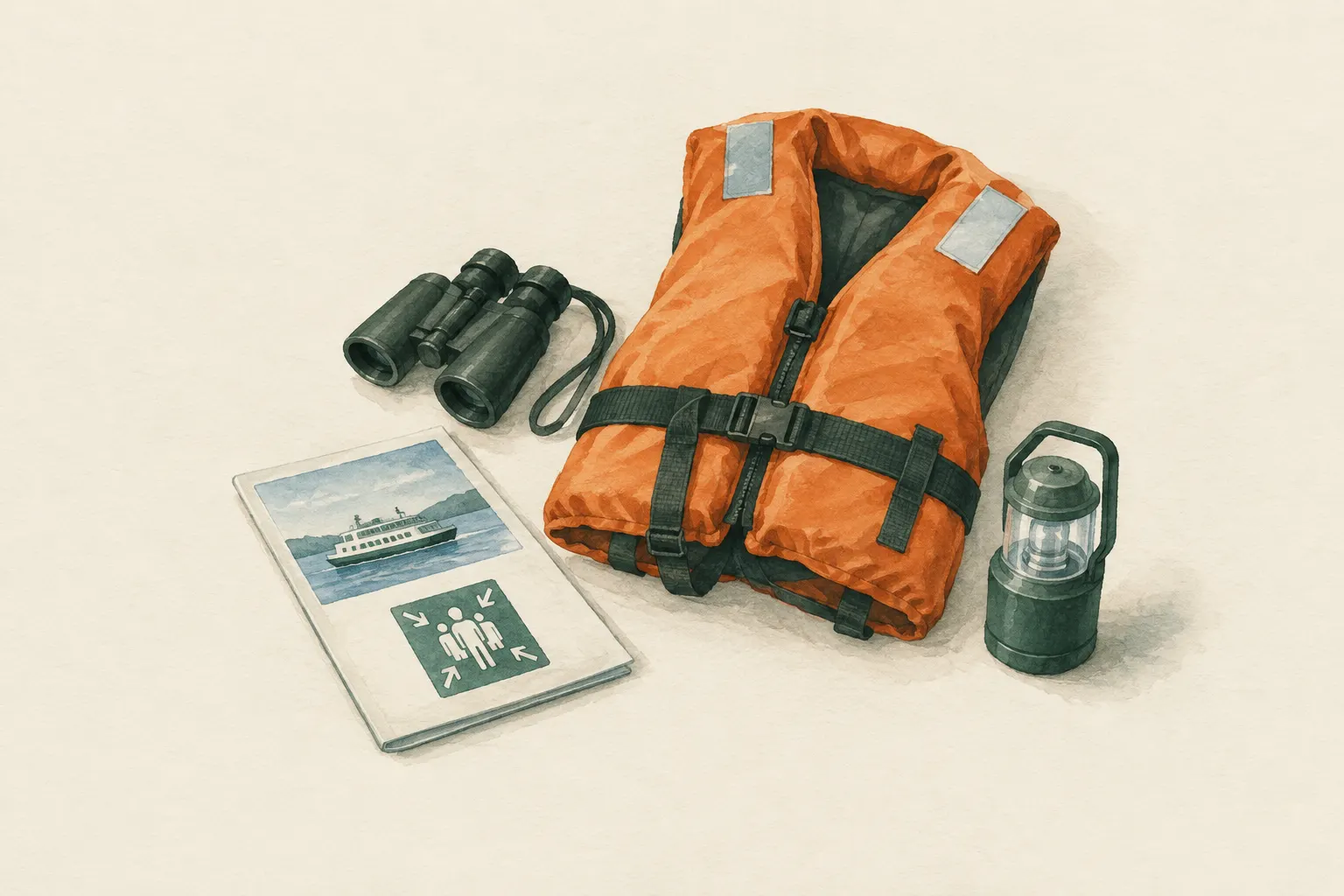
When you step onto a ship or boat, you are surrounded by water – and water is unforgiving. Most of the time everything goes well. But if something does happen, the first minutes count. So it is wise to look for two things right after boarding: where are the life jackets, and where is the muster station, where everyone meets in an emergency?
A life jacket is like an air cushion that holds your head above water, even when you get tired or cannot swim well. On small, open boats it is best to wear it the whole time, and children always. And when the crew gives a safety briefing, listen – even if it seems boring.
The most important point: do not get into a boat that is obviously overloaded, has no life jackets or sets out in a storm. And if you fall into cold water, first lie back, float and calm your breathing before calling for help.
How it works
At sea help is further away than on land. An ambulance cannot simply pull up, and in water the body quickly loses heat and strength. That is why safety on board relies on preparation: everyone should know where the life-saving equipment is and where to go when the alarm sounds, before anything happens.
The muster station is the place where the crew counts passengers in an emergency, hands out life jackets and leads people on in an orderly way. Anyone who has walked the route once will find it at night, when the vessel is listing or when corridors are crowded. The signs for it are usually green and white, like escape route signs in buildings.
A correctly worn life jacket keeps a person at the surface even when their strength fades. A jacket lying under the seat only helps if you reach it and put it on in time. On small boats, which can capsize or sink quickly, that time is often not there.
What really matters
A quick look is worthwhile even before boarding: does the boat look well kept? Are there clearly more people on board than seats? Are life jackets visible, including children's sizes? With small operators, feel free to ask. Large ships in international service have strict rules; small boats and domestic services often have other, sometimes lower, standards.
A life jacket only helps if it fits and is fastened. Close and tighten all buckles and straps; a well-fitting jacket does not ride up over the chin when you pull it upwards at the shoulders. Children need jackets in their size – an adult jacket can slip over a child's head.
On night ferries, keep clothes and shoes within reach, memorise the route from cabin to muster station and have a headlamp by the bed. When the alarm sounds, take warm clothing, life jacket and essential medication – luggage stays behind. People always come before suitcases.
Safety: cold water
Sudden immersion in cold water can trigger cold shock: you gasp involuntarily and breathe rapidly and uncontrollably. Anyone who breathes in water at this moment or tries to swim frantically can easily get into trouble. This reaction eases after a short time – if you get through it.
That is why the lifeboat charity RNLI recommends “Float to Live” for an unexpected fall into water: lie on your back, spread arms and legs slightly, float and calm your breathing. Only when your breathing is under control again, call for help or swim to something that floats or to the shore. A whistle on the life jacket helps you be heard.
If you see someone fall into the water, alert the crew immediately, keep the person in sight and, if possible, throw them something that floats, such as a lifebuoy. Do not jump in after them – that usually puts a second person in danger. Someone who comes out of the water chilled needs protection from further heat loss and medical help.
In an emergency on board
When the alarm sounds: stay calm, listen to announcements and follow the crew's instructions. The crew is trained for such situations and knows which areas are safe. Go to the muster station quickly but without running, and hold children by the hand.
Do not jump into the water on your own initiative unless the vessel must be abandoned. Even damaged, a ship is often a better place than the open water for a long time. If the crew orders you to abandon ship, follow their instructions to lifeboats or life rafts.
Steering or sailing boats yourself is a separate subject that requires training and is not part of this entry. This is about what every passenger can do: listen, know the life jackets and muster station, wear a life jacket on small boats and follow the crew in an emergency.
Step by step
Before boarding
Assess the condition and load of the boat; with small operators ask about life jackets.
- 1
Before boarding
Assess the condition and load of the boat; with small operators ask about life jackets.
- 2
Briefing
Follow the safety briefing or signs attentively, even if they seem routine.
- 3
Jackets and muster station
Locate the life jackets (including children's) and the muster station; walk the route from cabin or seat once.
- 4
Wear it on small boats
On small open boats put on the life jacket and fasten it correctly; children always.
- 5
When the alarm sounds
Grab warm clothing, life jacket and medication and go to the muster station; follow crew instructions.
Common mistakes
- Ignoring the briefing
- Children without a fitting jacket
- Wearing the jacket unfastened
- Trying to save luggage before people
Quick view
Materials
Life jacket / buoyancy aid
Size and buoyancy must match body weight; children need children's jackets. Follow manufacturer instructions and service intervals.
Signal whistle
Carry within easy reach, not deep in the pack.
Do not blow right next to other people's ears.
Headlamp / flashlight
Suitable for
- Ferries, excursion boats, water taxis, small boats
Not suitable for
- Sailing or skippering without training
Prerequisites
- Attention during the briefing
Safety
- In an emergency follow crew instructions; do not jump on your own initiative unless the vessel must be abandoned.
How it works
At sea help is further away and water is unforgiving. Knowing life-saving equipment and the muster station before anything happens saves crucial minutes; a worn life jacket keeps you afloat even when strength fades.
Advantages
- A few minutes of effort
- Improves survival chances in an emergency
Disadvantages
- Standards of small operators are hard to judge
Deep knowledge
Background
The IMO International Convention for the Safety of Life at Sea (SOLAS) contains requirements on life-saving appliances and safety instructions on ships in international service. Small boats and domestic services often have other, sometimes lower, standards.
The RNLI "Respect the Water" campaign describes floating on your back ("Float to Live") after an unexpected fall into cold water.
Variants
- Night ferries
- Keep clothes and shoes within reach, know the route from cabin to muster station, headlamp by the bed.
Common mistakes
- Ignoring the briefing
- Children without a fitting jacket
- Wearing the jacket unfastened
- Trying to save luggage before people
Limits and risks
- No boat handling or seamanship
- No information on national regulations
Material alternatives
Derived from material properties: a substitute must have all relevant properties. Observe the notes on the substitute.
- Headlamp / flashlight
- Mobile phone (The battery drains quickly in cold and with continuous screen and GPS use.), Battery lantern / LED light
Results come exclusively from structured entries. No improvised instructions are generated.
Sources
International Maritime Organization (IMO) (1974): International Convention for the Safety of Life at Sea (SOLAS), 1974, as amended
Life-saving appliances and safety instructions on ships in international service
Royal National Lifeboat Institution (RNLI), UK: Respect the Water – Float to Live
Cold water shock and "Float to Live"