Fire safety in hotels and lodging: know your way out
In unfamiliar lodging you do not know the escape routes – at night and in smoke you will hardly find them. Two minutes after check-in are enough: find two exits, count the doors to the stairwell, put key and torch by the bed. In a fire never use the lift.
- About 2–5 minutes after check-in
Explained simply
At home you know exactly where the door is – even in the dark. In a hotel or holiday flat everything is new. If a fire alarm goes off there at night and there might be smoke in the corridor, you will hardly find the exit. That is why you go on a little “discovery walk” right after arriving.
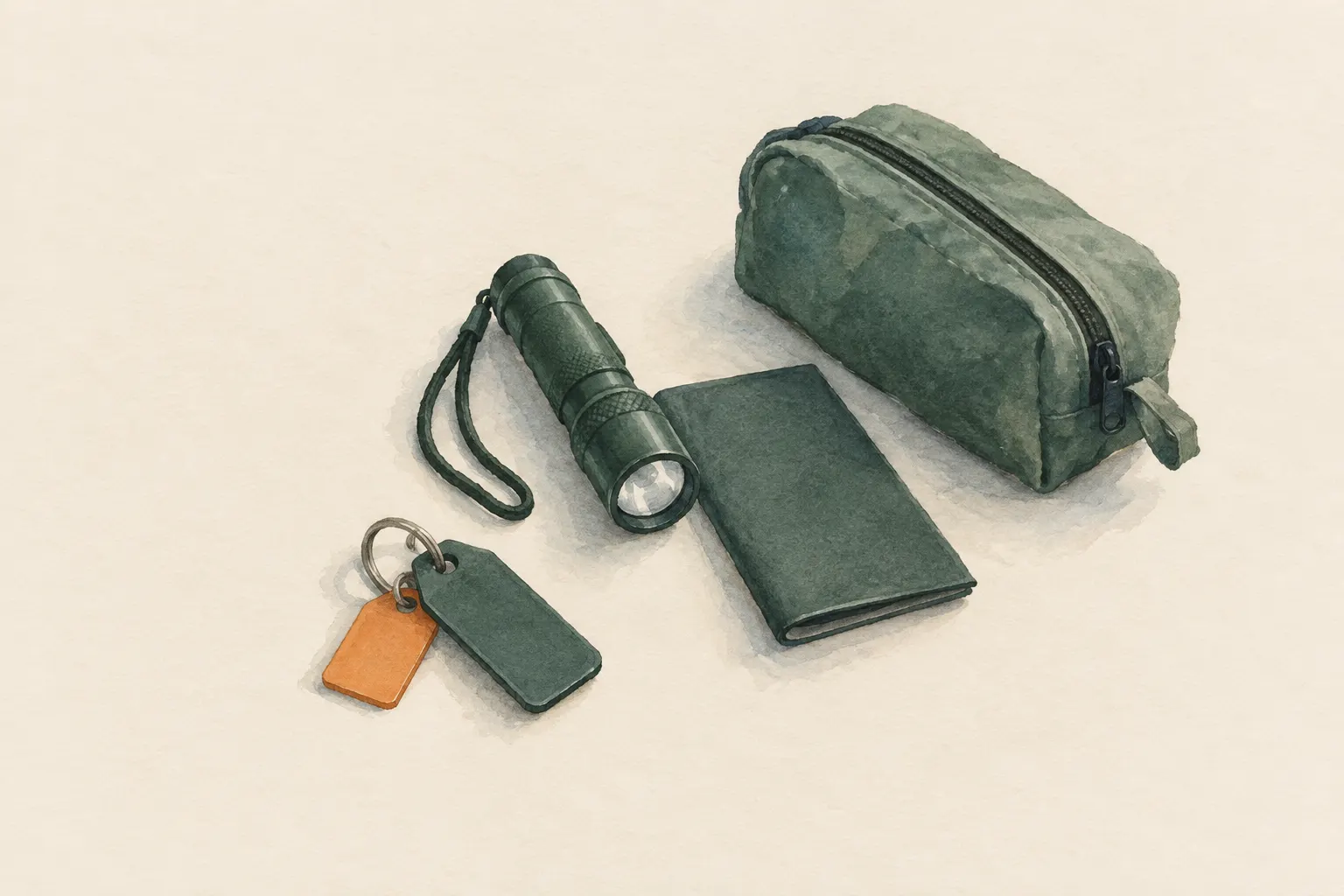
You look for two exits, walk once to the stairwell and count the doors on the way. Then you put your room key, a torch, glasses and shoes next to the bed. It takes only a few minutes, but in an emergency you then know the way even with your eyes closed – like counting the steps on your own staircase.
The most important point: in a fire never take the lift, always the stairs. And smoke is more dangerous than the flames – in smoke you stay low down, where the air is clearer.
How it works
In a fire the main danger is usually the smoke, not the fire itself. Smoke is hot, toxic and takes away your sight. Because hot gases rise, it first collects under the ceiling and then fills the room from top to bottom. Close to the floor the air therefore often stays clearer and cooler for longer – that is why you move low or crawl in smoke.
In thick smoke you can hardly see your own hand, and emergency lighting or signs may be hidden. Anyone who has walked the route consciously once and counted the doors can find it by touch along the wall. That is the core of the method: you move the thinking into a calm moment so that you no longer need it under stress.
Lifts are dangerous in a fire. Their shaft can fill with smoke, the power can fail, and the car can stop on a smoke-filled floor. Stairwells, on the other hand, are built as escape routes in many buildings and separated from smoke by doors – which is why you close those doors behind you.
What really matters
After check-in, look at the escape plan on the room door or in the corridor: where is your room, and in which two directions can you get out? Then walk to the nearest and the second-nearest emergency exit. Check that the door opens and that the stairwell is clear. If an exit is locked or blocked, tell reception.
Count the doors between your room and the exit and remember which side it is on. Put your room key, phone, torch, glasses and shoes next to the bed so that you can grab them in the dark. You need the key in case you have to go back into your room because the route is blocked.
Take every alarm seriously. Many people first wait to see whether it is “just a test” and lose valuable time. Luggage stays in the room, and you do not go back to fetch anything.
Safety: what to watch out for
Before opening the room door, test the door and the handle with the back of your hand. The back of the hand is sensitive to heat, and you do not burn the palm you need for feeling your way. If the door is hot or smoke is coming through, do not open it.
If it is cool, open it carefully, take the key, close the door behind you and leave the building by the stairs. Outside, report at the assembly point so that nobody searches for you inside.
If the route is blocked, stay in the room: seal the gaps around the door with wet towels, call the local emergency number (112 in the EU) and give your room number, and signal at the window. Do not jump from a great height – that is often more dangerous than waiting for the fire service in the sealed room.
Good to know
Building regulations for hotels differ greatly between countries. In some regions smoke alarms, sprinklers or lit escape routes are missing. In mountain huts and simple lodging this is more common. There, a small personal smoke alarm and a headlamp by the bed can make sense.
The basic rules – know two escape routes, stay low in smoke, test doors for heat, do not use the lift – come from general fire safety advice from emergency management agencies, such as FEMA's “Are You Ready?” guide. Firefighting, on the other hand, is the fire service's job. Your goal is to get out quickly and safely.
Step by step
Read the escape plan
Look at the plan on the room door, note your position and both escape directions.
- 1
Read the escape plan
Look at the plan on the room door, note your position and both escape directions.
- 2
Walk the route
Walk to the nearest and second-nearest emergency exit. Check that the door opens and the stairwell is clear.
- 3
Count doors
Count the doors between your room and the exit and note which side it is on.
- 4
Prepare by the bed
Put the room key, phone, torch, glasses and shoes within reach.
- 5
When the alarm sounds
Take the alarm seriously. Test the door, take the key, close the door behind you, leave by the stairs, report at the assembly point.
- 6
If the route is blocked
Go back into the room, seal door gaps with wet towels, call the local emergency number (112 in the EU) and give your room number, signal at the window.
Common mistakes
- Assuming the alarm is a test and waiting
- Using the lift
- Trying to take luggage
- Going back to fetch something
- Jumping from a great height
Quick view
Materials
Headlamp / flashlight
Mobile phone
The battery drains quickly in cold and with continuous screen and GPS use.
Do not plan on it as your only means of navigation or emergency calls.
Suitable for
- Hotels, hostels, holiday flats, mountain huts
Not suitable for
- Firefighting – that is the fire service's job
Prerequisites
- Look at the escape plan in the room or corridor
Safety
- Smoke is the main danger. In smoke, move low or crawl where the air is clearer.
How it works
In smoke and darkness orientation is hard and time is short. Anyone who has walked the route consciously once and counted the doors can find it by touch.
Advantages
- Hardly any effort
- Works in any accommodation
Disadvantages
- No influence on the building's fire protection
Deep knowledge
Background
General fire safety advice from emergency management agencies, for example in FEMA's "Are You Ready?" guide, emphasises two escape routes, staying low in smoke, testing doors for heat and avoiding lifts.
Building regulations for hotels differ greatly between countries; in some regions smoke alarms or sprinklers are missing.
Variants
- Huts and simple lodging
- Smoke alarms or lit escape routes are often missing. A small personal smoke alarm and a headlamp by the bed can make sense.
Common mistakes
- Assuming the alarm is a test and waiting
- Using the lift
- Trying to take luggage
- Going back to fetch something
- Jumping from a great height
Limits and risks
- No information on building codes
- No firefighting
Material alternatives
Derived from material properties: a substitute must have all relevant properties. Observe the notes on the substitute.
- Headlamp / flashlight
- Mobile phone (The battery drains quickly in cold and with continuous screen and GPS use.), Battery lantern / LED light
- Mobile phone
- Headlamp / flashlight, Battery lantern / LED light
Results come exclusively from structured entries. No improvised instructions are generated.
Sources
U.S. Federal Emergency Management Agency (FEMA): Are You Ready? An In-Depth Guide to Citizen Preparedness
Behaviour in fires: two escape routes, stay low, test doors, no lifts
European Commission: 112 – the European emergency number
European emergency number 112