Passport lost or stolen abroad: what to do
A lost passport is annoying but solvable. The usual steps are: report the loss to local police, contact your own country's embassy or consulate, apply for a replacement or emergency travel document and block stolen cards. Copies and emergency numbers speed everything up.
- Hours to days, depending on country and mission
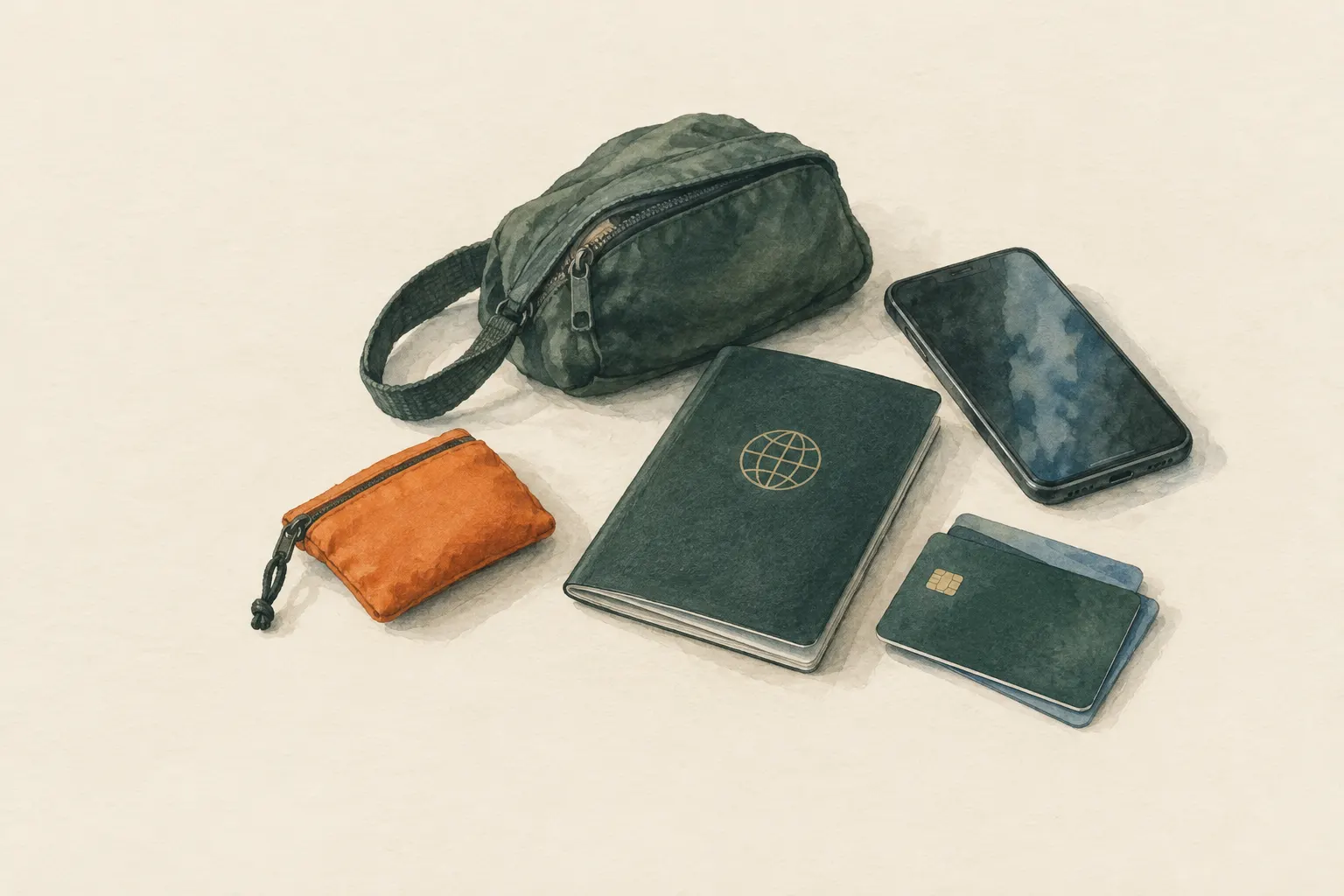
Explained simply
Your passport is gone – that feels bad at first. But it is a problem with a clear path, like a treasure map with stations. Many people have been through it and still made it home.
The stations are: search calmly, go to the police and report the loss, call your country's embassy or consulate, have stolen cards blocked and apply for a replacement passport or an emergency travel document. If you have copies of your passport and a passport photo with you, a lot goes faster.
Important: use only your embassy's official contact details, for example from your foreign ministry's website. Anyone who promises you a “fast passport” for money is usually trying to cheat you.
How it works
Only the state that issued a passport can replace it. Abroad, this therefore goes through your home country's embassy or consulate, not through the host country's authorities. Depending on the country and situation, the mission issues a new passport, a temporary passport or an emergency travel document, which is often valid only for the journey home.
The mission has to be sure that you really are who you say you are and that you hold the nationality. This is where your copies help: passport number, date of issue and photo can be checked faster. The police report documents the loss or theft and is often required – and you usually need it for insurance too.
Which documents are issued, how long it takes and what it costs is set by each country. Expect hours to days. Weekends, public holidays and the distance to the nearest mission can make it longer.
What really matters
Before you set everything in motion, search calmly and systematically: accommodation, vehicle, the places you were last. Ask at the lost property offices of the hotel, railway or airport. A passport surprisingly often has just slipped into the wrong pocket.
If it is really gone, go to the local police and have the loss or theft confirmed in writing. If bank, credit or SIM cards were stolen too, have them blocked immediately – that is what the blocking numbers on your emergency card are for. Then call the embassy or consulate and ask about an appointment, the required documents and fees.
Bring copies of your passport, the police confirmation and, if possible, passport photos to the appointment. Afterwards inform the airline, tour operator and insurer. If you had a visa for the host country, the host country's immigration authority may also be involved so that you can leave properly.
Safety: what to watch out for
Someone who has just lost their passport is stressed and under time pressure – exactly what fraudsters exploit. There are fake websites, fake phone numbers and “agents” who promise fast replacements for money. Use only the official contact details of your mission, which you can find on your own foreign ministry's website or have already written on your emergency card.
A stolen passport can be misused for identity fraud. That is why reporting it matters, even if you get a replacement at once: a passport reported lost usually becomes invalid. If the old passport turns up later, ask your mission what to do with it instead of simply continuing to use it.
If you get into legal trouble or are arrested, also contact your embassy or consulate immediately. That is a different case from a lost passport, but the same office is the right point of contact.
Typical situations
For children, extra documents may be needed, for example the consent of both parents or guardians. Ask the mission exactly before you go to the appointment so that you do not have to come twice.
Losing a passport can delay a trip by days and costs fees and perhaps rebooking. Whether insurance covers part of it is stated in your terms. The best preparation still happens before the trip: copies kept separate from the original, passport photos and the mission's contact details on paper, as described in the entry on travel documents.
Step by step
Search calmly
Check lodging, vehicle and recently visited places; ask the lost property offices of hotel, railway or airport.
- 1
Search calmly
Check lodging, vehicle and recently visited places; ask the lost property offices of hotel, railway or airport.
- 2
Police
Report the loss or theft to local police and ask for written confirmation.
- 3
Embassy or consulate
Contact your country's embassy or consulate; ask about appointments, required documents and fees.
- 4
Block cards
Have stolen bank and credit cards and SIM cards blocked immediately.
- 5
Replacement document
Apply for a replacement or emergency travel document with copies, police confirmation and passport photos.
- 6
Arrange onward travel
Inform the airline, tour operator and insurer; where visas apply, also the host country's immigration authority.
Common mistakes
- Carrying no copies
- Passport and copies in the same bag
- Trusting unofficial intermediaries
- Forgetting the police report
Quick view
Materials
Copies of travel documents
Keep separate from the originals; store digital copies only in protected form.
Mobile phone
The battery drains quickly in cold and with continuous screen and GPS use.
Do not plan on it as your only means of navigation or emergency calls.
Cash reserve
Store securely and discreetly.
Suitable for
- Loss or theft of passport, ID or visa abroad
Not suitable for
- Legal problems or arrest – then also contact your mission immediately
Prerequisites
- Copies of passport and ID (kept separately)
- Address and phone number of your country's mission
- Passport photos, if possible
Safety
- Only use the embassy's official contact details (e.g. from your foreign ministry's website). Beware of intermediaries promising "fast passports" for money.
- Which documents are issued, how long it takes and what it costs is set by each country – check with your own mission.
How it works
A passport can only be replaced by the issuing state, so abroad through its embassy or consulate. A police report documents the loss and is often required. Copies prove identity and nationality faster.
Advantages
- A clear sequence saves time
Disadvantages
- Can delay travel plans by days
- Costs for fees and rebooking
Deep knowledge
Background
Foreign ministries provide information on their websites about losing a passport abroad; the US Bureau of Consular Affairs, for example, describes reporting the loss and replacing it through an embassy or consulate.
The specific procedures differ by nationality and host country.
Variants
- A child's passport
- For children additional documents (e.g. consent of both parents/guardians) may be required – ask the mission.
Common mistakes
- Carrying no copies
- Passport and copies in the same bag
- Trusting unofficial intermediaries
- Forgetting the police report
Limits and risks
- No country-specific procedures or fees
Material alternatives
Derived from material properties: a substitute must have all relevant properties. Observe the notes on the substitute.
- Mobile phone
- Headlamp / flashlight, Battery lantern / LED light
Results come exclusively from structured entries. No improvised instructions are generated.
Sources
U.S. Department of State – Bureau of Consular Affairs: Lost or Stolen Passports
Reporting and replacing lost or stolen passports via embassy or consulate
Auswärtiges Amt, Deutschland: Krisenvorsorgeliste ELEFAND (Elektronische Erfassung von Deutschen im Ausland)
Example of a foreign ministry providing information for travellers abroad