Skip to content
In an emergencyAustriaEmergency numbers →
SurviveBetter
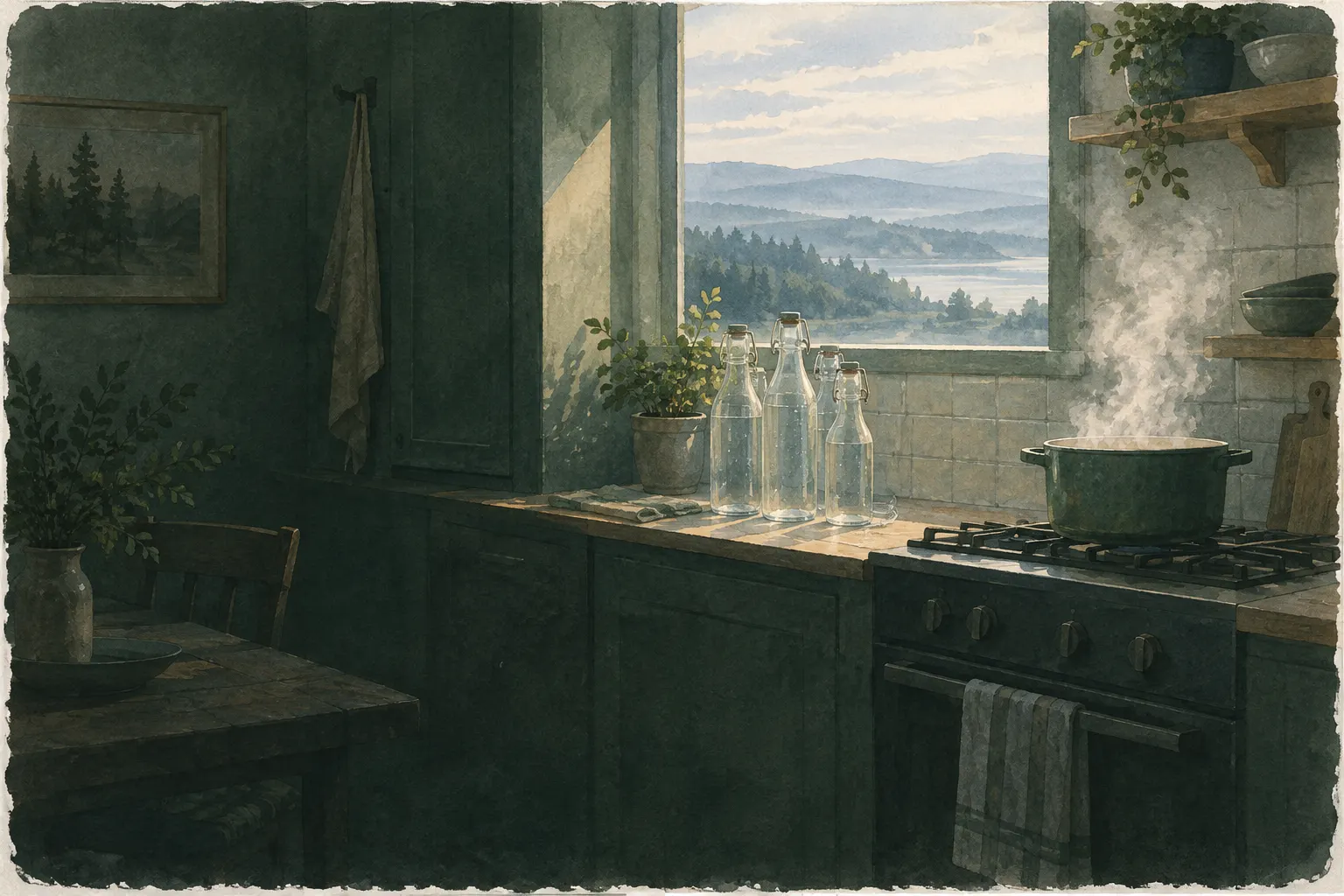
Kitchen with a steaming pot of water and clean bottles

There is a boil-water notice for our tap water

The water supplier has issued a boil-water notice: water still flows, but may be contaminated with germs.

First

  1. Read the notice carefully: boil-water notice or do-not-drink notice? With a do-not-drink notice boiling does not help.
  2. Use boiled or bottled water for everything that goes in the mouth – drinking, brushing teeth, ice cubes, infant formula, food preparation.
  3. Follow information from the water supplier or authorities until the notice is lifted.

Call emergency services if

  • Severe diarrhoea or vomiting with signs of dehydration, especially in infants and older people
  • Confusion or impaired consciousness
  • Suspected poisoning

What is happening

A boil-water notice is issued when germs have been found in tap water or cannot be ruled out – for example after a burst main, a pressure drop in the network, construction work or flooding. The water usually looks completely normal and smells and tastes as usual. That is exactly what makes it tricky: out of habit you reach for the tap.

A rolling boil kills bacteria, viruses and parasites. It does not remove chemicals, oil or heavy metals, however – so it is crucial to know which notice applies. With a boil-water notice the water is safe to drink after boiling. With a "do not drink" or "do not use" notice boiling does not help, and some substances even become more concentrated.

A boil-water notice can last several days, sometimes longer, because pipes have to be flushed and new samples tested. During this time everyday mistakes creep in easily: teeth are brushed with tap water, ice cubes taken from the freezer, salad washed with unboiled water or a baby bottle made up with tap water.

Babies, older people, pregnant women and people with weakened immune systems are at particular risk, as diarrhoea and vomiting can quickly lead to dehydration. What realistically matters: read carefully what applies, set up a fixed routine for boiling and follow the supplier's information until the notice is officially lifted.

Step by step

  1. Phase 1

    As soon as you hear about the notice

    • Read carefully what applies – boil-water notice, do-not-drink notice or do-not-use notice – and for which area.
    • Tell everyone in the household, including children and guests; a note on the taps helps against habit.
    • Dispose of ice cubes, drinks and food made with tap water from the affected period as the supplier advises.
    • Stop using water dispensers, ice makers and coffee machines with a fixed water connection.
    • Let neighbours know who may not follow the news – older people, for example.
  2. Phase 2

    Daily life during the boil-water notice

    • Bring water to a rolling boil and let it cool, covered.
    • Store boiled water in clean, covered containers and label them.
    • Use boiled or bottled water for drinking, brushing teeth, infant formula, cooking, washing raw fruit and vegetables and for pets.
    • For hand washing, showering, dishes and laundry follow the supplier's advice; do not swallow water in the shower and wash small children with a flannel instead.
    • Jug filters and fridge filters do not make water germ-free – they do not replace boiling.
  3. Phase 3

    If problems arise

    • If the power fails: use bottled water; run camping stoves outdoors only. Chemical disinfection is a stopgap and must be used exactly as instructed.
    • With diarrhoea or vomiting, drink enough – boiled or bottled water – and pay attention to hygiene; call your doctor if it does not improve or if babies, older or sick people are affected.
    • Call the emergency number with signs of severe dehydration (hardly any urine, very dry mouth, unusual drowsiness, in babies hardly any wet nappies), with confusion or if poisoning is suspected.
    • If a "do not drink" or "do not use" notice applies: do not boil or filter the water to use it anyway; use bottled water or distribution points.
  4. Phase 4

    When the notice is lifted

    • Only the official lifting by the supplier or authority counts – not rumours and not how the water looks.
    • Flush your pipes as the supplier instructs, usually by letting cold water run for a while.
    • Empty ice makers, clean water dispensers and coffee machines according to the manufacturer's instructions and replace filter cartridges.
    • Clean the containers that held boiled water and let them dry.

What to watch out for

  • A boil-water notice is not a do-not-drink notice

    With chemical contamination boiling does not help and can even concentrate some substances. Always check the exact wording of the notice.

  • Scalds

    Handling a lot of boiling water every day raises the risk of scalds, especially with children in the household. Put pans at the back of the hob, do not let the kettle cable hang down and let water cool before pouring it into containers.

  • Infant formula

    Use only boiled water or bottled water that is expressly suitable for baby bottles, and follow advice from the authorities and your paediatrician.

  • Hidden routes

    Ice cubes, rinsing a toothbrush under the tap, coffee from the machine, washed salad – many routes bypass boiling. Go through your daily routine once consciously.

  • Recontamination

    Boiled water can become contaminated again in dirty or open containers. Use clean, covered containers and pour the water out rather than scooping it with hands or cups.

  • People at higher risk

    Babies, older people, pregnant women and people with weakened immunity become dehydrated more quickly with diarrhoea. Seek medical advice if you are unsure.

Common mistakes

  • Only warming the water instead of bringing it to a rolling boil.
  • Brushing teeth with tap water out of habit.
  • Using ice cubes from the freezer or water from the fridge dispenser.
  • Thinking a jug filter is enough.
  • Boiling water under a do-not-drink notice and drinking it anyway.
  • Missing the lifting of the notice or assuming it too early.

Prepare in advance

  • Keep a supply of bottled drinking water at home.
  • Clean, food-grade containers with lids to store boiled water.
  • A way to boil water without power that can be used safely outdoors.
  • Know or subscribe to the warning app and your water supplier's information channels.
  • For babies, a small supply of suitable bottled water or ready-to-feed formula.

Special consideration

Babies and toddlers
Clean bottles, teats and dummies with boiled water. Toddlers easily swallow water in the bath – wash them with a flannel instead.
People with weakened immune systems
Anyone with weakened immunity – for example after a transplant, during chemotherapy or for other reasons – should ask their doctor whether extra precautions are needed.
Pets
Animals should also get boiled and cooled, or bottled, water.

Sources

Your situation

Type of notice
In the household
Options

Matching entries

0 rules apply

No AI decides here. Every recommendation is based on a visible rule.

Add details about your situation above to get more specific guidance.

Basics for this situation

Why: Always applies to this situation – regardless of your answers.

All rules of this situation (7)
  1. [not active] If Type of notice = Boil-water notice

    Bring water to a rolling boil, let it cool and store it in clean, covered containers.

  2. [not active] If Type of notice = Do not drink / do not use

    Do not boil or filter the water to drink it anyway – chemicals remain. Use bottled water or distribution points.

  3. [not active] If Type of notice = After flooding or private well

    Flood water is almost always contaminated with sewage and chemicals. Only use a well again after it has been tested.

  4. [not active] If In the household = Infants or toddlers

    Use only boiled or suitable bottled water for infant formula; follow advice from authorities and your paediatrician.

  5. [not active] If In the household = Older, sick, weakened immune system

    People with weakened immunity are at particular risk; seek medical advice if unsure.

  6. [not active] If In the household = Pets

    Give pets boiled or bottled water too.

  7. [not active] If Options = No power

    Use camping stoves and grills outdoors only. Chemical disinfection is a stopgap, used only as instructed.