Skip to content
In an emergencyAustriaEmergency numbers →
SurviveBetter
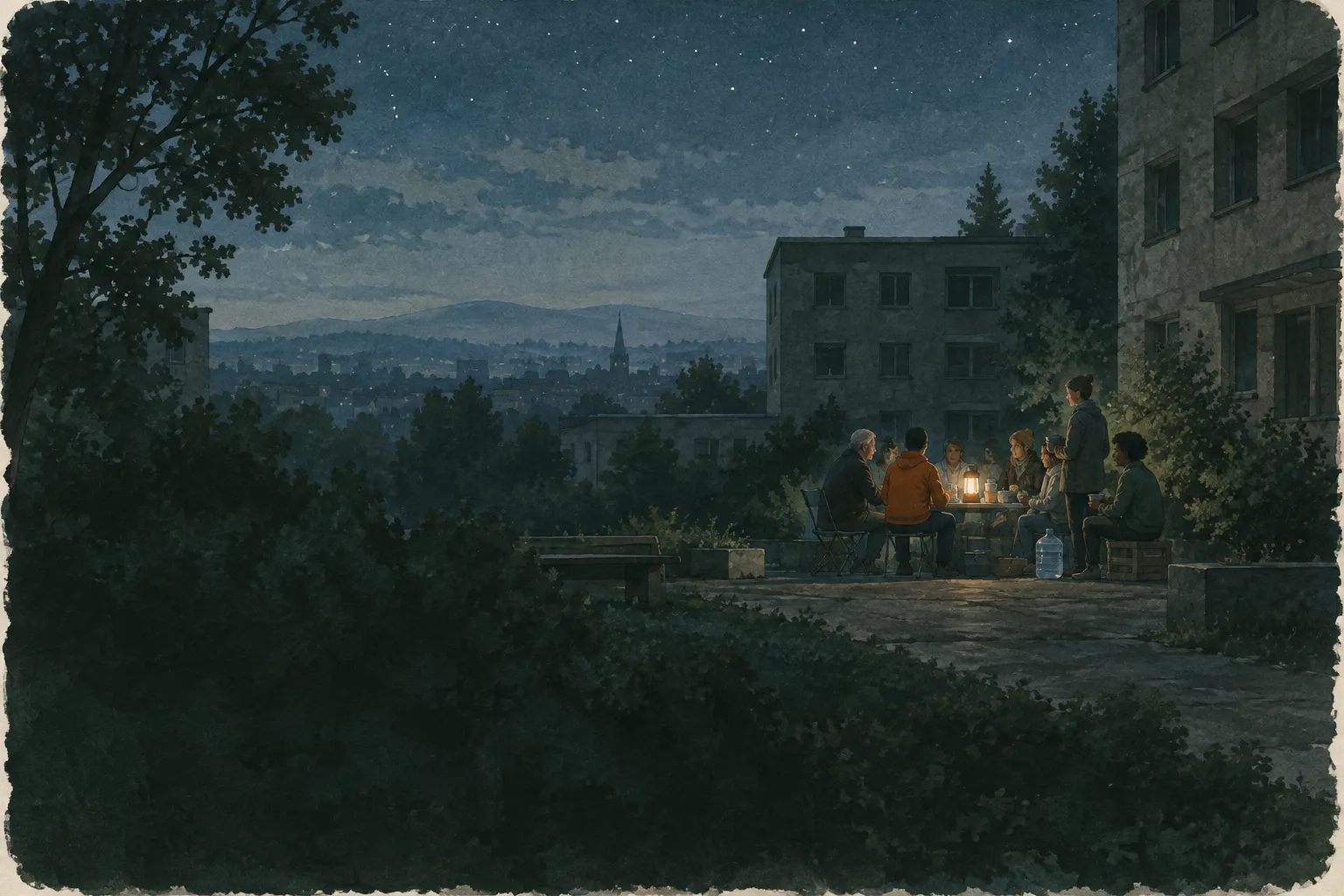
Dark neighbourhood at night, neighbours sharing water and food in a courtyard

The power outage has lasted several days

The power has been out for days: mobile network, water, heating and shops fail one after another – now it is about rationing, sticking together and staying safe.

First

  1. Reassess: how long will water, food, medication, warmth and batteries last?
  2. Follow official information on a battery or crank radio; know help points and emergency shelters.
  3. Check on neighbours, especially older people and those living alone.
  4. No generators, grills or gas heaters indoors – carbon monoxide kills. If life is at risk, call the local emergency number (112 in the EU).

Call emergency services if

  • Suspected carbon monoxide poisoning (headache, dizziness, nausea in several people)
  • A life-sustaining medical device fails
  • Signs of hypothermia or heatstroke
  • Fire

What is happening

A power cut lasting several days changes daily life step by step. On the first day it is mainly light and comfort that are missing. After that, systems fail that at first still ran on backup power or batteries: mobile phone masts go silent when their reserves are exhausted, petrol stations cannot pump without power, many shops stay closed or accept only cash. Depending on the area, water supply and sewage disposal can be restricted because pumps need electricity.

At the same time your home gets cold or hot depending on the season, food in the fridge spoils and information becomes scarce. Authorities then mostly inform via radio, loudspeaker announcements and help points, where there is information, support and often a way to make an emergency call. You find out where these points are via the radio, notices or in advance from your local council.

A long outage becomes dangerous mainly through carbon monoxide from improvised heating and cooking, through fires, through older and sick people getting too cold or too hot, through failed medical devices and through spoiled food and poor hygiene. A typical error of judgement is waiting too long: anyone who acts only when the battery is empty or the home is freezing has fewer options than someone who moves early to relatives or an emergency shelter.

What realistically matters most: an honest stocktake of supplies, a calm daily rhythm, safe sources of warmth and light, clean drinking water and your neighbourhood. Experience shows that people help each other in crises – sharing knowledge, tools or supplies and looking after the most vulnerable improves the situation for everyone, including yourself.

Step by step

  1. Phase 1

    Reassess as soon as it is clear: this will last

    • Count everything you have: drinking water, non-perishable food, medication, batteries, rechargeable batteries, fuel, cash. Roughly estimate how many days it will last.
    • Check medication: what needs refrigeration, what is running low? Go to a pharmacy or doctor early while they can still be reached.
    • Eat food in a sensible order: perishables from the fridge first, then frozen food, non-perishables last.
    • Use the radio as your main source of information and plan fixed listening times to save batteries.
    • Find out where help points, water distribution and emergency shelters have been set up.
  2. Phase 2

    Organising daily life

    • Set a daily routine: use daylight for tasks, little light in the evening, go to bed early.
    • Choose one room as the shared living space – in winter so you can keep it warm, in summer the coolest room.
    • If there is no water for flushing, set up an emergency toilet with a bucket, strong bags and absorbent; washing or disinfecting hands takes priority.
    • Allocate energy: phone and radio come first; use power banks only for what is necessary.
    • Agree with neighbours: who has what, who needs what, who checks on whom?
  3. Phase 3

    When things become critical

    • If your home becomes too cold or too hot, move in good time to relatives, friends or an emergency shelter or warming centre – not only once someone falls ill.
    • If a life-sustaining device runs on battery, clarify with your doctor, care service or supplier beforehand where you can go; if it fails, call the emergency number at once.
    • If the phone network is down, make emergency calls at the places the authorities name for this, such as help points or fire stations.
    • Do not bring outdoor heaters, grills, generators or fuel into the home.
    • At signs of hypothermia, heat illness, carbon monoxide poisoning or severe dehydration, call the emergency number or get help at a help point.
  4. Phase 4

    When the power comes back

    • Do not switch on all appliances at once; restart the heating according to the manufacturer's instructions.
    • Empty and clean fridges and freezers and dispose of spoiled food – when in doubt, throw it out.
    • Follow the water supplier's advice: after a long loss of pressure a boil-water notice may apply for a while.
    • Restock supplies, batteries and medication and note what was missing.
    • Look after yourself and others: exhaustion and stress often show only afterwards.

What to watch out for

  • Carbon monoxide from heating and cooking

    The longer the outage lasts, the greater the temptation to bring a grill, camping stove, patio heater or generator inside. That is life-threatening, even with a window open. A battery-powered carbon monoxide alarm warns you in time.

  • Fire risk

    Candles, flame lamps, stoves and tired people are a bad combination. In a widespread outage the fire service and emergency number may be harder to reach – so avoid fires from the outset and keep a fire blanket or extinguisher ready.

  • Spoiled food

    After days without refrigeration, meat, fish, dairy products and cooked dishes are risky even if they smell normal. Food poisoning is especially hard to cope with when there is no running water and doctors' surgeries are closed.

  • Drinking water and hygiene

    When pumps fail, water pressure can drop and quality can suffer. Follow the supplier's advice, boil or use bottled water when in doubt and do not neglect hand washing.

  • Silent emergencies

    Older, sick and isolated people often do not ask for help on their own. Hypothermia, dehydration or missing medication only become apparent when someone checks on them.

  • Generators and fuel

    Run generators only outdoors, well away from windows, doors and vents. Never feed power into the house wiring through a socket – it endangers people working on the grid. Store fuel only in approved containers and never inside the home.

  • Security and rumours

    Dark streets and failed alarm systems are unsettling. Lock doors, do not display valuables, look out for each other with neighbours – and do not believe rumours unchecked; follow official announcements.

Common mistakes

  • Holding out too long in a cold or hot home instead of moving in good time.
  • Using up all batteries and power banks right at the start.
  • Judging food by its smell and eating risky items anyway.
  • Reacting to rumours instead of official announcements.
  • Staying alone and neither accepting nor offering help.
  • Storing or using fuel, gas cylinders or charcoal inside the home.

Prepare in advance

  • A supply of drinking water and non-perishable food that can be eaten without cooking or with little energy; the German federal civil protection office (BBK) recommends supplies for ten days.
  • A stock of medication and a medication list; for medicines that need refrigeration, clarify with your doctor or pharmacy what to do in a long power cut.
  • Lights, a battery or crank radio, spare batteries and power banks, possibly a small solar charger.
  • Battery-powered carbon monoxide alarms if you heat or cook with fuel, and working smoke alarms.
  • An emergency toilet (bucket, strong bags, absorbent) and hygiene supplies.
  • Know your neighbourhood: exchange phone numbers, know who needs help and ask your council where help points are planned.

Special consideration

People with medical devices or care needs
Clarify in advance with your doctor, care service and device supplier how long batteries last and where you can go in a long outage. Some councils offer to register people who particularly need help – ask locally.
Children
Fixed routines, games without electricity and small tasks (handing out lamps, counting supplies) give children stability. Keep them away from candles, stoves and generators.
Pets
Include food and water for animals in your planning. Not every emergency shelter accepts pets – ask beforehand.

Sources

  • Ratgeber für Notfallvorsorge und richtiges Handeln in Notsituationen · Bundesamt für Bevölkerungsschutz und Katastrophenhilfe (BBK), Deutschland
  • Power Outages · Ready.gov – U.S. Federal Emergency Management Agency (FEMA)
  • Are You Ready? An In-Depth Guide to Citizen Preparedness · U.S. Federal Emergency Management Agency (FEMA)
  • Carbon Monoxide Poisoning – Prevention guidance · Centers for Disease Control and Prevention

Your situation

Season
Shortages
In the household

Matching entries

0 rules apply

No AI decides here. Every recommendation is based on a visible rule.

Add details about your situation above to get more specific guidance.

Basics for this situation

Why: Always applies to this situation – regardless of your answers.

All rules of this situation (8)
  1. [not active] If Season = Cold, no heating

    Keep one room warm and wear layers. If it gets too cold, move to relatives or a warming centre in good time.

  2. [not active] If Season = Hot

    Without fans or cooling, go to cool places early; drink plenty.

  3. [not active] If Shortages = Water running low

    Secure drinking water first, use distribution points and organise hygiene without running water.

  4. [not active] If Shortages = Food running low / no refrigeration

    When in doubt, throw perishable food out. Cook only with safe means; camping stoves and grills outdoors only.

  5. [not active] If Shortages = Batteries and light running out

    Allocate remaining energy to communication and light; candles only under supervision.

  6. [not active] If In the household = Powered medical devices

    Before the battery runs out, contact your doctor, care service or device supplier and decide whether to relocate.

  7. [not active] If In the household = Children

    Fixed routines and games help; keep children away from candles, stoves and generators.

  8. [not active] If In the household = Older people or people needing care

    Check in regularly; make sure of drinks, warmth and medication.