Skip to content
In an emergencyAustriaEmergency numbers →
SurviveBetter
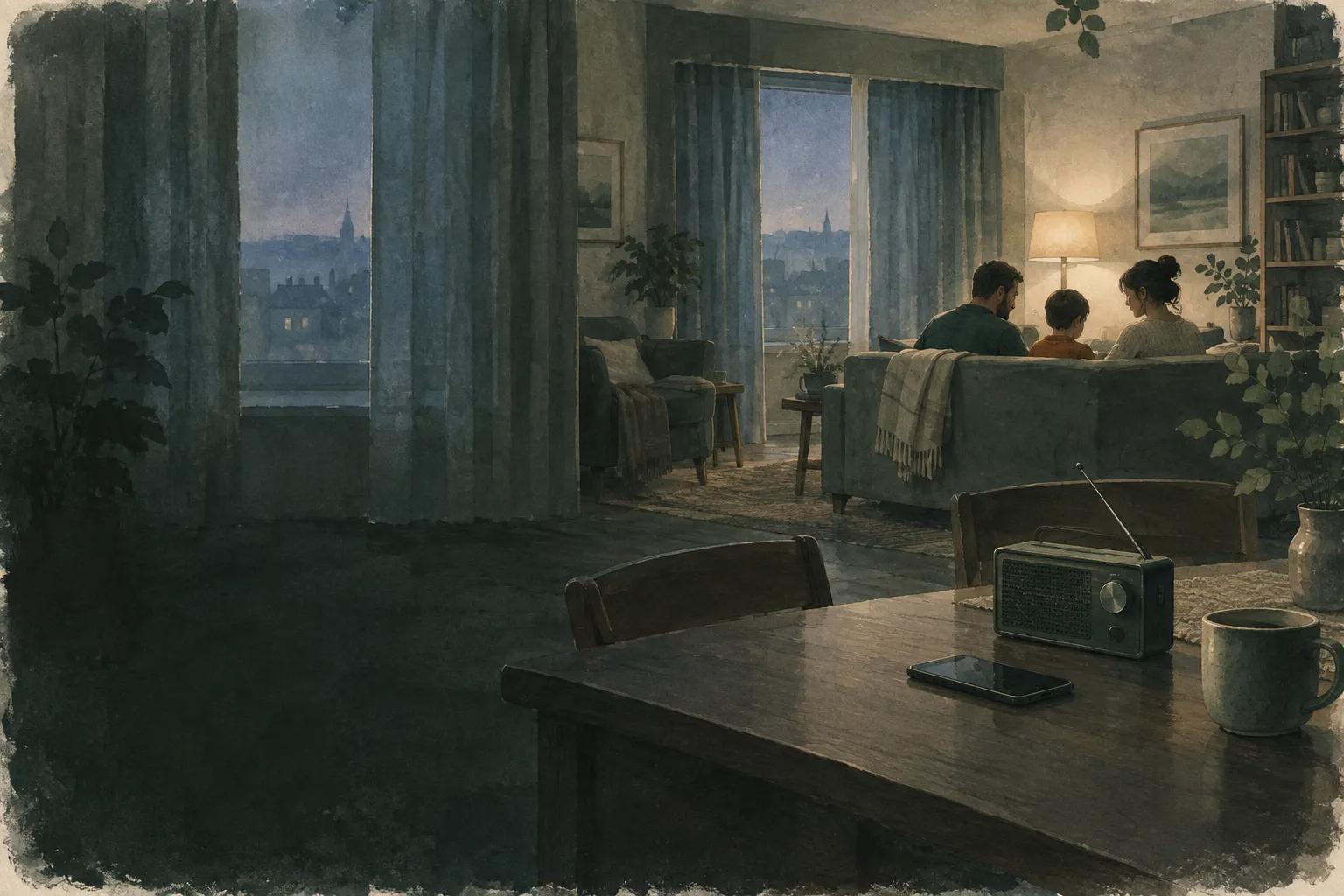
Family inside a flat with windows closed and a radio on the table

There is a warning about a radiation release

The warning app reports a possible radiation release – what matters most now: get inside, stay inside, stay tuned.

First

  1. Get inside a sturdy building at once, close windows and doors, switch off ventilation and air conditioning.
  2. Go to the middle of the building or the basement and stay there until the authorities say otherwise.
  3. Follow official information by radio, warning app or official websites; follow only them.
  4. Take iodine tablets only when the authorities tell you to.

Call emergency services if

  • Acute injury or illness – tell emergency services about the situation
  • Someone cannot reach a building and needs help
  • Fire or other immediate danger in the building

What is happening

A warning about a radiation release can follow an accident at a nuclear power plant, a transport accident or other events. Radioactivity cannot be seen, smelled or tasted. The main danger is radioactive particles that are carried by the air and can settle on the ground, clothing, skin and food – especially with rain.

The most effective protection is simple: a sturdy building. Walls, ceilings and distance from the outer shell markedly reduce exposure. The basement or the middle of a large building is the best place to be. A car, by contrast, offers little protection. If you were outdoors, you can remove much of any possible contamination by taking off your outer clothing and washing.

Typical mistakes come from fear: people set off to collect children or drive far away and are then unprotected on the road. Others take iodine tablets on their own initiative or use dangerous substitutes. Iodine tablets only protect the thyroid from radioactive iodine, not from other radiation – and they only make sense when the authorities tell people to take them.

What realistically matters most: get inside at once, windows shut, ventilation off, go to the middle of the building or the basement, follow official information, and only go out or evacuate when the authorities say so. Staying inside may last a day or longer.

Step by step

  1. Phase 1

    Immediately

    • Go into the nearest sturdy building; a car offers little protection.
    • Close windows and doors, switch off ventilation, air-conditioning and extractor hoods.
    • Go to the basement or the middle of the building, away from outside walls and the roof.
    • Bring pets inside if you can do so at once.
  2. Phase 2

    If you were outdoors

    • Right at the entrance, take off outer clothing and shoes, put them in a bag, seal it and leave it away from people and animals.
    • Shower, or wash hands, face and hair thoroughly with soap and shampoo; do not use hair conditioner.
    • Do not scrub or injure the skin; put on clean clothes.
    • If possible, also wash pets that were outside – wearing gloves.
  3. Phase 3

    While staying inside

    • Follow the radio, warning app or official websites; follow only official information.
    • Use packaged food and drinks from the house; fruit, vegetables and water from the garden only once cleared.
    • Take iodine tablets only when the authorities explicitly tell you to, and follow their guidance on who should take them and how.
    • Only collect children from school or childcare if the authorities say so – usually they are sheltered there.
    • Keep the phone network free for emergency calls; briefly inform relatives by text message.
  4. Phase 4

    Evacuation or all-clear

    • Evacuate only when ordered and on the routes given; take your go bag, documents and medication.
    • In the car keep windows closed and ventilation off or on recirculation.
    • After the all-clear, follow advice on food, drinking water, gardens and playgrounds.
    • Do not dispose of the sealed clothing bag yourself; wait for official instructions.

What to watch out for

  • No self-medication with iodine

    Iodine tablets only when the authorities say so – they are not intended for all age groups in the same way and only protect against radioactive iodine. Iodine-based disinfectants or iodised table salt are no substitute and can cause harm.

  • Rain and precipitation

    Rain can wash radioactive particles out of the air particularly strongly. Getting wet outside increases possible contamination – so stay indoors, especially when it rains.

  • The car as protection

    A car offers little protection against radiation. If you are on the road, go into the nearest sturdy building rather than driving on for a long time.

  • Rumours and panic buying

    With invisible dangers, rumours spread particularly fast. Only official sources count; panic buying and trips to pharmacies take you outside unnecessarily.

  • Acute emergencies come first

    A serious injury, a heart attack or a fire must be reported at once even during a radiation warning. Emergency services know about the situation – still tell them where you are and what has happened.

Common mistakes

  • Getting into the car and driving far away instead of sheltering inside.
  • Taking iodine tablets without being told to, or iodine-containing substitutes.
  • Collecting children from school or childcare on your own initiative.
  • Opening windows or leaving the ventilation running.
  • Forwarding rumours from social media.

Prepare in advance

  • Install a warning app and keep cell broadcast enabled on your phone.
  • Find out whether you live near a nuclear facility and which emergency plans apply there.
  • Keep a supply of drinking water and long-life food for a few days.
  • Keep a battery-powered radio, a torch, rubbish bags and tape ready.
  • Know how to switch off ventilation, air-conditioning and the extractor hood.
  • Find out whether and how iodine tablets are distributed in your region – without taking them on your own initiative.

Special consideration

Children and pregnant women
Authorities often have specific recommendations on iodine tablets for them. Pay close attention to official advice and explain calmly to children why everyone is staying inside.
Pets
Bring animals in if you can do so at once and do not let them out again. Animals that were outside may carry particles in their fur – wash them wearing gloves and then wash your own hands.

Sources

Your situation

Where are you?
Family
Stage

Matching entries

0 rules apply

No AI decides here. Every recommendation is based on a visible rule.

Add details about your situation above to get more specific guidance.

Basics for this situation

Why: Always applies to this situation – regardless of your answers.

All rules of this situation (6)
  1. [not active] If Where are you? = Outdoors

    Go into the nearest sturdy building at once. Inside, take off outer clothing, put it in a bag, seal it and wash hands, face and hair or shower.

  2. [not active] If Where are you? = In a car

    A car offers little protection. Get into a nearby sturdy building; keep windows and ventilation closed until then.

  3. [not active] If Family = Children at school / childcare

    Follow the authorities' instructions on whether to collect children. Often they are sheltered where they are; schools have their own emergency plans.

  4. [not active] If Family = Pets

    Bring pets inside if you can do so at once.

  5. [not active] If Stage = Instruction: stay inside

    Stay inside, use your supplies and do not spread rumours. Only official sources count.

  6. [not active] If Stage = Evacuation ordered

    Evacuate only when ordered and on the routes given; keep car windows and ventilation closed.