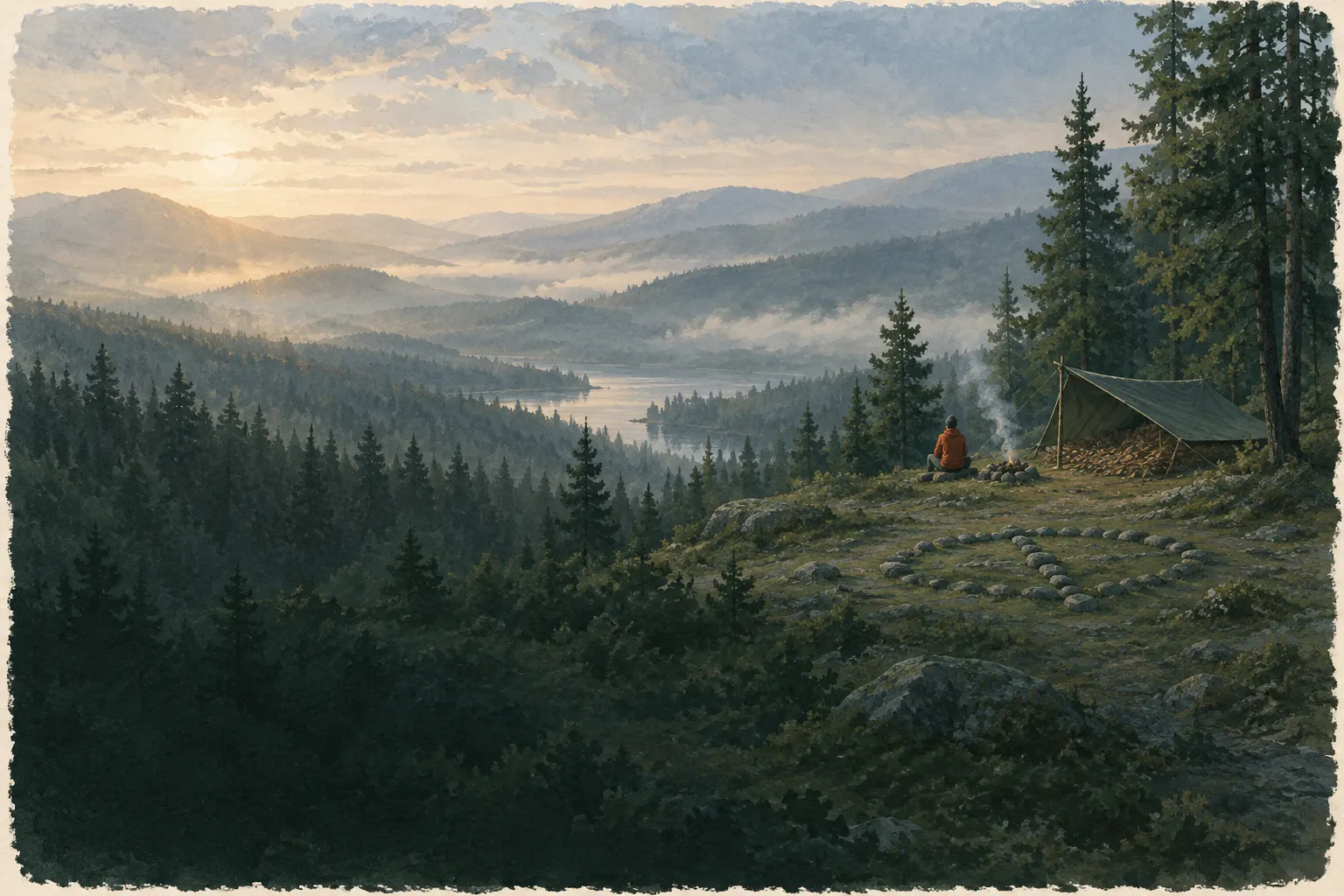
Basics for this situation
Lost: the STOP rule
When you realise you have lost your way, stop immediately instead of carrying on. STOP stands for Stop, Think, Observe, Plan. It is often safer to stay at an easy-to-find place, especially if someone knows your trip plan.
Staying findable: trip plan, staying put, leaving clues
Rescue starts before you set off: leaving a trip plan means you are missed sooner and searched for more precisely. In an emergency it usually helps to stay at a clearly visible place, prepare signals and remain reachable. If you must move, leave notes and markers.
Choosing a shelter site
The site often decides more about a safe night than the structure itself. A good spot is slightly raised, level, sheltered from wind and free of hazards from above, below and the sides.
Finding and assessing water sources
Water is found where it collects or emerges: in hollows, valley floors, at springs and as precipitation. Every natural source must be treated as microbiologically contaminated until proven otherwise; assessing the surroundings also decides whether chemical contamination is a concern.
Keeping hope: small goals and milestones
Anyone who only sees the big, distant goal easily loses heart during long periods of strain. Realistic sub-goals, visible progress and a focus on what you can influence keep motivation and the ability to act going – without sugarcoating the situation.