Skip to content
In an emergencyAustriaEmergency numbers →
SurviveBetter
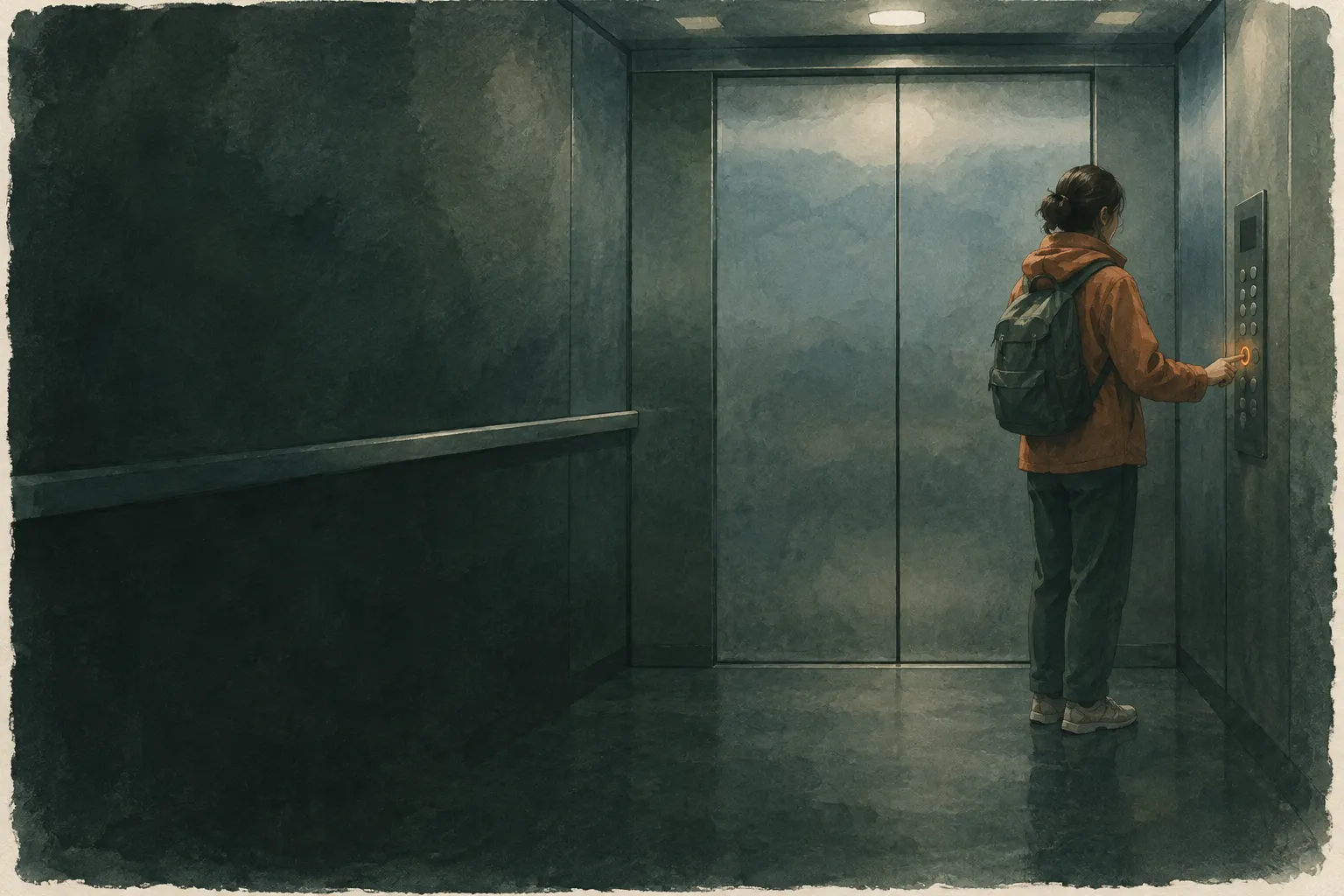
Person in a lift calmly pressing the alarm button

I am stuck in a lift

The car jolts, stops between two floors and the door stays shut – now it is time to raise the alarm, stay calm and wait.

First

  1. Press the alarm button or emergency intercom in the lift and follow the instructions.
  2. Stay calm and wait for help; a stopped lift is usually unpleasant rather than acutely dangerous.
  3. Do not force the doors and never climb out yourself – even if the car stops between floors.
  4. If someone feels unwell or panics and the alarm does not respond: call the local emergency number (112 in the EU).

Call emergency services if

  • Smoke or smell of fire
  • Someone has difficulty breathing, chest pain or loses consciousness
  • The lift alarm gets no response
  • Water is coming in

What is happening

A lift usually stops because of a technical fault or a power cut. Often the car jolts briefly, the normal light goes out, an emergency light comes on and the doors stay shut. That is frightening, but lifts are built to stop safely in such a case: brakes and safety devices hold the car.

The car is not airtight; there are ventilation openings. Suffocation is not the danger, even if the confined space feels that way. In the EU, lifts must have an alarm system that connects to a permanently staffed service, and this is common elsewhere too. That service sends the lift engineer or the fire service. It can take minutes or longer until help arrives – much longer in a widespread power cut, when many lifts are stuck at the same time.

The real danger mostly comes from trying to get out yourself: anyone who forces the doors or climbs out of a car stuck between floors can fall into the shaft or be trapped if the car suddenly moves again. Even a car that has stopped almost level with a floor is not a safe way out.

What makes it hard is mainly the confined space, the uncertainty, the warmth in summer and fear – especially for people with claustrophobia, children or people with health conditions. What realistically matters: raise the alarm, say clearly where you are and who is affected, stay calm, sit down and wait. You need the local emergency number if there is smoke, someone needs medical help, water is coming in or the lift alarm gets no response.

Step by step

  1. Phase 1

    Right away

    • Press the alarm button (usually marked with a bell symbol); some must be held for a few seconds – follow the instructions in the car.
    • If someone answers over the intercom: give the address, the lift (e.g. the number on the plate in the car), how many people are inside and any health problems.
    • Do not force the doors and do not climb through a ceiling hatch or a gap in the doors.
    • If there is smoke or a smell of fire, call the local emergency number (112 in the EU) at once and give the exact location.
    • Breathe: in slowly, out even more slowly – this calms you down.
  2. Phase 2

    While you wait

    • Sit down, do not lean on the doors and keep bags, clothing and leads away from them.
    • Save your phone battery; reception in the shaft is often poor, sometimes better near the door. Inform the building management or a contact person.
    • If the alarm gets no response: call the local emergency number (112 in the EU); without signal, knock and call out regularly to attract people in the stairwell.
    • If someone panics, talk to them calmly, have them sit down and breathe slowly; conversation or small tasks help to distract.
    • In summer take off unnecessary layers; if you have something to drink, take small sips.
    • If someone has difficulty breathing or chest pain or loses consciousness: call the emergency number at once.
  3. Phase 3

    When help arrives

    • Follow the instructions of the lift engineer or fire service; if needed they bring the car level with a floor and open the doors.
    • Only step out when the helpers tell you to, and watch for a step between the car and the floor.
    • Tell them if someone needs help getting out.
  4. Phase 4

    Afterwards

    • Use the lift again only once it has been cleared, and report the fault to the building management.
    • Anyone who still feels unwell should see a doctor; with chest pain or difficulty breathing, call the emergency number.
    • The shock can linger: talking about it helps. Persistent fear of lifts can be addressed with professional support.

What to watch out for

  • Self-rescue

    The car can move again at any moment, and there can be an open gap to the shaft between the car and the floor. Only trained helpers open the doors.

  • Smoke and fire

    With a smell of fire, call the emergency number at once. Never use a lift during a fire in the building – not even if it still works.

  • Heat and circulation

    In summer a full car can get warm. Sit still, loosen clothing and keep an eye on people with heart or circulation problems.

  • Panic or emergency?

    Panic is a common but temporary stress reaction. Talk calmly, have the person sit down, breathe slowly. But do not simply dismiss chest pain or difficulty breathing as panic – call the emergency number.

  • Water coming in

    If water comes into the car or shaft, for example in a flood or from a burst pipe, call the emergency number at once.

  • Leads and bags

    A dog lead or bag strap caught between the doors is dangerous when the lift starts moving again. Keep animals close to you.

Common mistakes

  • Forcing the doors open or climbing out.
  • Pressing the alarm button only once, briefly, and then giving up.
  • Not saying exactly where you are over the intercom.
  • Draining the phone battery with videos or games.
  • Dismissing chest pain or difficulty breathing as "just panic".
  • Taking the lift anyway during a severe weather warning or an announced power shutdown.

Prepare in advance

  • In your own building, know where the alarm button and information plate are in the lift and how to reach the building management.
  • Keep your phone charged and save the building management's number.
  • Take the stairs during severe weather warnings or announced power shutdowns.
  • Show children how the alarm button works and explain that they should wait and never climb out.
  • Anyone who depends on the lift, for example a wheelchair user, plans with the building management and neighbours what happens during a longer breakdown.
  • Always carry emergency medication prescribed for you, such as an asthma inhaler.

Special consideration

Children
Explain calmly what is happening and keep children occupied – with stories, counting games or questions. Your calm is contagious.
Health conditions and disability
Report over the intercom straight away if someone has a heart, lung or other condition, uses a wheelchair or needs medication, so the helpers can plan for it.
Pets
Keep dogs close on a short lead and do not let the lead get caught between the doors.

Sources

Your situation

Cause
With you

Matching entries

0 rules apply

No AI decides here. Every recommendation is based on a visible rule.

Add details about your situation above to get more specific guidance.

Basics for this situation

Why: Always applies to this situation – regardless of your answers.

All rules of this situation (5)
  1. [not active] If Cause = Power outage

    In a widespread outage, release can take longer. Still trigger the alarm and make yourself heard by knocking or calling out.

  2. [not active] If Cause = Fault, power is on

    Wait for the service technician; save battery and inform someone.

  3. [not active] If Cause = Smoke or smell of fire

    Call the local emergency number (112 in the EU) at once and give the exact location. Never use a lift to escape a fire.

  4. [not active] If With you = Children

    Explain calmly to children what is happening and keep them occupied.

  5. [not active] If With you = Someone feels unwell

    Report over the intercom that someone needs help. Panic is common: breathe slowly, sit down, talk to the person.