Skip to content
In an emergencyAustriaEmergency numbers →
SurviveBetter
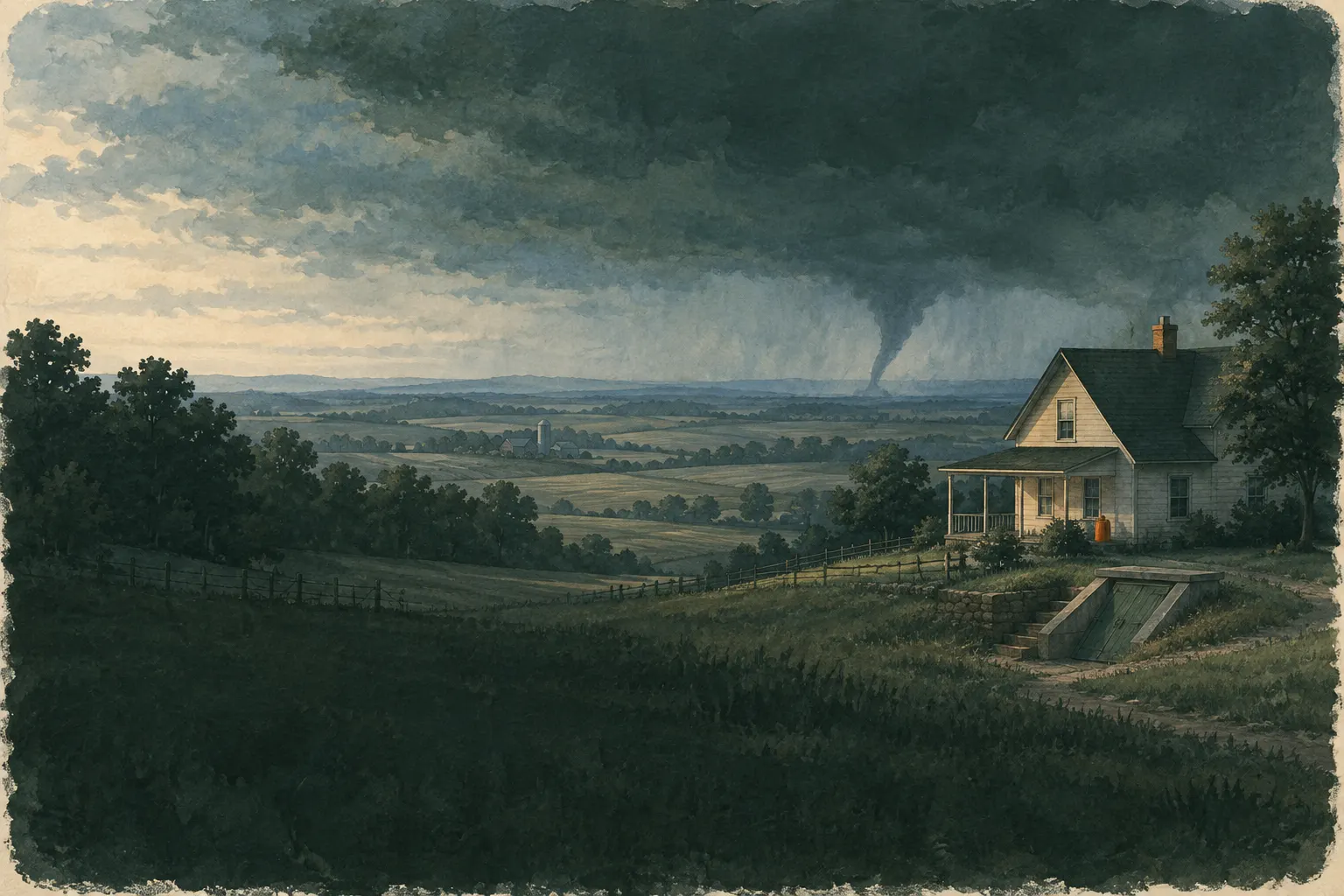
Dark storm sky with a distant tornado over farmland

A tornado warning has been issued for our area

The warning reports a tornado near you – you may only have minutes to reach the safest place in the building.

First

  1. Take shelter immediately – do not wait to see the tornado.
  2. Safe room, basement or windowless interior room on the lowest floor of a sturdy building; keep away from windows, doors and outside walls.
  3. Protect your head and neck with your arms, cushions, a blanket or a helmet.
  4. Keep following official warnings by radio, warning app or cell broadcast.

Call emergency services if

  • Someone is injured or trapped
  • A building has collapsed or is badly damaged
  • Smell of gas, fire or a downed power line

What is happening

Tornadoes form from severe thunderstorms. Lead time is short: after a warning, often only a few minutes remain. Some countries distinguish between a watch (“Tornado Watch” – conditions are favourable) and a warning (“Tornado Warning” – a tornado has been sighted or detected on radar). A warning means: act now.

Typical signs are a very dark, sometimes greenish sky, large hail, a low rotating cloud and a continuous loud roar like a freight train. But many tornadoes are hidden by rain or darkness. If you go to look first, you lose the time that matters.

The biggest danger is flying debris and collapsing parts of buildings. Caravans, mobile homes, tents and cars offer little protection. In a sturdy building, the safest place is a safe room, the basement or a windowless interior room on the lowest floor – as many walls as possible between you and the outside. Opening windows “to equalise the pressure” is a myth and only wastes time.

What realistically matters most: know your shelter spot in advance, go there at once when a warning comes, protect your head and neck, and only go out once the warning has ended. Afterwards, debris, power lines and damaged buildings are the danger.

Step by step

  1. Phase 1

    Immediately when the warning comes

    • Do not look outside – go to your shelter spot at once.
    • Safe room, basement or windowless interior room on the lowest floor (hallway, bathroom, closet), away from windows, doors and outside walls.
    • Put on sturdy shoes if they are right at hand; take your phone, a torch and helmets if you have them.
    • Bring children and people who need help; take pets only if it causes no delay.
  2. Phase 2

    In the shelter

    • Crouch low or get under a sturdy table; protect your head and neck with your arms, cushions, a mattress, a blanket or a helmet.
    • Keep following warnings by radio, warning app or cell broadcast.
    • Stay there until the warning has officially ended – even if it suddenly goes quiet.
    • Explain calmly and briefly to children what is happening.
  3. Phase 3

    Without a sturdy building

    • Leave a caravan, mobile home or tent and go to the nearest sturdy building or designated shelter while there is still time.
    • Do not shelter under bridges or overpasses – the wind is channelled there and debris flies through.
    • If no building can be reached: lie flat in a low, flat spot and protect your head and neck with your arms, a jacket or a blanket; watch out for water in hollows.
    • Do not try to outrun a tornado in city traffic.
  4. Phase 4

    When the tornado has passed

    • Only go out once the warning has ended; wear sturdy shoes, long trousers and gloves.
    • Care for the injured, and if someone is injured or trapped, call the local emergency number (112 in the EU).
    • Keep away from downed lines and damaged buildings; if you smell gas, leave the building and report it from outside.
    • Trapped? Attract attention by knocking or using a whistle rather than shouting constantly.
    • Photograph and document the damage.

What to watch out for

  • Debris and glass

    Most injuries are caused by flying debris. That is why head protection and as many walls as possible between you and the windows matter so much.

  • Invisible tornadoes

    In rain or at night a tornado is often not visible. Rely on the warning and on sounds, not on your eyes.

  • Mobile shelters

    Caravans, mobile homes and tents can be overturned or destroyed, even when anchored. On campsites, ask in advance where the shelter is.

  • Bridges and overpasses

    Under bridges you feel protected, but you are not: wind accelerates there and debris is hurled through.

  • Dangers afterwards

    Nails, glass, torn-down lines, leaking gas and unstable walls remain dangerous after the tornado. Only enter damaged buildings once they have been cleared.

Common mistakes

  • Looking outside or filming the tornado first instead of taking shelter at once.
  • Opening windows to equalise the pressure.
  • Staying in a caravan or tent.
  • Sheltering under a bridge or overpass.
  • Leaving the shelter during a brief lull before the warning has ended.

Prepare in advance

  • Know the safest spot at home, at work and at school, and show it to everyone in the household.
  • Install a warning app and keep cell broadcast enabled on your phone.
  • Keep a torch, shoes, blankets and, if possible, helmets at the shelter spot.
  • When travelling and on campsites, ask where the nearest shelter is.
  • Know your weather service's warning levels (watch or immediate warning).

Special consideration

Older people and people with disabilities
Anyone who needs help moving must start as soon as a watch is issued or have a shelter spot on the ground floor. People who do not hear well need a warning that vibrates or flashes.
Children
Bring children into the shelter, help them protect head and neck, and practise playfully beforehand where everyone goes when the phone sounds a warning.

Sources

  • Tornadoes · Ready.gov – U.S. Federal Emergency Management Agency (FEMA)
  • Are You Ready? An In-Depth Guide to Citizen Preparedness · U.S. Federal Emergency Management Agency (FEMA)
  • Emergency Alerts · Ready.gov – U.S. Federal Emergency Management Agency (FEMA)

Your situation

Where are you?
Stage
With you

Matching entries

0 rules apply

No AI decides here. Every recommendation is based on a visible rule.

Add details about your situation above to get more specific guidance.

Basics for this situation

Why: Always applies to this situation – regardless of your answers.

All rules of this situation (6)
  1. [not active] If Where are you? = In a sturdy building

    Go to the lowest floor and the most interior room without windows (hallway, bathroom, closet). Get under a sturdy table for extra protection from debris.

  2. [not active] If Where are you? = Caravan, mobile home, tent

    Caravans, mobile homes and tents do not offer adequate protection. Go to the nearest sturdy building or designated shelter in good time.

  3. [not active] If Where are you? = In a car or Outdoors

    Reach a sturdy building if you can. Do not shelter under bridges or overpasses. Follow the entry's advice for when no building is reachable.

  4. [not active] If Stage = Tornado has passed

    Only go out once the warning has ended. Keep away from downed lines and damaged buildings; leave the building if you smell gas.

  5. [not active] If With you = Children or pets

    Bring children into the shelter and help them protect head and neck; take pets only if it causes no delay.

  6. [not active] If With you = Older people or people with disabilities

    Anyone who needs help moving must start early. Choose a shelter spot on the ground floor in advance.