Chemical or industrial accident: sheltering in place
When authorities warn of hazardous substances after a fire, chemical or transport accident, a building is usually the best protection: go inside, close windows and doors, switch off ventilation and air-conditioning, move to an interior room and follow the radio or warning app. Children stay at school or childcare.
- Carried out within a few minutes
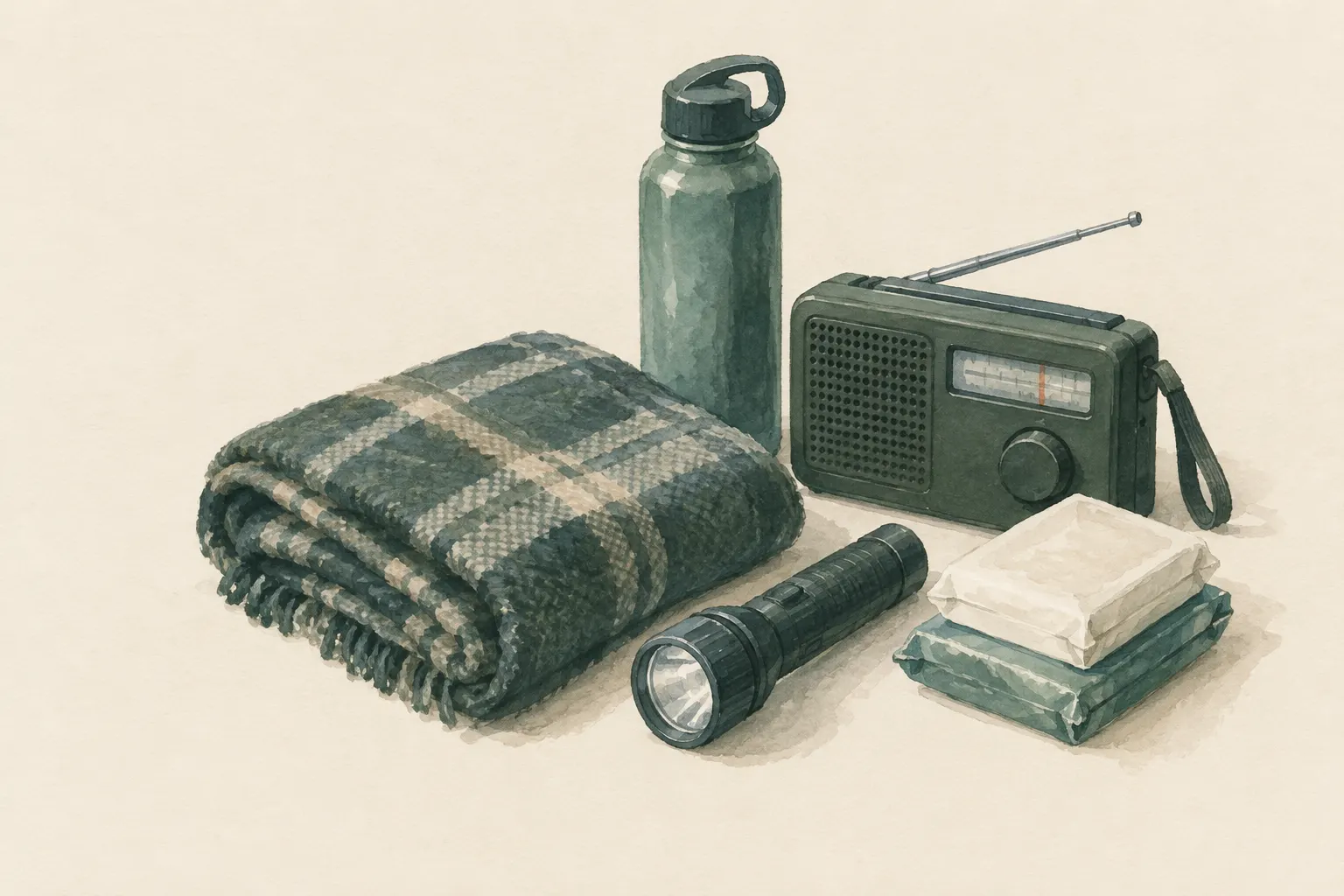
Explained simply
Sometimes a factory catches fire, a lorry carrying dangerous substances crashes, or a big fire produces a lot of toxic smoke. Then a visible or invisible cloud can drift over the town with the wind. Unlike with many other dangers, running away is often not the right thing then – staying inside is.
A closed house is like a protective shell. When windows and doors are shut and the ventilation is off, air from outside only gets in very slowly. The cloud moves on and thins out, and you are protected inside. Anyone walking around outside or driving, on the other hand, is directly exposed to the cloud.
When a warning comes: get into the nearest building quickly, shut windows and doors, turn off the ventilation, go to a room with as few outside walls as possible and switch on the radio or warning app. Children stay at school – the teachers look after them there. If someone has trouble breathing or is unconscious, call the local emergency number (112 in the EU) at once.
How it works
When a hazardous substance is released in an accident, a cloud of gas, vapour or smoke forms and drifts with the wind. On its way it mixes with the surrounding air and thins out. How dangerous it is depends on the substance, the amount, the weather and the distance – and it is the authorities, not the people on site, who have exactly this information.
A closed building exchanges its air with the outside air only slowly. Closing windows and doors and switching off ventilation systems slows this exchange even further. An interior room with few windows and outside walls offers an additional layer of protection. This keeps the amount that gets in clearly lower until the cloud has passed. This approach is called “shelter in place”.
The protection is not complete, especially if a substance is released for a very long time. That is why the authorities decide, depending on the situation, whether sheltering indoors or evacuation is better, and they also say when it is safe to ventilate again. Their announcements always take precedence over general rules.
What really matters
Speed matters. Get into the nearest solid building immediately and take passers-by with you if possible. Close all windows and outside doors, lower shutters and close fireplace or stove dampers where present. Switch off ventilation systems, air-conditioning, extractor hoods and fans. It is worth knowing in advance how to switch off the ventilation in your own home.
Then find a room with as few windows and outside walls as possible. Whether it should be lower or higher in the building depends on the substance: some gases are heavier than air and collect in basements and hollows – then a higher floor is better. That is why you listen carefully to the announcements and follow them.
Follow the radio, warning app or loudspeaker announcements and keep phone lines free for emergency calls. Open windows only after the official all-clear, and then ventilate thoroughly. Pay attention to any advice the authorities give about garden vegetables or cleaning surfaces.
Safety: what to watch out for
Do not go to the scene to look or help – you put yourself in danger and hinder the emergency services. If you are outside and no building can be reached, move away from the smoke or gas cloud across the wind direction, not with the wind and not through it. In a car, close the windows, set the ventilation to recirculation or off, switch on the radio and drive away from the cloud across the wind. If a building can be reached, it is better than the car.
Particle masks such as FFP2 do not protect against gases and vapours. With smoke they can hold back some of the particles, but the real protection comes from the closed building. So do not rely on a mask.
Anyone who has come into contact with a substance should carefully remove contaminated clothing, put it in a bag, wash their skin with plenty of water and soap and follow the instructions of the authorities or emergency services. For breathing difficulties, unconsciousness or if people are affected, call the local emergency number (112 in the EU) at once. Treating poisoning belongs in the hands of professionals.
Typical situations
The hardest situation for many parents: the warning comes while the children are at school or childcare. The impulse to drive off at once and fetch them is understandable – but dangerous. Schools and childcare centres protect the children inside the building according to the same rules. Anyone who sets off exposes themselves to the cloud and may block roads for emergency vehicles. Agree in advance as a family that in such a case everyone stays where they are.
A common situation is a major fire, for example in a warehouse, with a dark column of smoke over the neighbourhood. The authorities then warn via radio, warning apps and announcements to keep windows and doors closed and switch off ventilation. Even if the smoke does not seem immediately dangerous, it is wise to follow these instructions closely.
Anyone living near industrial plants, railway lines or major roads benefits especially from being prepared: a warning app on the phone, a battery-powered radio and knowing how to switch off the ventilation at home. Many municipalities with industrial sites also inform residents about what to do in the event of an incident – it is worth reading this information.
Step by step
Go inside at once
Get into the nearest solid building. Take in passers-by if possible. Do not stay in the car if a building can be reached.
- 1
Go inside at once
Get into the nearest solid building. Take in passers-by if possible. Do not stay in the car if a building can be reached.
- 2
Close windows and doors
Close all windows and outside doors, lower shutters. Close fireplace and stove dampers where present.
- 3
Switch off ventilation
Switch off ventilation systems, air-conditioning, extractor hoods and fans.
- 4
Choose an interior room
Move to a room with as few windows and outside walls as possible; with gases heavier than air not the basement but a higher floor – follow the announcements.
- 5
Follow information
Follow the radio, warning app or loudspeaker announcements. Keep phone lines free for emergency calls.
- 6
Do not pick up children
Schools and childcare protect the children inside the building. Setting off puts yourself at risk.
- 7
Ventilate after the all-clear
Open windows and ventilate thoroughly only after the official all-clear. Follow any advice on garden vegetables or cleaning surfaces.
Common mistakes
- Driving to the scene to look
- Leaving the ventilation or air-conditioning running
- Fetching children from school
- Opening windows before the all-clear
- Assuming a dust mask protects against gas
Quick view
Materials
Battery or crank radio
Check batteries regularly and keep spares.
Duct tape
Only if authorities recommend sealing
Do not use on power cables, gas lines or as a wound dressing.
Adhesive can soften in heat and leave residue.
Plastic sheet / large bin bag
Tears easily; never pull over the head (suffocation risk).
Do not use for drinking water unless food-grade.
Suitable for
- Fires with smoke, industrial and transport accidents
- Living near industrial plants, railway lines or main roads
- Schools, offices and homes
Not suitable for
- Situations in which authorities order an evacuation – then follow their instructions
- Investigating the scene yourself
Prerequisites
- Warning app installed or radio at hand
- Knowing how to switch off the ventilation system
Safety
- Particle masks such as FFP2 do not protect against gases and vapours. Protection comes from the closed building.
- If you have come into contact with a substance: carefully remove contaminated clothing, put it in a bag, wash skin with plenty of water and soap and follow the instructions of the authorities or emergency services.
How it works
In a release, a cloud drifts with the wind and dilutes over time. A closed building lets outside air in only slowly; switching off the ventilation and choosing an interior room clearly reduces the amount that gets in until the cloud has passed. Being out and about, by contrast, is dangerous because you are exposed to the cloud without protection.
Advantages
- Can be done at once without equipment
- Protects many people at the same time
- Avoids dangerous traffic flows
Disadvantages
- Not complete protection during a long release
- Requires trust in the authorities' information
Deep knowledge
Background
For chemical emergencies Ready.gov describes the "shelter in place" principle: go inside, close windows, doors and ventilation, move to an interior room and wait for instructions. The BBK gives similar rules for hazardous-substance warnings: go into a building, close windows and doors, switch off ventilation, turn on the radio.
Whether a basement or a higher floor is safer depends on the substance. That is why official announcements always take precedence over general rules.
Variants
- In the car
- If no building can be reached: close windows, ventilation to recirculation or off, radio on, drive away from the cloud across the wind direction, not through it.
Common mistakes
- Driving to the scene to look
- Leaving the ventilation or air-conditioning running
- Fetching children from school
- Opening windows before the all-clear
- Assuming a dust mask protects against gas
Limits and risks
- No medical treatment of poisoning
- No information on individual substances
Material alternatives
Derived from material properties: a substitute must have all relevant properties. Observe the notes on the substitute.
- Plastic sheet / large bin bag
- Tarp, Emergency blanket (Tears easily once punctured; short-term shelter only.), Document folder (waterproof) (Store securely – contains sensitive personal data.), Rain poncho (When used as a shelter, it no longer protects your body from rain.), Bivy bag (Never fully close off the face.), Tent (Do not cook or heat inside the tent (fire and carbon monoxide danger).), Heavy-duty bin bag (large) (Suffocation risk: never pull plastic bags over the head or face and keep them away from small children.), Group shelter bag (Airtight – ventilate regularly.)
Results come exclusively from structured entries. No improvised instructions are generated.
Sources
Ready.gov – U.S. Federal Emergency Management Agency (FEMA): Chemical Emergencies
Shelter in place: go in, close windows, doors and ventilation, interior room
Bundesamt für Bevölkerungsschutz und Katastrophenhilfe (BBK), Deutschland: Ratgeber für Notfallvorsorge und richtiges Handeln in Notsituationen
Behaviour on hazardous-substance warnings: building, windows shut, ventilation off, radio
U.S. Federal Emergency Management Agency (FEMA): Are You Ready? An In-Depth Guide to Citizen Preparedness
Hazardous materials incidents in citizen preparedness