Volcanic ashfall
Volcanic ash is not soft dust but fine, sharp-edged rock and glass material. It irritates airways and eyes, makes roads slippery, clogs filters and can overload roofs – especially when wet. Stay indoors, close windows, wear a mask and goggles and follow the authorities' instructions.
- 30 minutes of preparation when warned
Explained simply
When a volcano erupts, it often throws not only lava but also huge amounts of ash into the air. But this ash is not soft like ash from a fireplace. It consists of tiny, sharp-edged bits of rock and glass – a bit like extremely fine sand with pointed corners. The wind can carry it very far, even hundreds of kilometres.
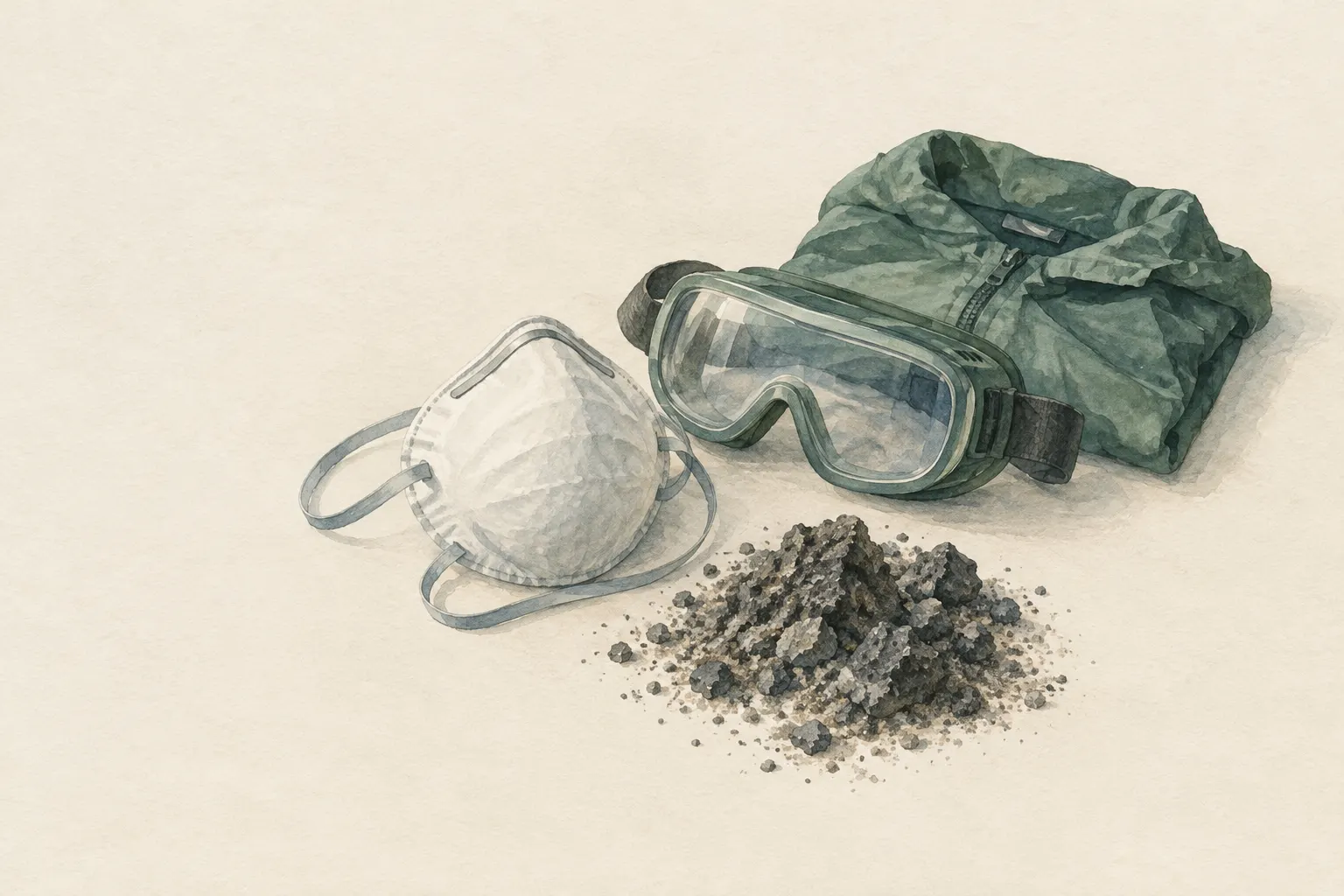
This ash irritates the eyes and airways, makes roads slippery like snow and can damage machines. When it gets wet, it becomes really heavy and can put a strain on roofs. That is why during ashfall you stay indoors, close windows and doors, and outdoors you wear a good mask and close-fitting goggles.
Near a volcano there are much greater dangers than ash. There the only rule is: leave at once when the authorities say so, and never enter closed areas. In danger, call the local emergency number (112 in the EU).
How it works
In an explosive volcanic eruption, rock is torn apart and blasted high into the atmosphere as a cloud of very fine particles. This volcanic ash consists of tiny, angular pieces of rock, minerals and volcanic glass. It is fine enough to be inhaled, hard enough to scratch eyes, paint and machinery, and it does not dissolve in water.
The wind often carries the ash cloud far away from the volcano, sometimes hundreds of kilometres. That is why places that cannot even see the volcano can be affected by ashfall. There, ash is then usually the main hazard: for health, for traffic, for the water supply and for buildings.
When ash gets wet, it soaks up water and becomes considerably heavier. A layer of ash that seems harmless when dry can overload flat or weak roofs after a rain shower. Ash also clogs filters, gutters and drains and can turn into a concrete-like mass in the sewers.
What really matters
Protection during ashfall follows three simple principles: keep the particles out, do not stir them up, and recognise loads early. As soon as a warning comes, put masks, goggles, water and food for a few days ready, cover sensitive electronics and bring animals and vehicles under a roof. Cover or disconnect rainwater tanks and follow the water utility's instructions.
During the ashfall, stay indoors. Close windows and doors, switch off ventilation and air-conditioning or set them to recirculation, and seal draughts with damp cloths. If you have to go out, wear a well-fitting FFP2 or N95 mask, close-fitting goggles and long clothing. Wear glasses instead of contact lenses, because ash grains under a lens can scratch the cornea. Stay outdoors as briefly as possible.
When cleaning up, dampen the ash lightly before pushing it together, and collect it in strong bags. Do not dry sweep, or you will stir up the finest particles again. Do not wash it into the drains either, and dispose of it as the municipality instructs. A simple cloth over your mouth is not enough protection.
Safety: what to watch out for
Near the volcano there are far greater dangers than ash: lava, glowing hot clouds of gas and rock that race down slopes at great speed, and mudflows of ash and water. In such hazard zones there is only one rule: follow evacuation orders immediately and do not enter closed zones. In danger, call the local emergency number (112 in the EU).
People with asthma or other respiratory diseases are particularly at risk during ashfall. They should stay indoors and keep their prescribed medication at hand; if short of breath, get medical help. Children and older people should also keep their exposure to ash as low as possible.
Do not climb onto a roof without fall protection – ash is slippery, and a fall can end badly. Thick layers of ash on flat or weak roofs should be removed by professionals or with fall protection, especially before forecast rain. If there are signs of overloading, leave the building. Driving on ash is like driving on snow: slippery, with poor visibility. Only drive if absolutely necessary, slowly and with lights on.
Good to know
In 2010 the eruption of the Icelandic volcano Eyjafjallajökull showed how far ash can reach: across large parts of Europe, air traffic was restricted for days, because ash can be dangerous to aircraft engines. Anyone travelling to volcanically active areas should therefore expect closed airports and roads, follow the travel advice of their foreign ministry and the local authorities, and plan supplies for delays.
The International Volcanic Health Hazard Network, a network of experts, publishes guidance for the public. Among other things, it recommends staying indoors, using well-fitting particle masks and dampening ash before removing it. The specific instructions, however, always come from the local authority, because every eruption is different.
A common misconception is that volcanic ash is harmless dust you can just blow or sweep away. Doing exactly that puts the finest particles, the ones of most concern to health, back into the air. Working slowly, damply and with protection is more laborious, but it protects lungs, eyes and equipment.
Step by step
When warned: prepare
Put masks, goggles, water and food ready. Cover electronics. Shelter animals and vehicles.
- 1
When warned: prepare
Put masks, goggles, water and food ready. Cover electronics. Shelter animals and vehicles.
- 2
Stay indoors
Close windows and doors, switch off ventilation and air-conditioning or set to recirculation, seal draughts with damp cloths.
- 3
If you have to go out
A well-fitting FFP2/N95 mask, close-fitting goggles, glasses instead of contact lenses, long clothing. Outdoors as briefly as possible.
- 4
Protect water
Cover or disconnect rainwater tanks. Follow the water utility's instructions.
- 5
Clean up without dust clouds
Dampen ash lightly, then push it together and collect it in strong bags; do not dry sweep, do not wash it into drains. Dispose of it as the municipality instructs.
- 6
Watch the roof load
Have thick ash layers on flat or weak roofs removed by professionals or with fall protection, especially before rain.
Common mistakes
- Dry sweeping and stirring up ash
- Wearing contact lenses
- Considering simple cloth masks sufficient
- Climbing onto the roof without fall protection
- Washing ash into the drains
Quick view
Materials
Particle-filtering respirator (FFP2/N95)
Only protects with a tight fit; beards and the wrong size reduce effectiveness.
Filters particles, not gases – no protection against chemical vapours or carbon monoxide.
Close-fitting safety goggles
Wear glasses instead of contact lenses
Plastic sheet / large bin bag
To cover electronics
Tears easily; never pull over the head (suffocation risk).
Do not use for drinking water unless food-grade.
Battery or crank radio
Check batteries regularly and keep spares.
Suitable for
- Regions near active volcanoes
- Travel to volcanically active areas
- Ashfall far from the volcano
Not suitable for
- Hazard zones with lava, pyroclastic flows or lahars – the only rule there is evacuation as instructed
- Roof cleaning without fall protection
Prerequisites
- Access to official warnings
- A stock of water and food for a few days
Safety
- People with asthma or other respiratory diseases are particularly at risk: stay indoors, keep prescribed medication at hand, get medical help if short of breath.
- Vehicles slide on ash as on snow, and visibility and air filters suffer. Only drive if absolutely necessary, slowly and with lights on.
How it works
Ash consists of tiny, angular rock and glass particles. Fine enough to be inhaled, hard enough to damage eyes, paint and machines, and heavy enough to load roofs. Protection means keeping the particles out (building, mask, goggles), not stirring them up (dampen rather than dry sweep) and recognising loads early.
Advantages
- Simple protective measures with great effect
- Reduces health and property damage
Disadvantages
- Clean-up is laborious and lengthy
- Protective material must be in stock
Deep knowledge
Background
In its guide for the public the International Volcanic Health Hazard Network (IVHHN) describes the health effects of volcanic ash and recommends, among other things, staying indoors, using well-fitting particle masks and dampening ash before removing it. Ready.gov recommends following evacuation orders and protecting yourself from ash with masks and goggles.
Ash can be carried hundreds of kilometres. Health protection, traffic and water supply are therefore affected even far from the volcano.
Variants
- While travelling
- During eruptions airports and roads are often closed. Follow the foreign ministry's travel advice and local authorities and plan supplies for delays.
Common mistakes
- Dry sweeping and stirring up ash
- Wearing contact lenses
- Considering simple cloth masks sufficient
- Climbing onto the roof without fall protection
- Washing ash into the drains
Limits and risks
- No figures on roof load capacities
- No behaviour in the near zone of the volcano other than evacuation
Material alternatives
Derived from material properties: a substitute must have all relevant properties. Observe the notes on the substitute.
- Plastic sheet / large bin bag
- Tarp, Emergency blanket (Tears easily once punctured; short-term shelter only.), Document folder (waterproof) (Store securely – contains sensitive personal data.), Rain poncho (When used as a shelter, it no longer protects your body from rain.), Bivy bag (Never fully close off the face.), Tent (Do not cook or heat inside the tent (fire and carbon monoxide danger).), Heavy-duty bin bag (large) (Suffocation risk: never pull plastic bags over the head or face and keep them away from small children.), Group shelter bag (Airtight – ventilate regularly.)
Results come exclusively from structured entries. No improvised instructions are generated.
Sources
International Volcanic Health Hazard Network (IVHHN): The Health Hazards of Volcanic Ash – A guide for the public
Health effects of ash, masks, staying indoors, dampening ash
Ready.gov – U.S. Federal Emergency Management Agency (FEMA): Volcanoes
Following evacuation orders, protection from ash with mask and goggles