Pandemics: household basics
In a pandemic everyday life, work, school and supplies change, often for months. For the household what counts is good hygiene, a small stock for periods of isolation, a plan for caring for sick relatives and for childcare – and above all the advice of the responsible public health authorities.
- A few hours of preparation; ongoing adjustment
Explained simply
A pandemic is a disease that spreads across many countries at the same time. Pathogens – tiny germs such as viruses or bacteria – jump from person to person: through coughing, sneezing, hands, or things that many people touch. Because so many people are affected at once, everyday life often changes: schools may close, parents may work from home, and some families have to stay inside for a while.
You can think of preparing like a good team game. Everyone in the household has a job: washing hands properly with soap, coughing into the crook of the elbow, having enough in the cupboard for a few days at home, and knowing who helps whom if someone falls ill. Nobody has to manage it alone.
The most important point: what exactly helps against a particular disease is decided by the health authorities and doctors – not by rumours on the internet. If someone struggles to breathe or seems very ill, call the local emergency number (112 in the EU) or the medical hotline.
How infection spreads
Infectious diseases need a route from one person to the next. Some pathogens travel mainly in droplets that are expelled when coughing or talking and quickly sink to the ground. Others float as very fine particles, called aerosols, in indoor air for longer. Still others reach the mouth, nose or eyes via hands and frequently touched surfaces such as door handles, light switches or phones.
Which route matters most for a new pathogen is often something science first has to find out. That is why recommendations can change during a pandemic – this is not a sign of chaos but of growing knowledge. For the household this means: there are basic rules that almost always help, plus specific rules that the health authorities set for the pathogen in question.
The basic rules include thorough handwashing with soap, coughing and sneezing into the crook of the elbow, throwing tissues away straight away, airing rooms regularly and cleaning frequently touched surfaces. Soap is not a magic potion; it loosens dirt and many germs from the skin so that water can rinse them away. That takes a little time and rubbing – between the fingers, around the thumbs and under the nails too.
What really matters at home
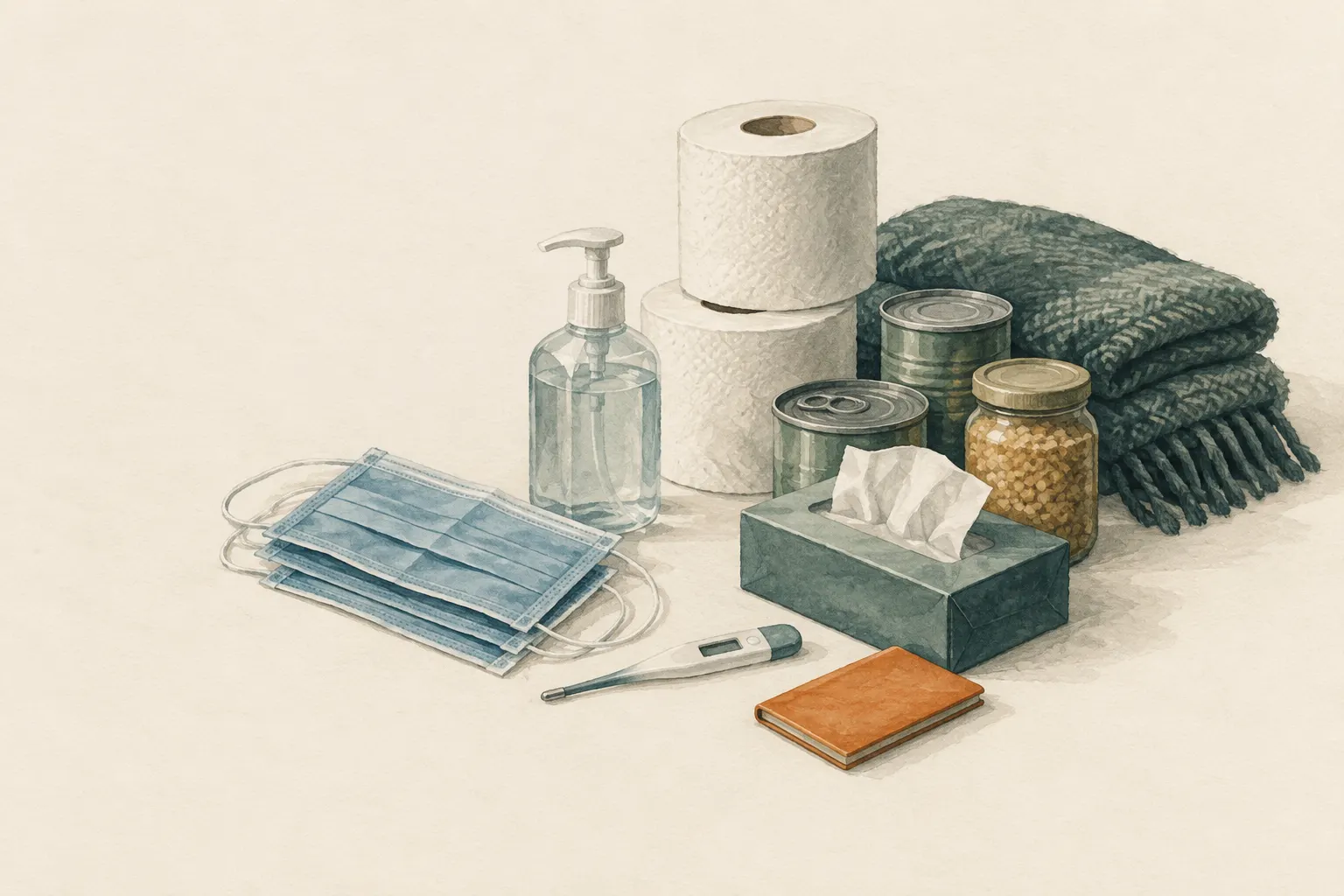
A calmly built stock is the core. This does not mean panic buying, but a basic supply of food, drinks, hygiene items and the medication someone in the household needs regularly. Then a sick or isolated household does not have to go shopping. If you already keep an emergency stock, you are well placed; if not, it is best built up gradually with your normal shopping.
For medication: reorder what is needed regularly in good time, and do not hoard or take anything on your own initiative. A thermometer, tissues, soap and hand sanitiser belong in every home medicine kit. What else makes sense is something to discuss with your doctor or pharmacy.
Arrangements matter just as much as things. Who takes over if a parent falls ill? Who looks after the children if school or childcare closes? Can someone work from home? It helps to name backup people who are not in a risk group themselves and to write down the most important phone numbers.
When someone in the household falls ill
If possible, the sick person gets their own room, their own towels and their own crockery, which is washed thoroughly. Regular airing dilutes germs in the indoor air. Ideally one healthy person takes on the caring, so that not everyone in the household is in close contact. Which further protective measures make sense, such as masks or tests, depends on the pathogen and follows the health authorities' advice.
Before taking a sick person to a doctor's practice, phone ahead. That way the practice can protect other patients and tell you what to do. With severe signs such as shortness of breath, marked confusion or if someone can hardly be woken, call the local emergency number (112 in the EU) at once. This entry makes no diagnoses and does not replace medical advice.
Going to work or school while sick is one of the most common mistakes. Staying at home protects colleagues, classmates and above all people who could become seriously ill.
Keeping going for weeks and months
Unlike a storm, a pandemic often lasts a long time. That is a strain: boredom, worry, arguments in cramped homes and loneliness are completely normal reactions. A fixed daily routine with times for getting up, meals, exercise and sleep gives structure, especially for children.
Staying in touch is a protective factor. Phone and video calls with relatives, friends and neighbours help against loneliness. People who live alone and older people in particular should not be forgotten – a short call or an offer to help with shopping can make a big difference.
Moderation helps with information too. It is usually enough to read the health authorities' official pages once or twice a day. Following the news constantly tends to make you more anxious rather than better informed.
Good to know: spotting rumours
In pandemics, misinformation often spreads faster than the disease itself. Typical warning signs are miracle cures that supposedly heal for certain, calls to forward something 'before it gets deleted' or messages with no identifiable sender. Such messages play on fear and hope.
A simple habit helps: before you believe or share something, check whether the responsible health authority says the same. This entry deliberately does not answer medical questions about pathogens, masks, tests or vaccinations, because the answers depend on the specific pathogen. That is the job of the authorities and doctors.
The good news: what you prepare here – hygiene, supplies, arrangements – also helps in any ordinary flu season and makes the household more resilient overall.
Step by step
Make hygiene a habit
Wash hands thoroughly with soap regularly, cough and sneeze into the crook of your elbow, dispose of tissues at once, clean frequently touched surfaces.
- 1
Make hygiene a habit
Wash hands thoroughly with soap regularly, cough and sneeze into the crook of your elbow, dispose of tissues at once, clean frequently touched surfaces.
- 2
Stock for isolation
Food, drinks, hygiene items and regular medication for some time at home, so that a sick or isolated household does not have to go shopping.
- 3
Plan care at home
Who cares for someone who falls ill? If possible, one room for the sick person, separate towels, good ventilation. Follow health authorities' advice on home care.
- 4
Arrange childcare and work
What happens if schools or childcare close? Who looks after the children? Can someone work from home? Plan backup people outside the risk groups.
- 5
Stay in contact
Phone and video contact with relatives and neighbours, especially with people who live alone. Offer shopping help.
- 6
Follow official information
Rules can change quickly. Read the health authorities' information regularly but in moderation.
Common mistakes
- Panic buying instead of steady preparedness
- Taking medication without medical advice
- Following rumours from social media
- Going to work or school while sick
- Losing sight of relatives who live alone
Quick view
Materials
Hygiene supplies
Soap, hand sanitiser, tissues
Medication supply
Regularly needed medication
Agree any stock of prescription medication with a doctor or pharmacist; observe storage instructions and expiry dates.
First-aid kit (household)
Including a thermometer
Does not replace a first-aid course; check contents and expiry dates regularly.
Non-perishable food
Prefer food that can be eaten without cooking; consider allergies and dietary needs; do not forget a can opener.
Suitable for
- All households
- Families with children, older or chronically ill relatives
- Shared households
Not suitable for
- Medical self-treatment or diagnoses
- Information from unconfirmed sources instead of official channels
Prerequisites
- Knowing the official information sources of the health authorities
- Basic household supplies
Safety
- Do not hoard or take medication on stock without medical advice. Reorder regular medication in good time.
- In pandemics misinformation spreads quickly. Health authorities and official bodies are the authoritative source.
How it works
Infectious diseases spread through contact, droplets, aerosols or surfaces – differently depending on the pathogen. Which measures work is set by health authorities for the specific pathogen. The household can prepare for what helps in every pandemic: hygiene, the ability to stay at home for a while, and organisation in case someone falls ill.
Advantages
- Also helps in any flu season
- Reduces infections within the household
- Gives structure in uncertain times
Disadvantages
- Long duration strains mental health and family
- Rules change depending on pathogen and situation
Deep knowledge
Background
For pandemics Ready.gov recommends good hand hygiene, a stock of food and medication, a plan for care and childcare and following the health authorities' advice. The BBK lists hygiene items and a household medicine kit as part of emergency preparedness.
This entry deliberately makes no medical statements about pathogens, masks, tests or vaccinations – these depend on the specific pathogen and are set by the health authorities.
Common mistakes
- Panic buying instead of steady preparedness
- Taking medication without medical advice
- Following rumours from social media
- Going to work or school while sick
- Losing sight of relatives who live alone
Limits and risks
- No medical statements
- No statements on measures against specific pathogens
Sources
Ready.gov – U.S. Federal Emergency Management Agency (FEMA): Pandemic
Hygiene, supplies, care and childcare plan, health authorities' advice
Bundesamt für Bevölkerungsschutz und Katastrophenhilfe (BBK), Deutschland: Ratgeber für Notfallvorsorge und richtiges Handeln in Notsituationen
Hygiene items and household medicine kit in preparedness