Storm surge on the coast: know your zone, leave in time
In a storm surge, strong winds push seawater against the coast; together with tide and waves the water can reach far inland. Anyone living or holidaying in an exposed zone should know the evacuation zone, take warnings seriously and leave immediately when told – water, not wind, is the greatest danger here.
- 1 hour of planning; evacuation as instructed
Explained simply
In a storm surge, a strong storm pushes seawater against the coast. Imagine blowing hard across a bowl of water – on the other side the water sloshes up. In the same way, the wind pushes huge amounts of seawater onto land. If there is also a normal high tide and big waves on top, the water can run far inland, over roads and into houses and basements.
In a storm surge, the water is more dangerous than the wind. That is why the best protection is to leave in time – inland or to higher ground. Anyone who lives or holidays on the coast should know whether their house is in an at-risk zone and which route leads away from the water.
The most important point: when the authorities say 'Please leave the area', you go at once. And never go to the dyke or the beach to watch the waves – they can sweep people away.
How a storm surge forms
Several things come together in a storm surge. First, onshore wind – wind blowing from the sea towards the land – pushes the water towards the coast over long distances. Second, the low air pressure in the storm system raises the water level a little further, because less air is pressing down on the sea. Third, the tides play a part: if the storm coincides with normal high tide, the water rises especially high.
Waves come on top. They carry extra water onto land and can strike dykes, walls and houses with great force. The shape of the coast matters too: in bays, river mouths and shallow coastal waters, water can pile up particularly high.
According to the US National Hurricane Center, storm surge has historically been the greatest threat to life in hurricanes. European coasts such as the North Sea and Baltic have their own storm-surge warning services and a system of dykes. The basic rules still apply everywhere.
Knowing your zone
Many coastal towns have maps showing which areas can flood in a storm surge and which zones are evacuated first. Ask the municipality, civil protection or your accommodation whether your address is in such an area and where the route inland runs. This entry gives no specific water levels or zones – local plans take precedence.
On holiday it is best to ask on arrival day: how are guests warned, and where do you go? If the host country has a warning app, it is worth installing. That way you do not have to find your bearings first in an emergency.
The extent is hard to judge locally. The sea may barely rise in one place and run far inland a few kilometres further on. That is why you rely on the authorities' assessment, not on your view from the window.
Preparing and leaving in time
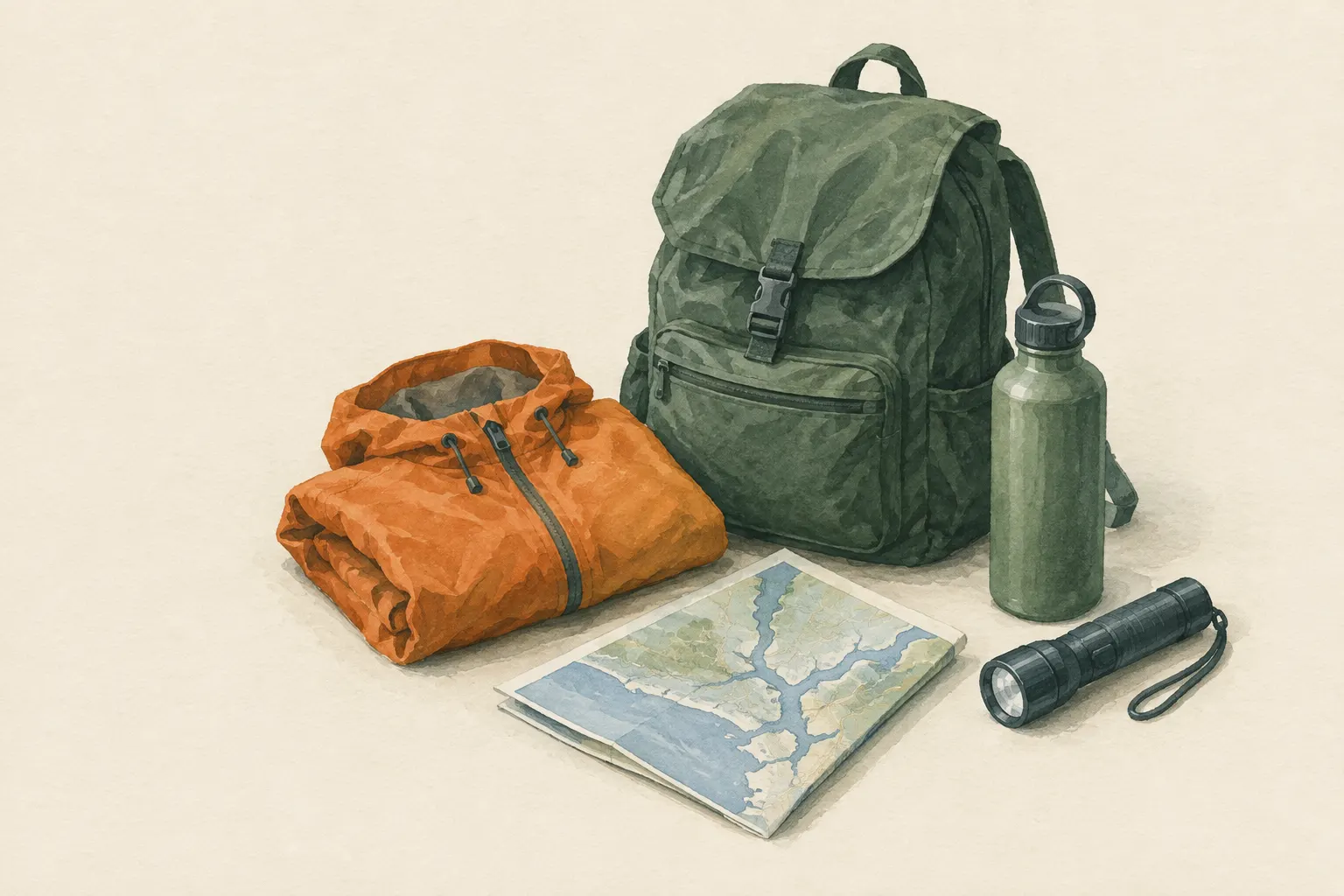
Storm surges often have one advantage over other disasters: they are usually announced hours to days in advance. Use that time. When a watch is issued, get your go bag, important documents, medication, charging cables and a power bank ready, fill up the car and talk to neighbours who might need help leaving.
If an evacuation is ordered for your zone, leave immediately and follow the designated route. Do not wait until the last moment: roads can already be flooded before the peak of the surge. Those who stay often cannot be reached by rescuers during the storm.
A typical mistake is refusing to evacuate because the wind seems 'only moderate'. In a storm surge, the water is the main danger, and it can run high even when the weather seems less dramatic.
Safety: what to watch out for
Do not go to dykes, piers or beaches to watch the waves. Waves and currents can sweep people away, and a single big wave can reach much further up than the others.
If leaving is no longer possible, stay in a safe, tall building only on official instruction and move to the upper floors. Do not retreat into a closed attic without an exit – if the water keeps rising, you are trapped there. If you are in danger, call the local emergency number (112 in the EU).
Floodwater can be contaminated with sewage and chemicals and can hide dangers such as debris, open manholes and power lines. So do not walk or drive through it. Return only when the authorities clear the area; then document the damage before you clean up. Important: tsunamis have their own rules. After a strong earthquake on the coast or if the sea suddenly draws back, go to high ground immediately, even without an official warning.
Step by step
Know your zone
Ask the municipality, civil protection or your accommodation whether the address is in a flood or evacuation area and where the route inland runs.
- 1
Know your zone
Ask the municipality, civil protection or your accommodation whether the address is in a flood or evacuation area and where the route inland runs.
- 2
Prepare when a watch is issued
Get the go bag, documents, medication and charged devices ready, fill up the vehicle, talk to neighbours who need support.
- 3
Leave when ordered
Follow the designated route. Do not wait until the last moment – roads can flood before the peak.
- 4
If leaving is no longer possible
Only on official instruction, stay in a safe, tall building, move to upper floors, not into closed attics without an exit. Call the emergency number if in danger.
- 5
Return only when cleared
Return only when the authorities allow it. Do not walk or drive through water; document damage.
Common mistakes
- Watching the waves from the dyke
- Refusing to evacuate because the wind is 'only moderate'
- Retreating into an attic without an exit
- Returning too early
Quick view
Materials
Battery or crank radio
Check batteries regularly and keep spares.
Document folder (waterproof)
Store securely – contains sensitive personal data.
Power bank
Do not use damaged or swollen batteries; do not charge while covered.
Medication supply
Agree any stock of prescription medication with a doctor or pharmacist; observe storage instructions and expiry dates.
Suitable for
- Coastal towns on the North Sea, Baltic, Atlantic, Gulf coasts
- Tropical cyclones
- Coastal holidays in storm season
Not suitable for
- Tsunamis – their own rules apply (move inland immediately, even without a warning)
Prerequisites
- Knowing whether your accommodation is in a flood or evacuation zone
- An escape route inland or to higher ground
Safety
- Floodwater can be contaminated and hide dangers such as debris, open manholes and power lines.
How it works
Storm surge occurs when onshore storm winds and low air pressure raise the water level above the normal tide. If it coincides with high tide, the water rises especially high; waves add to it. The water can flood large areas quickly and damage buildings. According to the National Hurricane Center, storm surge has historically been the greatest threat to life in hurricanes.
Advantages
- Leaving in time is the most effective protection
- Can be planned well when warnings come early
Disadvantages
- Evacuation costs time, money and nerves
- The local extent is hard to judge
Deep knowledge
Background
NOAA's National Hurricane Center explains how storm surge forms and why it is dangerous. Ready.gov advises knowing your evacuation zone and leaving immediately when ordered.
European coasts have their own storm-surge warning services and dyke protection; the basic rules – know your zone, follow warnings, don't watch from the water's edge – apply there too.
Variants
- On holiday
- On arrival day, ask how the accommodation is warned and where to go. Install the host country's warning app if available.
Common mistakes
- Watching the waves from the dyke
- Refusing to evacuate because the wind is 'only moderate'
- Retreating into an attic without an exit
- Returning too early
Limits and risks
- No details on specific water levels or zones
- Local warning and evacuation plans take precedence
Material alternatives
Derived from material properties: a substitute must have all relevant properties. Observe the notes on the substitute.
- Document folder (waterproof)
- Tarp, Plastic sheet / large bin bag (Tears easily; never pull over the head (suffocation risk).), Emergency blanket (Tears easily once punctured; short-term shelter only.), Rain poncho (When used as a shelter, it no longer protects your body from rain.), Bivy bag (Never fully close off the face.), Tent (Do not cook or heat inside the tent (fire and carbon monoxide danger).), Heavy-duty bin bag (large) (Suffocation risk: never pull plastic bags over the head or face and keep them away from small children.), Group shelter bag (Airtight – ventilate regularly.)
Results come exclusively from structured entries. No improvised instructions are generated.
Sources
NOAA National Hurricane Center: Storm Surge Overview
How storm surge forms and why it is dangerous
Ready.gov – U.S. Federal Emergency Management Agency (FEMA): Hurricanes
Know your evacuation zone, leave when ordered
Ready.gov – U.S. Federal Emergency Management Agency (FEMA): Evacuation
Preparing and carrying out evacuation