Pastures, fields and farms: out in farmland
Farmland looks harmless but has its own risks: cattle with calves defend their young, electric fences, machinery at harvest, slurry stores and silos. In addition the land belongs to someone, and access rights differ greatly from country to country. Respect for animals, property and work protects everyone.
- Attention on the way
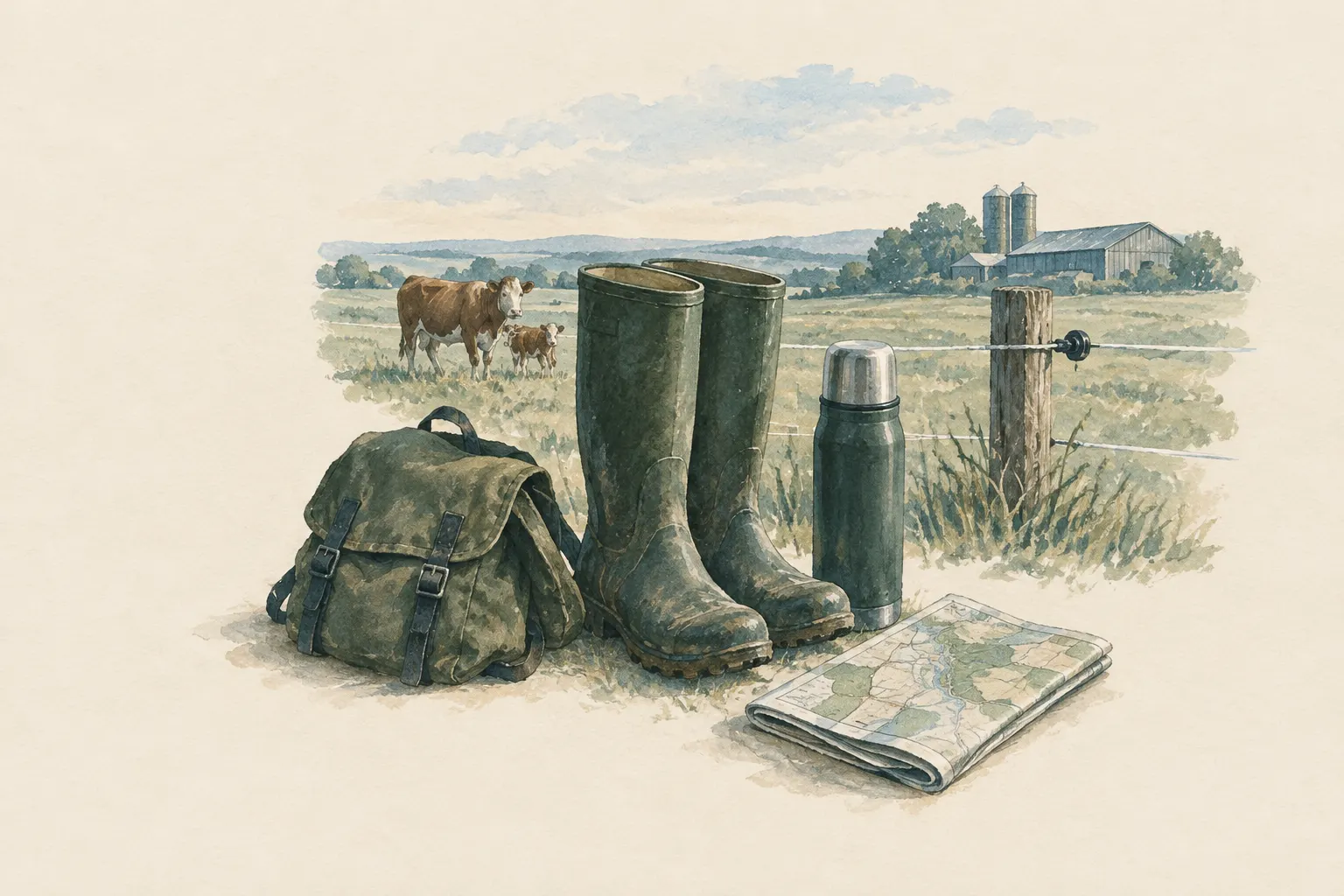
Explained simply
Fields, meadows and farms look peaceful, almost like a picture book. Still, there are a few things worth knowing. A cow is many times heavier than you and can run surprisingly fast. A cow with a calf watches over her young, just as a mother watches over her child.
Pasture fences can carry electricity and give you a painful shock. Big machines are loud, and their drivers often cannot see you. And slurry stores and silos can contain gases that you cannot see but that are dangerous.
The most important thing: never walk between a cow and her calf, and if cattle chase you and your dog, let the dog go – it is faster than you and will manage on its own. Also, the land belongs to someone: stay on the paths and leave gates the way you found them.
Understanding cattle
Cattle are large, heavy and fast animals. Most of the time they are curious or indifferent, but suckler cows defend their calves. They see dogs as a threat, much like a wolf. That is why many dangerous encounters happen when people walk with a dog through a field with calves. Bulls can also be dangerous.
Go around fields with calves if there is another option. If you must cross, walk calmly along the edge, not between a cow and her calf, and keep the dog on a short lead. If the herd becomes restless, if the animals come towards you or lower their heads, turn back or detour.
If you and your dog are chased by cattle, let the dog go. The Countryside Code from England and Wales advises exactly that: the dog can escape faster, and the cattle usually focus on it rather than on you. You yourself calmly take the shortest safe way out of the field.
Safety: what to watch out for
Slurry pits, slurry stores and silos are life-threatening. When slurry decomposes, gases such as hydrogen sulphide form and collect in pits and enclosed spaces; there may also be too little oxygen. Never enter such facilities, do not lean in and keep children away. If someone collapses there, do not go in after them – call the local emergency number (112 in the EU).
Electric fences work with short, strong pulses meant to deter animals. For people they are painful. Do not touch them or climb over them, and explain this to children too. Many pastures have gates with insulated handles; use those.
Farm machinery is wide, loud and has large blind spots. During harvest work, keep your distance and make eye contact with the driver before passing. Stacks of straw bales can topple and are not a climbing frame. Farm buildings, barns and machinery sheds are workplaces, not shortcuts.
Respect and access rights
The land is the workplace and property of people who make their living from it. Whether and where you may enter private land differs greatly from country to country and even region to region – from the wide-ranging right of public access in parts of Scandinavia to considerably stricter rules elsewhere. Check the local rules and stay on marked paths. This text deliberately gives no legal advice.
One simple rule helps everywhere: leave gates as you found them. Close a closed gate again so that animals do not escape. Leave an open one open, because the animals may need to reach water on the other side. Do not walk on crops, take rubbish and dog waste with you and do not obstruct work.
Typical situations
Families with children and dogs often use farm tracks. Explain to children beforehand that calves are not cuddly toys, that fences are not to be touched and that machines have right of way. A dog on a lead is safer for everyone near livestock and wildlife.
In an emergency in the countryside, farms are often the nearest place with people, a phone and tools. Ring at the farmhouse and do not go into barns or machinery sheds. Good farm tracks, hedges and buildings also make farmland terrain in which you can usually find your way well.
Step by step
Clarify access rules
Whether and where you may enter private land differs greatly between countries and regions. Check local rules and stay on marked paths.
- 1
Clarify access rules
Whether and where you may enter private land differs greatly between countries and regions. Check local rules and stay on marked paths.
- 2
Leave gates as you find them
Close gates that were closed and leave open ones open – otherwise animals could escape or be cut off from water.
- 3
Go around cattle
Cross fields with cattle along the edge and calmly, do not get between a cow and her calf, keep a dog on a short lead. If the herd becomes restless, turn back or detour.
- 4
Avoid hazards
Keep away from slurry stores, silos, machinery, stacks of straw bales and farm buildings.
- 5
Be considerate
Do not walk on crops, take rubbish home, pick up dog waste and do not obstruct work.
Common mistakes
- Wanting to pet or photograph calves
- Holding on to the dog when cattle charge
- Climbing over electric fences
- Leaving gates open
- Assuming the same access rights apply everywhere
Quick view
Materials
Topographic map
Shows paths and pastures
Check the publication date – paths and buildings may have changed.
Protect from wet (map case or bag).
Suitable for
- Hikes and bike trips through rural areas
- Families with children and dogs
- Emergency routes through farmland
Not suitable for
- Handling livestock as a keeper
Prerequisites
- Know the local access rules (rights of way, right to roam)
Safety
- Electric fences give painful shocks. Do not touch or climb over them; explain this to children. Use fence gates with insulated handles.
- Farm machinery is wide, loud and has limited visibility. Keep your distance during harvest work and seek eye contact with the driver.
How it works
Livestock are large and fast; cattle weigh many times as much as a person. Suckler cows see dogs as a threat to their calves. Decomposing slurry produces gases such as hydrogen sulphide, which collect in enclosed spaces and pits. Pasture fences use short high-voltage pulses intended to deter. And the land is a workplace and property – consideration avoids conflicts.
Advantages
- Good tracks and landmarks
- People and help often nearby
Disadvantages
- Animals and machinery as hazards
- Access rights unclear or restricted
Deep knowledge
Background
The Countryside Code by Natural England and Natural Resources Wales summarises rules of conduct for visitors to farmland: leave gates as you find them, keep dogs under control, let your dog go if chased by cattle, respect work and animals.
Access rights differ greatly across Europe – from the wide-ranging right of public access in parts of Scandinavia to stricter rules elsewhere. This entry therefore does not state any legal rules.
Variants
- Getting help at a farm in an emergency
- In rural areas farms are often the nearest place with people, a phone and tools. Ring at the farmhouse, do not go into barns or machinery sheds.
Common mistakes
- Wanting to pet or photograph calves
- Holding on to the dog when cattle charge
- Climbing over electric fences
- Leaving gates open
- Assuming the same access rights apply everywhere
Limits and risks
- No legal advice on access rights
- No livestock-keeping advice
Sources
Natural England and Natural Resources Wales: The Countryside Code
Conduct on farmland, gates, dogs, cattle
European Commission: 112 – the European emergency number
European emergency number 112