Reading bird language: alarm calls and behaviour as clues
Birds react audibly to disturbance: with alarm calls, mobbing, sudden silence or flushing. Learning to tell relaxed song from alarm lets you notice hawks, cats, foxes or people long before you see them – and shows you how much you disturb yourself.
- 20–30 minutes regularly over weeks
Explained simply
Birds are like the burglar alarm of the woods. When all is calm, they sing, call softly to each other and search the ground for food. But when a cat, a fox, a bird of prey or a person appears, the sound changes: they call harshly and quickly, one call after another, fall suddenly silent or fly up in a hurry.
If you learn to hear the difference, you often notice that an animal is on the move before you see it. Sometimes you can even hear which way it is going, because the alarm travels with it – like a wave in a stadium.
All you need to do is sit still and listen, ideally always at the same spot. Important: do not go to nests to make the birds agitated, and do not play bird calls from your phone – that stresses the animals, especially when they have young.
How it works
Besides their song, many songbirds have various calls: soft contact calls so as not to lose each other in the group, begging calls of the young and alarm calls when there is danger. Alarm calls often differ depending on the type of danger. With a perched enemy, such as a cat in a bush or an owl during the day, many birds call loudly, harshly and repeatedly and even gather around the enemy. This behaviour is called “mobbing”.
With danger from the air, such as a hunting bird of prey, you often hear short, high, thin calls that are hard to locate instead. This way a bird warns the others without revealing to the hunter where it is itself. Many birds also react to the alarm calls of other species, and squirrels and other mammals listen in as well.
Because each bird only reacts when the danger is close enough, alarm spreads like a wave. When a fox walks through the woods, the unrest moves with it. An alarm that moves therefore suggests a walking animal or person; an alarm that stays in one place for a long time often suggests a perched predator.
What really matters: the baseline
You can only recognise alarm if you know what “normal” sounds like. That is why the most important step is to choose a regular observation spot – in the garden, in the park or at the woodland edge – and sit there quietly again and again. Listen to how it sounds when everything is calm: relaxed song, occasional contact calls, the rustling of birds feeding on the ground.
Then watch for changes: does it suddenly go quiet? Do several birds fly up in a hurry at the same time? Are there harsh call series? Are many birds looking in the same direction? Often it is not a single call but the overall picture that counts. A single loud call can also be a squabble over food or a territorial fight.
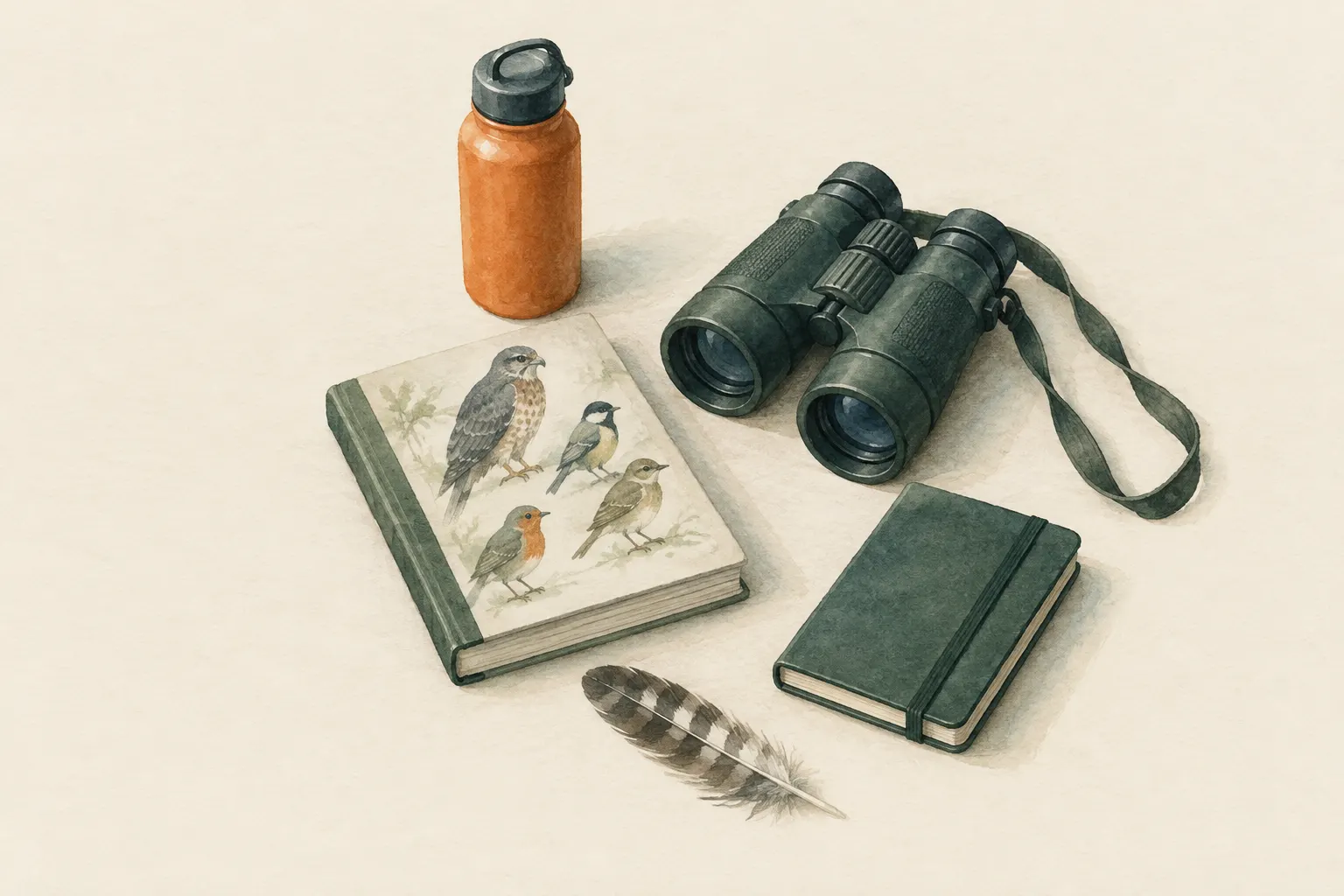
A notebook helps enormously. Write down when the alarm began, where, what it sounded like and where it moved – and what you saw afterwards. Over time you will recognise patterns typical of your spot.
Good to know: your own wave of disturbance
One of the most important insights when listening is uncomfortable: most of the time you are the trigger yourself. When you walk along a path, the alarm runs ahead of you and warns all the animals around. That is why noisy groups see so few animals in the woods.
When you arrive at your spot, notice how far this unrest reaches and how long it takes for the birds to settle again. If you walk more slowly, more quietly and not straight towards birds, the disturbance zone gets smaller. That is good not only for your observations but also for the animals, which spend less energy fleeing.
Jon Young popularised this reading of “bird language” in his book “What the Robin Knows”. What remains important: every interpretation is a guess that you test through your own observation. Bird-call apps can help with identification but do not replace listening in context.
Safety and consideration
Listening itself is harmless, but it can harm birds if done wrongly. Played bird calls (“playback”) can seriously disturb birds in the breeding season, because they suspect a rival in their territory. In protected areas this is often prohibited. Refrain from it and check local rules.
Do not go to nests either to see how the parents react. Repeated disturbance can make birds abandon their brood. If you hear an alarm, check from a distance with binoculars instead of walking over. That way the trigger – perhaps an owl at its roost – is also left undisturbed.
How to practise it
Sit at your spot regularly for 20 to 30 minutes over several weeks, ideally at similar times of day. The first minutes after arriving are usually restless; the real observing starts after that. Feel free to close your eyes now and then and try to assign each call to a direction.
Good species for beginners are conspicuous ones found in many European gardens and woods that give loud warnings, such as blackbirds and jays. But you do not need to be able to identify species to recognise alarm. With children this can become a game: who hears first that something is changing, and which direction does the unrest point to?
Step by step
Learn the baseline
Sit still at your regular spot and listen to what it sounds like when all is calm: song, contact calls, feeding on the ground.
- 1
Learn the baseline
Sit still at your regular spot and listen to what it sounds like when all is calm: song, contact calls, feeding on the ground.
- 2
Notice changes
Watch for sudden silence, hasty flushing, harsh call series or many birds looking in the same direction.
- 3
Direction and movement
Note where the alarm starts and where it travels. A moving alarm points to a walking animal or person; stationary mobbing often to a perched owl or cat.
- 4
Check from a distance
Look with binoculars without walking over. Record the result and a description of the calls.
- 5
Observe your own impact
When arriving, notice how far the alarm runs ahead of you. Walking more slowly and quietly shrinks this disturbance zone.
Common mistakes
- Interpreting every call as an alarm
- Walking over to see the trigger
- Call playback in the breeding season
- Listening to one species instead of the overall picture
Quick view
Materials
Binoculars
Never look directly at the sun.
Field notebook and pencil
Suitable for
- Garden, park, woodland edge
- Wildlife watching and tracking
- Children and families
Not suitable for
- Deliberately attracting birds with call playback in the breeding season or in protected areas
Prerequisites
- A regular observation spot
- Patience and calm
Safety
- Playing bird calls can disturb birds, especially in the breeding season. In protected areas it is often prohibited – check local rules and refrain from it.
- Do not approach nests to watch reactions; repeated disturbance can make birds abandon the brood.
How it works
Many songbirds use different calls for different dangers and also react to the alarm calls of other species. Typical are harsh, repeated calls when mobbing a perched predator and short, high, hard-to-locate calls for danger from the air. Because disturbance spreads like waves, the direction in which the alarm travels reveals the movement of whatever triggered it.
Advantages
- No equipment needed
- Trains attention
- Reduces your own disturbance
Disadvantages
- Needs a lot of practice
- Calls differ by species and region
Deep knowledge
Background
In 'What the Robin Knows', Jon Young describes how disturbances and the movements of other animals can be inferred from bird calls and behaviour. Interpretation remains a matter of likelihood that you test through your own observation.
Bird-call apps can help with identification but do not replace listening in context.
Variants
- Mammals as sentinels
- Squirrels and other mammals also give warnings. Jays and blackbirds are conspicuous alarm-givers in many European woods.
Common mistakes
- Interpreting every call as an alarm
- Walking over to see the trigger
- Call playback in the breeding season
- Listening to one species instead of the overall picture
Limits and risks
- No identification of calls by species
- Interpretations are never certain
Sources
Jon Young – Houghton Mifflin Harcourt (2012): What the Robin Knows: How Birds Reveal the Secrets of the Natural World
Alarm calls, waves of disturbance and interpreting bird behaviour