Watching animals without disturbing them: wind, stillness, binoculars, hides
You see wildlife best when it does not notice you. Four things matter: watch the wind so your scent does not drift to the animals; stay quiet and patient in one place; watch from a long distance with binoculars; and use existing observation hides or natural cover. The goal is observing, not approaching – if animals flee, you were too close.
- From 30 minutes of sitting still
Explained simply
Wild animals usually notice much earlier than we do that someone is coming. Many smell you long before they see you. Your scent travels with the wind like smoke from a campfire. If the wind blows from you to the animals, they already know before you have even arrived.
That is why good nature watchers check the wind first. They sit so that the wind blows from the animals towards them. Then they keep very still, move slowly and watch through binoculars. If you sit quietly for long enough, you almost become part of the landscape – and suddenly birds and other animals come out again on their own.
The goal is watching, not sneaking up. If an animal raises its head, stares at you or stops eating, you are already too close. Then you withdraw slowly. If an animal flees because of you, you were too close.
How it works
Many mammals perceive people first by smell, then by movement and finally by sound. Our scent constantly rises from skin, hair and clothing and is carried away by the wind. If the wind is unfavourable, an animal can smell you even though you are well hidden and make no sound.
If you position yourself so that the wind blows from the observation area towards you, your scent stays behind you. That is the single most important trick in any wildlife watching. Hunters, nature photographers and nature guides all know it, which is why wind direction is always their first question.
The second part is stillness. Anyone who moves stands out, because many animals react particularly strongly to movement. Anyone who sits quietly, on the other hand, is after a while no longer perceived as a threat. Birds start singing again, smaller animals return to their normal behaviour. Binoculars then bridge the distance that has to remain undisturbed for the animals.
What really matters
Checking the wind direction is simple: drop a few dry blades of grass and see where they drift. Or watch how leaves, smoke or clouds move. You can also moisten a finger and hold it up – the side that feels cool points into the wind. Remember that the wind can shift in valleys and at forest edges, especially in the morning and evening.
Choose a spot with cover. Sit in front of a tree, a bush or a rock, not on an open hilltop where your silhouette – your outline – stands out against the sky. Where there are public observation hides or viewpoints, use them. Stay on the paths.
Arrive early and quietly, ideally before dawn or dusk sets in, because many animals are most active then. Phone on silent, no rustling clothes, walk slowly and stop often. Then stay seated for at least twenty to thirty minutes and only move slowly. Raise your binoculars slowly too.
Safety: what to watch out for
Watch the animals' behaviour. If an animal raises its head, stares at you, stops feeding or moves away, you are too close. Then withdraw slowly. Never crowd large animals and never block their escape route. Stalking large or dangerous animals is not part of this technique, and you do not watch at nests, dens or places where animals give birth.
Hunting stands and other hunting facilities are private property in many countries. Using them without permission is prohibited there, and hunting may also take place from them. During hunts, avoid signposted areas and wear clearly visible clothing.
If you are out at dusk or dawn, carry a headlamp and know your way back. The walk home in the dark often takes longer than expected. A dog is best left at home for observation trips, or kept on a short lead.
How to practise it
The best exercise is a regular sit spot. Find a quiet place – it can be in your own garden or a park – and go back to it again and again. Sit quietly and watch what happens. Over time you recognise patterns: who passes when, how do the birds react when a cat appears?
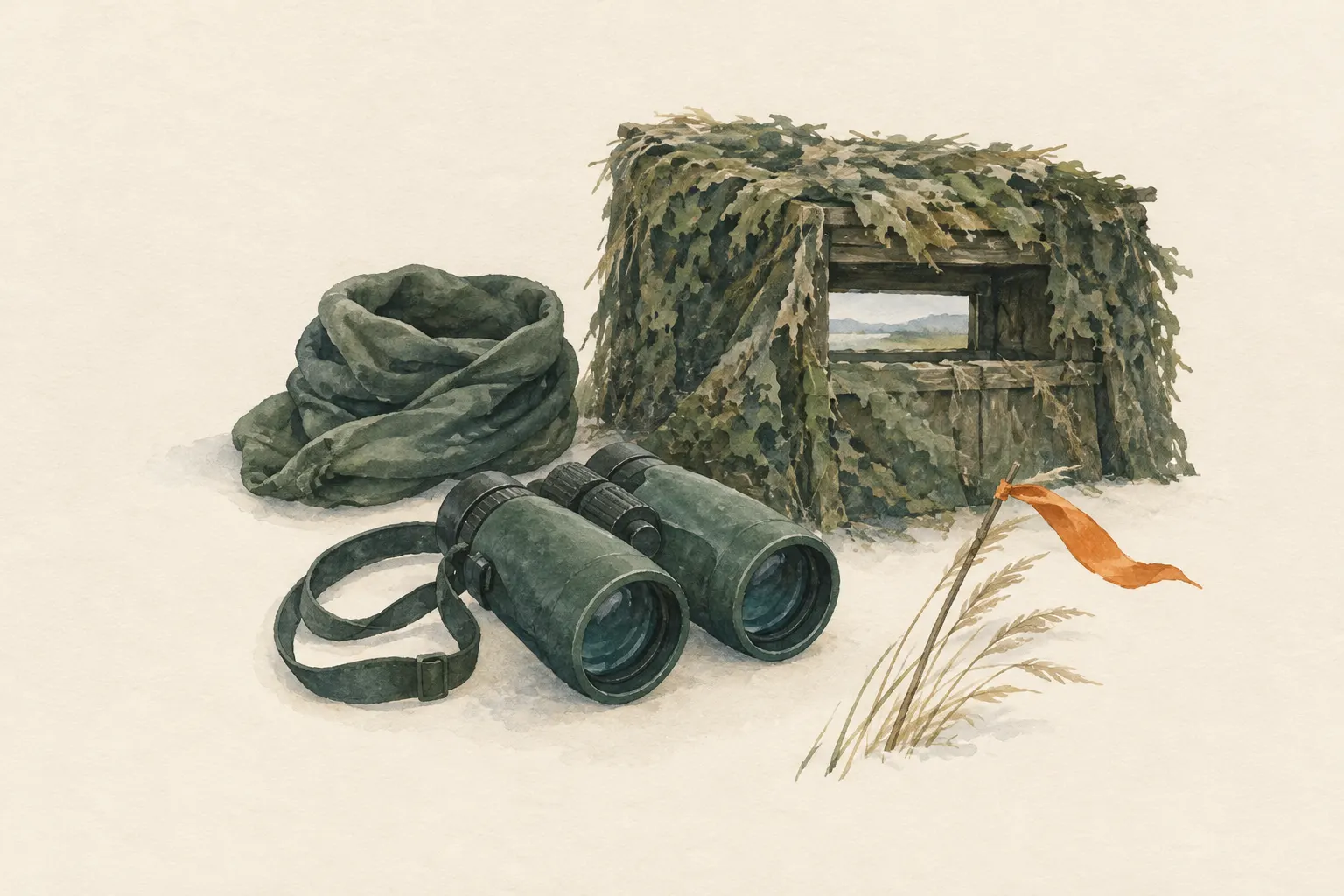
Many protected areas offer observation huts or towers. They are built so that animals are not disturbed, and they are the best choice when it comes to rare or sensitive species. There you can also practise focusing your binoculars properly in peace.
Expect to see nothing quite often. That is part of it. Patience is a nature watcher's most important skill. When you leave, wait until the animals have moved away or leave in a direction that does not disturb them – and leave no trace and no litter.
Good to know
The Leave No Trace principles call for observing wildlife from a distance and not following it. Binoculars and patience are exactly the tools that make this possible. The less disturbed an animal is, the more natural the behaviour you see.
This entry gives no species-specific minimum distances, because they depend on species, area and season. Where such rules exist, you will find them at the local protected-area administration or wildlife authority.
Step by step
Check wind direction
Drop a few blades of grass, watch smoke, leaves or clouds or raise a wet finger. Choose your spot so that the wind blows from the observation area towards you.
- 1
Check wind direction
Drop a few blades of grass, watch smoke, leaves or clouds or raise a wet finger. Choose your spot so that the wind blows from the observation area towards you.
- 2
Choose a spot with cover
Sit in front of a tree, bush or rock so your silhouette does not stand out against the sky. Use public observation hides and viewpoints where available. Stay on paths.
- 3
Arrive early and quietly
Be at your spot before dusk or dawn, phone on silent, avoid rustling clothing. Walk slowly, stop often.
- 4
Sit still
Remain quiet for at least 20–30 minutes, move slowly, raise binoculars slowly.
- 5
Leave unobtrusively
Wait until animals have moved away or leave in a direction that does not disturb them. Leave no trace and no litter.
Common mistakes
- Walking towards animals with the wind at your back
- Sneaking closer for a better photo
- Using hunting stands without permission
- Bringing a dog off the lead
- Getting up impatiently after a few minutes
Quick view
Materials
Binoculars
Allows a large distance
Never look directly at the sun.
Sleeping pad
As a seat pad
Field notebook and pencil
Suitable for
- Nature observation at dawn and dusk
- Photography from a distance
- A calm activity for families
Not suitable for
- Stalking large or dangerous animals
- Watching at nests, dens or birthing sites
- Entering quiet zones and wildlife sanctuaries
Prerequisites
- Warm, quiet clothing
- Knowledge of protected zones and path rules
- Patience
Safety
- If an animal changes its behaviour (raises its head, stares, stops feeding, moves away), you are too close. Withdraw slowly. Never crowd large animals or block their escape route.
- Hunting stands and hunting facilities are private property in many countries and using them without permission is prohibited; hunting may also take place there. Avoid signposted areas during hunts and wear clearly visible clothing.
- At dusk, carry a headlamp and know your way back.
How it works
Many mammals perceive people first by smell, then by movement and sound. If you stand so that the wind blows from the animals towards you, your scent stays behind you. Sitting still makes you part of the landscape: after a while birds and smaller animals return to their normal behaviour. Binoculars bridge the distance that has to remain undisturbed for the animals.
Advantages
- Low disturbance for animals
- Genuine observation of natural behaviour
- Calming and educational
Disadvantages
- Takes time and patience
- Often you see nothing
Deep knowledge
Background
The Leave No Trace principles call for observing wildlife from a distance and not following it. Binoculars and patience are the tools that make this possible.
That many animals detect people by smell is familiar to hunters, nature photographers and nature guides alike; this is why wind direction is the first question of any observation.
Variants
- Regular sit spot
- Visit the same quiet spot (also in your own garden or a park) regularly. Over time you recognise patterns: who passes when and how birds react to disturbance.
- Public hides
- Many protected areas offer observation huts or towers. They are designed so that animals are not disturbed – the best choice for rare or sensitive species.
Common mistakes
- Walking towards animals with the wind at your back
- Sneaking closer for a better photo
- Using hunting stands without permission
- Bringing a dog off the lead
- Getting up impatiently after a few minutes
Limits and risks
- No species-specific minimum distances – follow local guidance
- No stalking guidance
Material alternatives
Derived from material properties: a substitute must have all relevant properties. Observe the notes on the substitute.
- Sleeping pad
- Dry leaves, grass or conifer boughs (Collect only where allowed; no protected plants. Check for ticks and insects.), Backpack, Dry spare clothing (Carry it in waterproof packaging – wet clothing barely insulates.), Wool blanket / duvet (Keep away from candles, stoves and heaters.), Insulated cool box (Keeps cold only for a limited time; without ice packs or ice it is not a fridge.), Sleeping bag (Do not store compressed long-term; do not pack away damp.), Newspaper and cardboard (Flammable – keep away from candles, stoves, heaters and embers.), Insulated cooking box (hay box, thermal cooker) (Never put open flame or embers inside – only the hot, closed pot.)
Results come exclusively from structured entries. No improvised instructions are generated.
Sources
Leave No Trace Center for Outdoor Ethics: The Seven Principles of Leave No Trace (Principle 5: Minimize Campfire Impacts)
Observe wildlife from a distance, do not follow, do not feed