Using a wildlife camera responsibly
A wildlife camera triggers automatically on movement or heat and shows which animals use a place – without anyone needing to be there. It is ideal for your own garden. In forests or on other people's land, landowner permission, data protection and hunting or conservation rules apply: in many countries it is not allowed to film people, paths or public areas.
- 30 minutes setup, regular checks
Explained simply
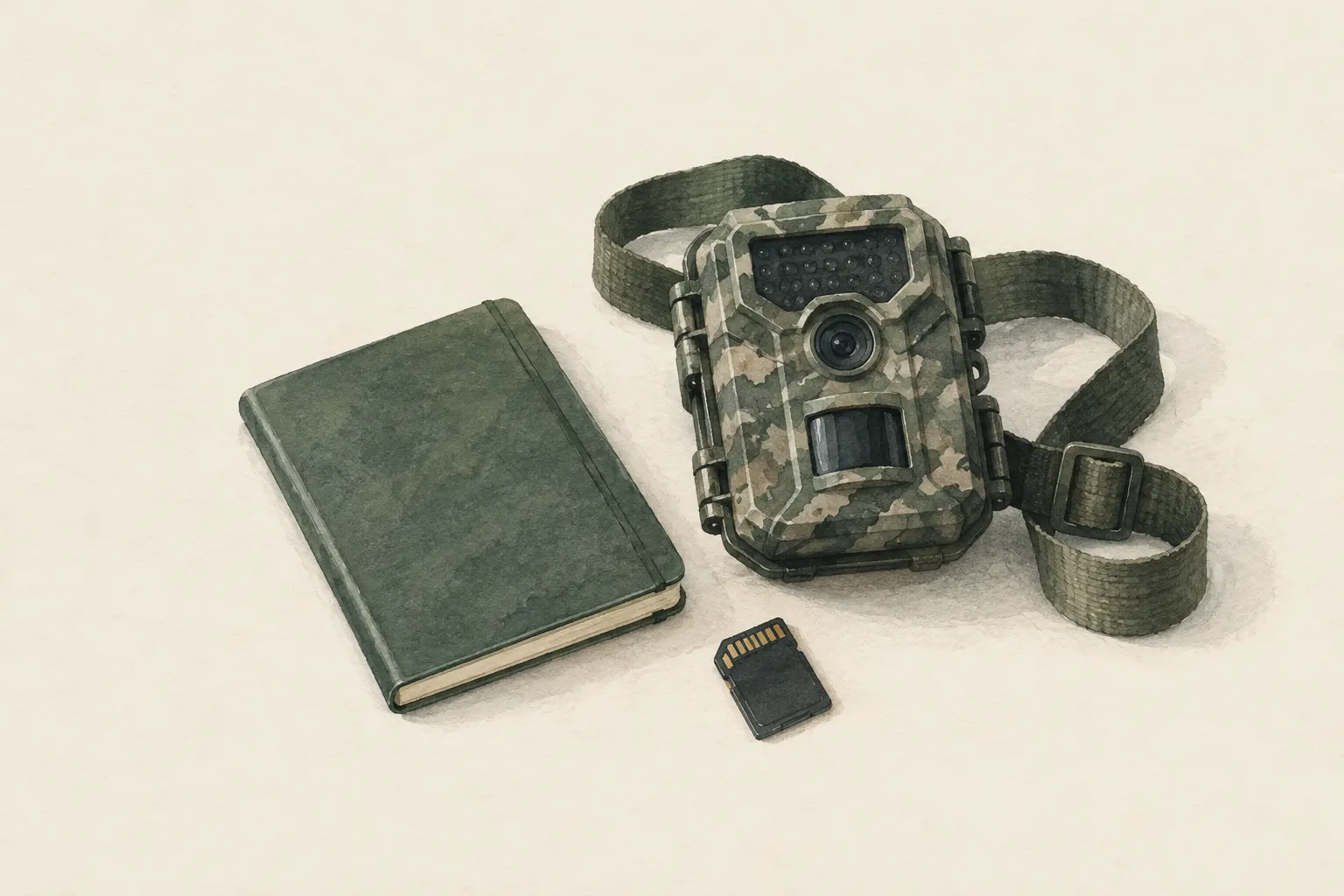
A wildlife camera is a small camera that keeps watch all on its own. It hangs on a tree or post, for example, and automatically takes a photo or video when an animal passes by. That way you can see who sneaks through your garden at night – while you are asleep.
The nice thing is that because nobody needs to be there, the animals are hardly disturbed. The only important things are that the camera hangs in a suitable place and that you do not check it all the time. You do not put out food to attract animals.
But careful: a camera may not simply hang anywhere. It must not film people, paths or neighbours' gardens, because that violates other people's privacy. In a forest you need the landowner's permission. The easiest place is your own garden.
How it works
Most wildlife cameras have what is called a passive infrared sensor. This is a small detector that notices heat radiation. When something warm, such as an animal, moves through its detection zone, the camera triggers. “Passive” means the sensor sends nothing out itself; it only detects.
At night most wildlife cameras light the scene with infrared light. This light is barely or not at all visible to people, and many animals also perceive it not at all or only faintly. Night images are therefore usually black and white. During the day the camera takes normal colour pictures.
Because the camera works alone, there is no disturbance from a person being present. But that only holds as long as it hangs in a suitable place and is checked rarely. Every check visit leaves scent and disturbance behind. Researchers worldwide also use such cameras to record shy animals without having to catch or disturb them.
Legal matters: what to watch out for
As soon as a camera can record people, data protection laws may apply – in the EU, for example, the General Data Protection Regulation, GDPR for short. So point the camera so that no paths, roads, pavements or neighbouring properties are in view. Delete any images that show people anyway immediately. This entry is not legal advice: check the rules in your country.
Outside your own property you need the landowner's permission, ideally in writing. On top of that come hunting and conservation rules. In protected areas, setting up a camera is often only allowed with a permit. If in doubt, ask the responsible authority.
Do not lure animals with food. It changes their behaviour, can spread disease between animals that meet at the feeding spot, and is prohibited in many places. And do not put up a camera at breeding or birthing sites, where animals nest or have their young.
What really matters
Location decides success. Good spots in your own garden are narrow points that animals pass anyway: a gap under the fence, an opening in the hedge, the edge of the compost heap or a water source. Often a surprising number of nocturnal visitors show up there.
For smaller animals the camera hangs at about knee height. Fasten it with a strap to a tree or post, not with nails or screws in other people's trees. If possible, do not point it towards the low morning or evening sun, otherwise sunlight can cause false triggers or the images get washed out.
Test the camera by walking through the detection zone yourself. That shows you whether triggering and framing are right. Delete the test images of yourself afterwards. Then change batteries and memory card only at longer intervals and note the date and species when you go through the pictures.
When it makes sense – and when not
A wildlife camera is ideal for your own garden, for nature education with children and for long-term observation without disturbance. Above all it shows nocturnal animals you would otherwise never see. Some citizen science projects also accept images from volunteers – ask conservation organisations or authorities in your region.
It is not suitable for monitoring people, paths or neighbours. Nor does it belong at nests, dens or eyries of protected species without a permit. Outside your own property there are legal hurdles and the risk that the camera gets stolen.
Also bear in mind that a camera only covers a small area. It shows you what happens at exactly that spot, not in the whole garden. A sand tracking plot makes a good complement, showing who passed by without any technology at all.
Good to know
In English, wildlife cameras are often called “camera traps”, and in German sometimes “Fotofallen”. The word sounds like a trap, but the camera holds no animal and touches none. It only takes pictures. That is exactly why it is so popular in research: it provides data on shy species without any animal having to be caught.
The Leave No Trace principles call for not disturbing and not feeding wildlife. A well-placed camera without bait that is checked rarely fits that exactly.
Step by step
Clarify legal matters
Use your own land or ask the landowner; check data protection, hunting and protected-area rules. If in doubt, ask the responsible authority.
- 1
Clarify legal matters
Use your own land or ask the landowner; check data protection, hunting and protected-area rules. If in doubt, ask the responsible authority.
- 2
Choose a location
At a trail, a hedge, a gap under a garden fence or a water source in your own garden – not at paths, not at nests or dens.
- 3
Mount and aim
At knee height for smaller animals, strapped to a tree or post, preferably not facing the low sun. No nailing or screwing into other people's trees.
- 4
Test
Walk through the detection zone yourself to check triggering and framing – then delete the test images of yourself.
- 5
Check rarely
Change batteries and memory card only at longer intervals. Evaluate images, note date and species, delete images of people immediately.
Common mistakes
- Pointing the camera at a path or the neighbour's property
- Hanging it in a forest without permission
- Putting out food as bait
- Checking daily and causing disturbance
- Mounting the camera at a nest
Quick view
Materials
Wildlife camera
Check data protection and hunting rules; do not record people, paths or neighbouring property.
Only set up with the landowner's permission.
Spare batteries
Store cool and dry, observe the expiry date; keep button cells out of children's reach.
Field notebook and pencil
Suitable for
- Garden observation (e.g. nocturnal visitors)
- Nature education and citizen science
- Long-term observation without disturbance
Not suitable for
- Monitoring people, paths or neighbouring property
- Placing at nests, dens or eyries of protected species without a permit
- Luring animals with food
Prerequisites
- Your own property or written permission from the landowner
- Knowledge of local data protection, hunting and conservation rules
Safety
- If the camera records people, data protection laws may apply (in the EU, for example, the GDPR). Point the camera so that no paths, roads or neighbouring property are in view, and check local rules.
- Check visits cause disturbance. Do not mount cameras at breeding or birthing sites; in protected areas often only with a permit.
- Do not lure animals with food – it changes their behaviour, can spread disease and is prohibited in many places.
How it works
Most wildlife cameras use a passive infrared sensor that registers heat and movement in its detection zone. At night they illuminate with infrared light that is barely or not visible to people and many animals. Because the camera works alone, there is no disturbance from a person being present – as long as it is in a suitable place and checked rarely.
Advantages
- Hardly any disturbance
- Shows nocturnal animals
- Data for citizen science projects
Disadvantages
- Legal hurdles outside your own property
- Risk of theft
- Costs for device and batteries
Deep knowledge
Background
In research, automatic cameras are used worldwide to record shy species without capture and without disturbance. Many monitoring projects also accept images from volunteers.
At the same time, wildlife cameras become a data protection issue as soon as people appear in the frame. Rules differ by country; therefore: only your own land or explicit permission, no paths in view.
Variants
- Garden camera
- In your own garden, a camera at a hedge or compost heap often reveals surprisingly many nocturnal visitors. This is the simplest and legally least complicated option, as long as only your own land is recorded.
Common mistakes
- Pointing the camera at a path or the neighbour's property
- Hanging it in a forest without permission
- Putting out food as bait
- Checking daily and causing disturbance
- Mounting the camera at a nest
Limits and risks
- No legal advice – check local rules
- Only records a small area
Sources
Leave No Trace Center for Outdoor Ethics: The Seven Principles of Leave No Trace (Principle 5: Minimize Campfire Impacts)
Do not disturb or feed wildlife