Found injured or apparently abandoned wildlife
An injured bird, a deer after a road collision, a single young animal in the grass: the first impulse is to help – but the wrong help often does harm. Many “abandoned” young animals are cared for by their parents. Injured wild animals can bite, scratch and transmit diseases. The right approach: keep your distance, observe, protect yourself and contact a wildlife rescue, vet or the responsible authority. After collisions with larger animals, in many countries notify the police.
- Minutes to an hour
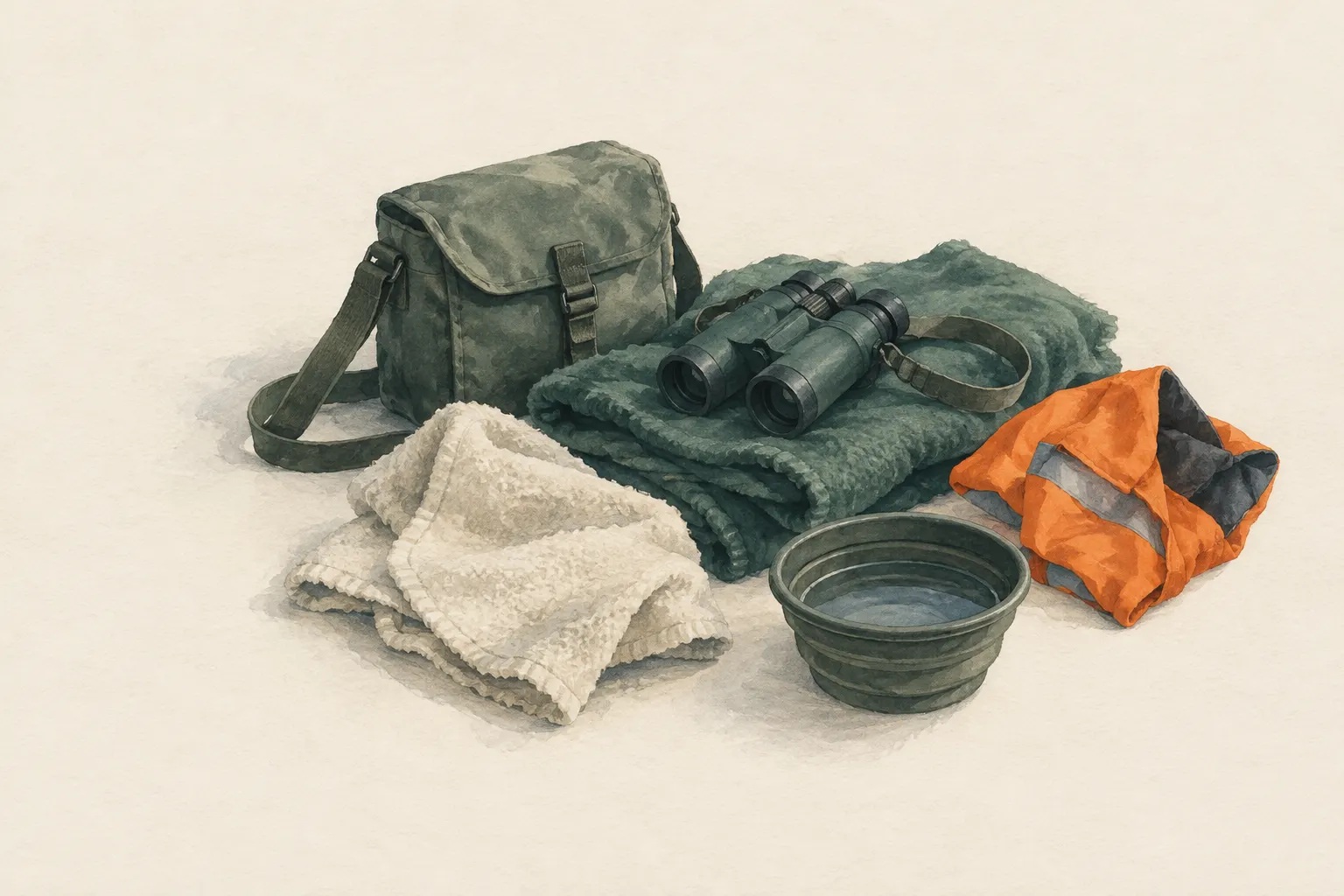
Explained simply
When you find an injured animal or a baby animal lying all alone, you want to help straight away. That is a good feeling – but often it is better not to touch anything at first. Many baby animals are not abandoned at all. A roe deer fawn, for example, lies alone in the grass during the day, and the mother only comes now and then to feed it. Young birds often hop around on the ground before they can fly properly and are fed there by their parents.
Injured wild animals are frightened and can bite, scratch or kick. Some can also transmit diseases. So the rule is: keep your distance, watch from afar and call experts – for example a wildlife rescue, a vet or the responsible authority. They will tell you what to do.
The most important point for your safety: never touch wild animals with bare hands. If you have been bitten or scratched anyway, tell an adult straight away and see a doctor. And after a collision with an animal on the road, the first rule is: keep yourself safe.
How it works: why “abandoned” is often misleading
Many species deliberately leave their young alone, and that is a form of protection. In some hoofed animals such as roe deer, fawns lie well hidden and motionless in the grass during the day in their first weeks of life. The mother feeds nearby and only returns to suckle, so that she does not lead predators to the hiding place. A person standing next to the fawn or touching it can keep the mother away.
It is similar with many songbirds. The young leave the nest before they can fly properly, sit on twigs or on the ground and call for food. The parents are nearby and keep feeding them. Such fledglings look helpless but are in a completely normal stage of development.
It is different with animals that are visibly injured: blood, a drooping wing, an animal that cannot stand up or turns in circles. They need expert help. Wildlife rescue centres and vets know what care is possible and what is legally permitted – and sometimes also that an animal can no longer be helped.
What really matters: the right order
Your own safety comes first. On the road this means: secure the scene, keep your distance from large animals, keep children and dogs away. In the garden or woods it means: do not get too close, so the animal does not panic and flee or attack.
Then you observe from a distance. Is the animal injured or just alone? With uninjured young animals it is worth waiting a long time from further away to see whether parents come. Sometimes it takes a long time for a mother to return, and she will not come while people are nearby. It is best to leave the spot promptly and check again later from afar.
After that you call experts: a regional wildlife rescue, a vet, an animal welfare organisation, the conservation or hunting authority or the police. Describe the location precisely and offer a photo taken from a distance. Only if the experts explicitly ask you do you place a small animal in a ventilated box using gloves or a cloth and keep it quiet, dark and warm until help arrives.
Safety: what to watch out for
Never handle wild animals, especially mammals and bats, with bare hands. Bites and scratches can transmit diseases, in some regions including rabies. Seek medical help after any bite or scratch from a wild animal – even if the wound looks small.
Never touch or hold large injured animals such as deer or wild boar. In panic they can kick, butt with antlers or bite and cause serious injuries. After a wildlife collision: hazard lights on, put on the hi-vis vest, set up the warning triangle, move behind the crash barrier. If people are injured, call the local emergency number (112 in the EU), then notify the police or responsible body.
And do not feed the animal or give it anything to drink. What is good for people or pets can harm wild animals – milk and bread, for example, are unsuitable for many wild animals. A weakened animal can also choke when water is poured into its mouth.
The legal side: why you don't just take wild animals home
In many countries it is prohibited to take or keep wild animals – even injured ones – without permission. For game species such as roe deer or wild boar, hunting law often applies: anyone who takes such an animal, even a dead one after a collision, may be committing an offence. Protected species are subject to their own, often strict rules.
Well-meant care at home also often goes wrong. Wild animals need special food, housing and experience, and an animal raised by humans often cannot survive later in the wild. Wildlife rescue centres therefore work to keep animals shy so they can be released again.
How to prepare
Look up the phone number of a regional wildlife rescue or the responsible authority before you need it, and save it in your phone. In the moment of finding an animal you are excited, and then it is good not to have to search first. A pair of disposable gloves in the car or backpack does no harm.
With children, the rules can be discussed calmly beforehand: “If we find a baby animal, we don't touch it, we move a bit away and call someone.” That turns compassion into help that really benefits the animal. With a bird that has flown into a window, experts often advise leaving it quiet and protected from cats; some recover on their own after a while.
Step by step
Your own safety
On roads, secure the scene, keep distance from large animals, keep children and dogs away.
- 1
Your own safety
On roads, secure the scene, keep distance from large animals, keep children and dogs away.
- 2
Observe from a distance
Is the animal visibly injured (blood, broken wing, cannot stand) or just alone? With uninjured young animals, observe from a greater distance for a longer time to see whether parents come.
- 3
Do not touch
Leave uninjured young animals where they are and leave the spot promptly. Do not feed them or give them water.
- 4
Call experts
Contact a regional wildlife rescue, vet, animal welfare organisation, conservation or hunting authority or the police. Describe the location precisely, offer a photo taken from a distance.
- 5
Follow instructions
Only if the experts explicitly ask, place a small animal in a ventilated box using gloves or a cloth and keep it quiet, dark and warm until help arrives.
Common mistakes
- “Rescuing” fawns or fledglings that are not abandoned at all
- Handling wild animals with bare hands
- Feeding milk or bread
- Trying to nurse injured animals back to health yourself
- Simply driving on after a collision where reporting is required
Quick view
Materials
Mobile phone
Emergency call, wildlife rescue, photos
The battery drains quickly in cold and with continuous screen and GPS use.
Do not plan on it as your only means of navigation or emergency calls.
High-visibility vest
At a road collision
Keep within reach inside the cabin, not in the boot/trunk.
Disposable gloves
Consider latex allergies – prefer latex-free gloves (e.g. nitrile).
Suitable for
- Walkers, hikers, drivers
- Families with children who find animals
- Garden owners
Not suitable for
- Taking wild animals home and raising them yourself
- Approaching large, injured or dangerous animals
Prerequisites
- Phone number of a regional wildlife rescue or authority (look up in advance)
- Your own safety comes first
Safety
- In many countries it is prohibited to take or keep wild animals – even injured ones – without permission; game species are often subject to hunting law and prohibitions on taking them. Check local rules.
How it works
Many young animals are not abandoned: in some hoofed animals such as roe deer, fawns lie alone in the grass during the day while the mother feeds nearby; young birds often leave the nest before they can fly properly and continue to be fed on the ground. Human presence or touch can keep the parents away. Injured animals, by contrast, need expert help – wildlife rescue centres and vets know what care is possible and what is legally permitted.
Advantages
- Protects animal and human
- Help comes from experts
- Legally on the safe side
Disadvantages
- Requires restraint despite compassion
- Availability of wildlife rescues varies by region
Deep knowledge
Background
Every year, wildlife rescue centres, animal welfare organisations and authorities point out that many supposedly abandoned young animals are taken from the wild unnecessarily. Observing rather than intervening is therefore the most important rule.
The Leave No Trace principles put it generally: observe wildlife from a distance, do not feed it, do not touch it.
Variants
- Bird after hitting a window
- Stunned birds sometimes recover on their own after a while. Experts often advise leaving the bird quiet and protected from cats; with visible injuries, contact a wildlife rescue.
Common mistakes
- “Rescuing” fawns or fledglings that are not abandoned at all
- Handling wild animals with bare hands
- Feeding milk or bread
- Trying to nurse injured animals back to health yourself
- Simply driving on after a collision where reporting is required
Limits and risks
- No veterinary treatment instructions
- No species-specific rules – ask experts
Material alternatives
Derived from material properties: a substitute must have all relevant properties. Observe the notes on the substitute.
- Mobile phone
- Headlamp / flashlight, Battery lantern / LED light
- High-visibility vest
- Emergency blanket (Tears easily once punctured; short-term shelter only.), Signal mirror (Do not flash into the eyes of people nearby or of drivers.), Warning triangle (Whether warning triangles are mandatory, or should be placed at all on certain roads (e.g. motorways), differs between countries – check local rules.), Aluminium foil (heavy-duty) (Edges can be sharp; conducts heat and electricity.)
Results come exclusively from structured entries. No improvised instructions are generated.
Sources
Leave No Trace Center for Outdoor Ethics: The Seven Principles of Leave No Trace (Principle 5: Minimize Campfire Impacts)
Observe wildlife from a distance, do not feed, do not touch
European Commission: 112 – the European emergency number
European emergency number 112