Natural disaster abroad: follow local authorities, send a sign of life
Earthquake, hurricane, flood or wildfire at your holiday destination: first follow the instructions of local authorities, the hotel or tour operator – warnings, evacuations, shelters. Then send a short sign of life to relatives, contact your own embassy or consulate if you need help and inform your insurer. Do not travel to disaster sites on your own.
- Preparation before the trip; hours to days during the event
Explained simply
Sometimes something big happens just when you are on holiday: the earth shakes, a storm comes, a river floods or a wildfire breaks out. As a guest in a foreign country you often feel helpless then. But there is a simple order you can hold on to: first protect yourself, then report, then plan ahead.
The people on site – authorities, rescue services, hotel staff or the tour guide – know best where it is dangerous and where the safe places are. So you follow their instructions first, even if they come in a foreign language. When you are safe, send your family at home a short message: “I'm OK.” It is like a beacon that shows everyone: here is someone who is safe.
The most important point: if the authorities tell you to leave a place, go immediately. And if you feel a strong earthquake at the coast or hear a tsunami warning, go immediately to higher ground or inland – not to the beach to watch.
How it works: who does what
Local authorities know the danger zones, shelters and evacuation routes; travellers do not. That is why their instructions take priority – over your own plans, over advice from social media and also over tips from home. Hotels and tour operators often pass these instructions on and organise additional help for their guests.
Your country's embassy or consulate has a different role: it can inform relatives, replace lost documents and in some situations help with leaving the country. But it is not a rescue service. With injured people or acute danger, always call the local emergency number (112 in the EU).
Many foreign ministries offer registration for travellers, such as the German crisis preparedness list ELEFAND or the US STEP programme. Registered travellers can be reached and informed more easily in a crisis. That relieves everyone involved, because fewer people have to be searched for blindly.
Before the trip
Find out which natural hazards exist at the destination and in which season: hurricane season, rainy season, wildfire season, earthquake or volcanic area. Note the country's warning apps or official channels through which warnings are spread, and register with your foreign ministry where this is offered.
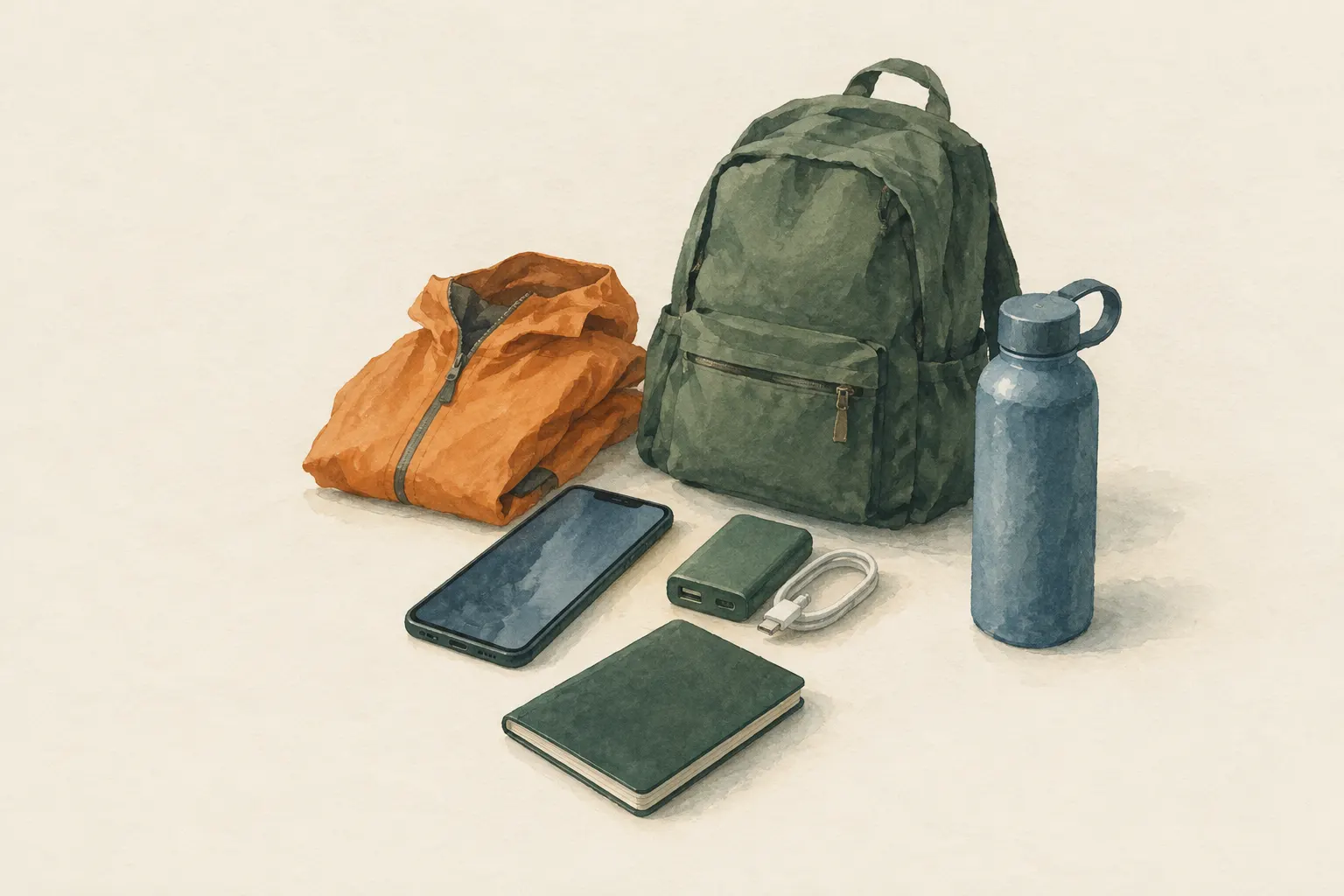
Pack a small emergency bag you can grab quickly: passport and document copies, medication, water, light, a charged power bank, some cash and your emergency card with contacts. Agree with someone at home that in an emergency they will collect your messages and pass them on to others.
Safety: during the event
Follow the basic rules that fit the event: in an earthquake take cover, for example under a sturdy table, and stay there until the shaking stops. In a flood go higher and avoid flooded roads. In a wildfire stay away from the smoke and follow evacuation instructions. Each of these events has its own entry with more detail.
With a tsunami warning or a strong earthquake at the coast: move immediately to higher ground or inland, without waiting for official confirmation. The US National Weather Service advises exactly that. Going to the beach to watch the water is one of the most dangerous mistakes.
Follow evacuation orders immediately and take your documents with you. Do not drive through closed areas on your own and do not go into danger zones to take photos. Barriers protect against dangers you often cannot see and keep routes clear for rescue services.
Sign of life and communication
After disasters phone networks are often overloaded because everyone calls at once. Short text messages then often get through more easily than calls and use less battery. A good message is short and complete: “We are safe, location, next update at …”.
Send the message to the agreed contact at home, who passes it on to others. That way you do not have to answer ten people individually and you save battery. If social networks offer a feature to mark yourself as safe, or there are people-finder services, you can use them as well.
Save battery: dim the screen, close unnecessary apps, do not phone for hours or watch videos. You may still need the phone for warnings, for contact with your tour operator and insurer, or for an emergency call.
Afterwards: help and departure
If you need help – after an injury, with lost documents or if you cannot leave the country – use your foreign ministry's crisis hotline or contact details. On package holidays tour operators often have their own emergency numbers and organise return transport; stay in contact with the tour guide.
Arrange onward or return travel with your tour operator, airline and insurer, and inform your insurer early. In armed conflict or political unrest, different rules apply than in natural disasters; there, follow your foreign ministry's crisis advice.
Step by step
Before
Know the hazards and season at the destination, note the country's warning apps or official channels, register with your foreign ministry, pack an emergency bag.
- 1
Before
Know the hazards and season at the destination, note the country's warning apps or official channels, register with your foreign ministry, pack an emergency bag.
- 2
Protect yourself during the event
Follow the relevant basic rules (e.g. earthquake: take cover; flood: go higher; wildfire: avoid smoke) and the instructions of authorities and staff.
- 3
Sign of life
Short message to an agreed contact at home: "We are safe, location, next update at …". Use social media safety check or people-finder services if available.
- 4
Embassy or consulate
If needed (injury, lost documents, problems leaving) use your foreign ministry's crisis hotline or contact details.
- 5
Departure
Clarify with tour operator, airline and insurer; do not drive through closed areas on your own.
Common mistakes
- Going to the beach to watch the tsunami
- Ignoring warnings because you are "just a visitor"
- Phoning for hours and draining the battery
- Driving into danger zones to take photos
- Evacuating without documents
Quick view
Materials
Mobile phone
The battery drains quickly in cold and with continuous screen and GPS use.
Do not plan on it as your only means of navigation or emergency calls.
Power bank
Do not use damaged or swollen batteries; do not charge while covered.
Copies of travel documents
Keep separate from the originals; store digital copies only in protected form.
Cash reserve
Store securely and discreetly.
Medication supply
Agree any stock of prescription medication with a doctor or pharmacist; observe storage instructions and expiry dates.
Suitable for
- Earthquake, tsunami warning, hurricane, flood, wildfire, volcanic eruption at the destination
Not suitable for
- Armed conflict or political unrest – follow your foreign ministry's crisis advice
Prerequisites
- Registration with your foreign ministry where offered
- Basic knowledge of hazards at the destination
- Small emergency bag with documents, medication, water, light
Safety
- Networks are often overloaded after disasters: short text messages instead of calls, save battery.
How it works
Local authorities know danger zones, shelters and evacuation routes; travellers do not. Your own embassy can inform relatives, replace documents and sometimes help with departure, but cannot rescue. Being registered beforehand and sending signs of life relieves all agencies.
Advantages
- Avoids dangerous going it alone
- Relatives are reassured sooner
Disadvantages
- Dependence on local communication
- Language barriers
Deep knowledge
Background
Many foreign ministries offer registration for travellers, such as the German crisis preparedness list ELEFAND or the US STEP programme, so they can make contact in a crisis. FEMA's "Are You Ready?" describes basic rules for earthquakes, floods, hurricanes and other events.
The US National Weather Service advises moving immediately to high ground or inland when there is a tsunami threat.
Variants
- Package holiday
- Tour operators often have emergency numbers and organise return transport; stay in contact with the tour guide.
Common mistakes
- Going to the beach to watch the tsunami
- Ignoring warnings because you are "just a visitor"
- Phoning for hours and draining the battery
- Driving into danger zones to take photos
- Evacuating without documents
Limits and risks
- No information on assistance by specific states
- Not a substitute for the entries on individual disasters
Material alternatives
Derived from material properties: a substitute must have all relevant properties. Observe the notes on the substitute.
- Mobile phone
- Headlamp / flashlight, Battery lantern / LED light
Results come exclusively from structured entries. No improvised instructions are generated.
Sources
Auswärtiges Amt, Deutschland: Krisenvorsorgeliste ELEFAND (Elektronische Erfassung von Deutschen im Ausland)
Registration of Germans abroad for crises
U.S. Department of State – Bureau of Consular Affairs: Smart Traveler Enrollment Program (STEP)
Registration of US travellers for crises
U.S. Federal Emergency Management Agency (FEMA): Are You Ready? An In-Depth Guide to Citizen Preparedness
Basic rules for earthquakes, floods, hurricanes
U.S. National Weather Service (NOAA): Tsunami Safety
With tsunami threat move immediately to high ground or inland
European Commission: 112 – the European emergency number
European emergency number 112