Plan for flight cancellation and being stranded at the airport
Strikes, storms, volcanic ash or technical problems can cancel flights at short notice. Carrying medication, charger and a change of clothes in hand luggage, storing booking data offline and knowing where rebooking and passenger rights are handled keeps you able to act.
- 15 minutes of preparation
Explained simply
Sometimes a flight is cancelled – because of a storm, a strike, an ash cloud from a volcano or a technical problem. Suddenly hundreds of people are standing at the airport, and everyone wants a new flight at the same time. It is like a game of musical chairs: there are fewer free seats than people who want one.
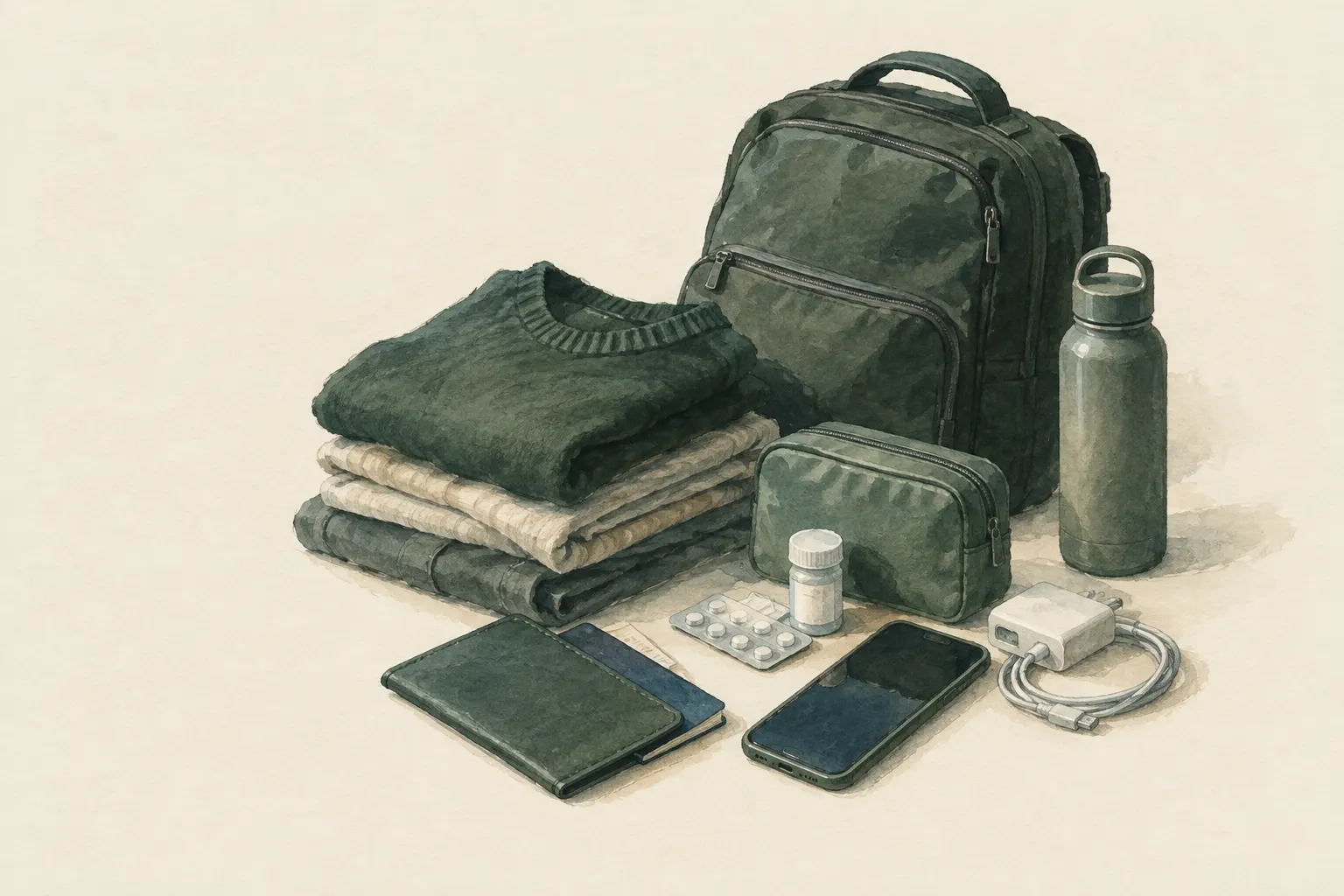
You are well prepared if your hand luggage holds everything you need for a day or two: your medication, charger and power bank, a change of clothes, toothbrush, a snack and your documents. You also have important numbers and your booking reference on paper.
And then one trick helps: do not just wait in the queue at the desk, but at the same time try to rebook through the airline's app or phone hotline. Using several channels often gets you served sooner.
How it works
In a major disruption, many travellers compete for few alternatives. The next flights are often already well booked, hotels near the airport fill up quickly, and long queues form at the desks. Whoever finds a solution first has the widest choice.
That is why it pays to use several channels at the same time: join the queue at the desk and in parallel try to rebook via the app or hotline. Before the trip, subscribe to the airline's flight information by app or text message so that you learn of a change as early as possible – sometimes even before it appears on the departure board.
In widespread disruption, for example from a volcanic ash cloud or a large weather system, air travel can be restricted for days. Then it is worth checking alternatives such as train or bus and securing accommodation early.
What really matters
The most important things belong in your hand luggage, not your suitcase: medication you really need, with a reserve for a few days of delay. Add charging cable and power bank, a change of clothes, toiletries, a snack, an empty water bottle you can fill after security, and your documents. After a cancellation you often do not get checked luggage back straight away.
Store your booking reference, airline contact, insurance number and accommodation address offline and write them on paper. A flat battery in a long queue is a common problem; that is why the power bank matters so much.
Collect all receipts: the confirmation of the cancellation or delay and receipts for food, hotel and transport. Without receipts it is hard to get costs reimbursed later. Also inform relatives, the accommodation at your destination and, if necessary, your employer about the delay.
Good to know: passenger rights
Passenger rights differ by departure point, airline and country. In the European Union, Regulation (EC) No 261/2004 sets common rules on assistance and compensation for denied boarding, cancellation and long delay. Outside the EU, other rules apply.
This page gives no legal advice and states no compensation amounts. Whether and to what extent you have claims is something to clarify with the responsible bodies, such as the airline, a dispute resolution body or a consumer advice service. Practical preparation pays off regardless of the legal framework: with medication, a charged battery and receipts, you are better off in any country.
Typical situations
With children, waiting quickly becomes tiring. A small game, a book, snacks and a change of clothes for the children in your hand luggage make a big difference. Anyone who needs medication – for example for a chronic condition – should never depend on checked luggage.
Long waits are also a matter of mindset. It helps to split the day into small tasks: rebook, sort out accommodation, inform relatives, eat, rest. Moving around, drinking enough and eating regularly make the wait easier to bear and lead to better decisions.
Step by step
Pack hand luggage
Medication, charger and power bank, change of clothes, toiletries, snack, empty water bottle, documents.
- 1
Pack hand luggage
Medication, charger and power bank, change of clothes, toiletries, snack, empty water bottle, documents.
- 2
Data offline
Booking reference, airline contact, insurance number and lodging offline and on paper.
- 3
Notifications
Subscribe to the airline's flight information by app or SMS.
- 4
Rebook in parallel
On cancellation queue at the desk while also using the app or hotline.
- 5
Keep receipts
Keep confirmations of the cancellation and receipts for food, hotel and transport.
- 6
Inform contacts
Inform relatives, lodging and employer if relevant about the delay.
Common mistakes
- Medication in checked luggage
- Flat battery
- Only waiting at the desk
- No receipts
Quick view
Materials
Power bank
Do not use damaged or swollen batteries; do not charge while covered.
Medication supply
Agree any stock of prescription medication with a doctor or pharmacist; observe storage instructions and expiry dates.
Copies of travel documents
Keep separate from the originals; store digital copies only in protected form.
Suitable for
- Air travel, especially with connections
- Travel with children or medication needs
Not suitable for
- Legal advice on compensation claims
Prerequisites
- Booking confirmation and contact details of airline or tour operator
Safety
- Always carry essential medication in hand luggage, with a reserve for a few days of delay.
- Passenger rights differ by departure point, airline and country. In the EU, Regulation (EC) No 261/2004 governs assistance and compensation for cancellation and long delay; check details with the responsible bodies.
How it works
In major disruptions many travellers compete for few alternatives. Being prepared and using several channels in parallel (app, phone, desk) usually leads to a solution faster and makes waiting easier to bear.
Advantages
- Less stress
- Faster rebooking
Disadvantages
- Slightly more hand luggage
Deep knowledge
Background
In the European Union, Regulation (EC) No 261/2004 sets common rules on assistance and compensation for denied boarding, cancellation and long delay. Other rules apply outside the EU.
Practical preparation makes sense regardless of the legal framework.
Variants
- Mass disruption
- In widespread disruption (e.g. volcanic ash, large weather systems) consider alternatives such as train or bus and secure lodging early.
Common mistakes
- Medication in checked luggage
- Flat battery
- Only waiting at the desk
- No receipts
Limits and risks
- No legal advice
- No compensation amounts
Sources
European Parliament and Council of the European Union (2004): Regulation (EC) No 261/2004 establishing common rules on compensation and assistance to passengers in the event of denied boarding and of cancellation or long delay of flights
Assistance and compensation for cancellation and long delay in the EU