Heat and cold at the destination: take the first days carefully
Anyone flying from winter into the tropics or the other way round is not used to the new climate. The body needs days to adapt to heat; protection from cold comes mainly from suitable clothing. Plan the first days with short stages, plenty to drink, shade and breaks, and know the warning signs of heat or cold illness.
- Planning before the trip, adapted pace on site
Explained simply
Imagine you board a plane in winter and a few hours later step out into the heat of the tropics. Your body is still set for winter. It first has to learn to cope with the heat – and that takes a few days. During that time it does not sweat as well and cools down less effectively.
Sweating is your body's air conditioning: when sweat dries on the skin, it takes heat with it. In the first days this air conditioning is not yet running at full power. So at the start you take shorter outings, drink regularly, stay in the shade at midday and take lots of breaks. The body hardly gets used to cold, on the other hand – there, the right clothing is what protects you.
The most important point: if someone in the heat seems confused, can no longer respond properly or collapses, call the local emergency number (112 in the EU) immediately, move the person into the shade and cool them. That can be heat stroke, and heat stroke is an emergency.
How it works
The body keeps its core temperature within a narrow range. In heat it releases warmth mainly by evaporating sweat. With repeated, moderate activity in the warmth it adapts: it starts sweating earlier, cools more effectively and copes better with the strain. This adaptation, acclimatisation, develops over days to about two weeks.
Until then the body is more vulnerable. A programme that would be easy at home can be too much in the first week in the heat. High humidity adds another factor: sweat evaporates less well, cooling works less well, and the strain feels considerably higher than in dry heat at the same temperature.
There is hardly any physical adaptation to cold that is really sufficient. Here protection from outside is what counts: several layers of clothing, hat and gloves, staying dry and protecting yourself from wind and wet. Wet clothing, especially cotton, loses much of its warming effect.
What really matters
Plan the first days gently. Do not schedule strenuous tours on the day of arrival and increase exertion slowly over several days. In heat, use the cooler morning and evening hours and rest in the shade at midday.
Drink throughout the day and do not wait until you are thirsty. The colour of your urine is a simple guide: very dark urine suggests you should drink more. With heavy sweating you also lose salt; normal meals help replace it. Mind the local water quality and only drink water that is safe. Alcohol is not refreshment in the heat but an extra strain.
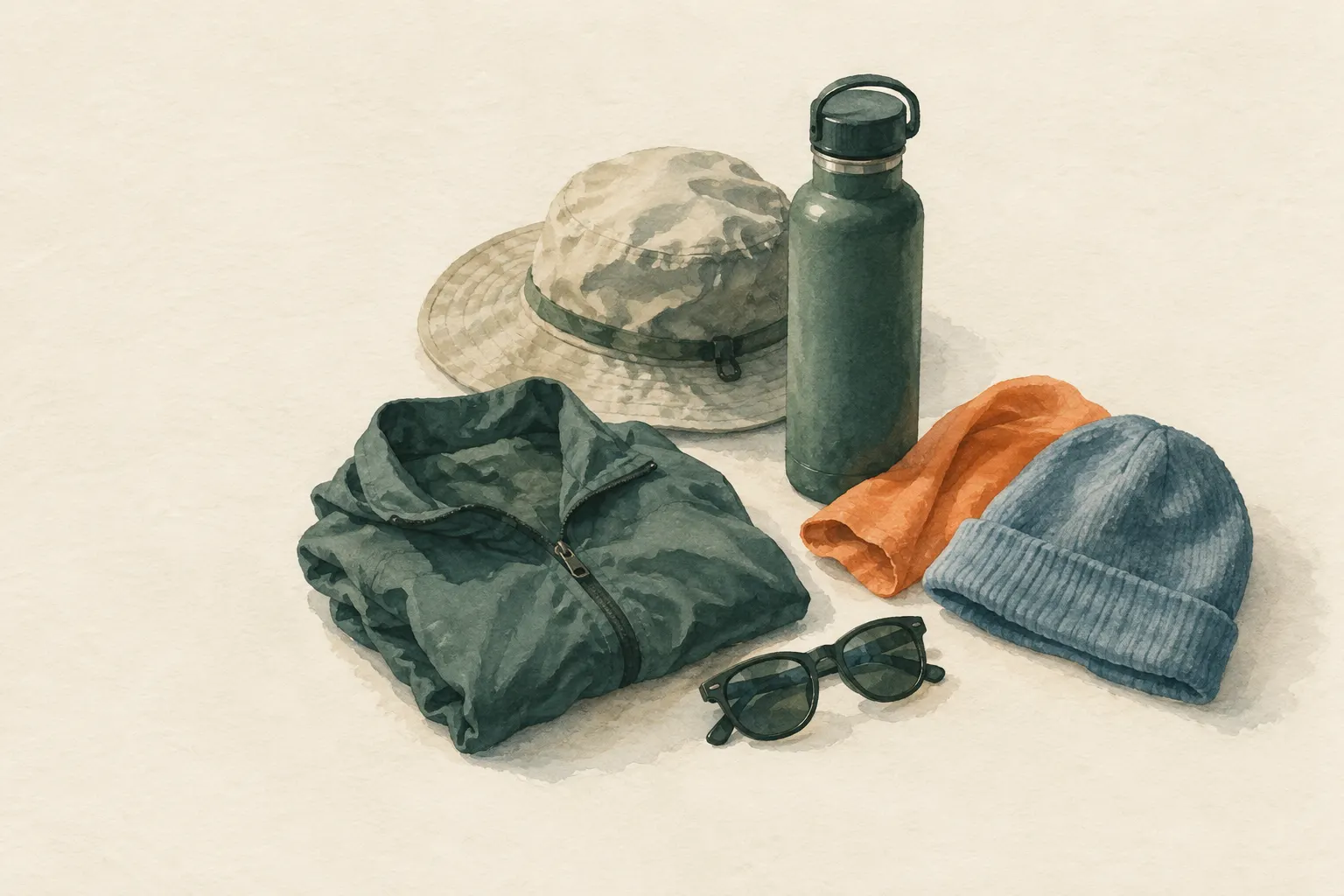
Dress appropriately. In heat, light-coloured, loose clothing, a hat and sun protection help. In cold, layers you can put on and take off depending on exertion, a hat, gloves, wind and rain protection and dry spare clothing help.
Safety: recognising warning signs
In heat, headache, dizziness, nausea and severe exhaustion are signals to stop: get into the shade, rest, drink. Confusion, altered consciousness or collapse may indicate heat stroke. Then call the local emergency number (112 in the EU) immediately, move the person into the shade and cool them.
In cold, strong shivering, numbness, clumsiness, confusion or striking apathy are warning signs of hypothermia. Protect the person from further heat loss – out of wind and wet, dry clothing, insulation – and call for help. Treating heat stroke and hypothermia belongs in the hands of the emergency services.
Look out not only for yourself but also for fellow travellers. Young children, older people, pregnant women and people with cardiovascular disease or certain medications are especially at risk in heat. Anyone with pre-existing conditions should get medical advice before the trip. And: never leave children waiting in the car – a parked car heats up very quickly in the sun.
Typical situations
The classic: arriving in a warm holiday country, with a long sightseeing tour in the midday sun or a hike planned for the very first day. Better is a quiet first day with short distances, with the big programme coming later. That does not make the holiday shorter, just more pleasant.
Conversely, many people underestimate how cold it can get on desert nights, in the mountains or in wind and rain by the sea. Anyone travelling from summer into winter should bring clothing for real cold, not just a thin jacket. Altitude is a separate topic with its own rules and is not covered here.
Step by step
Plan the first days gently
Do not schedule strenuous tours on the day of arrival; increase exertion gradually over several days.
- 1
Plan the first days gently
Do not schedule strenuous tours on the day of arrival; increase exertion gradually over several days.
- 2
Use the time of day
In heat, move activities to the cooler morning and evening hours, shade and rest at midday.
- 3
Drink regularly
Drink throughout the day and watch urine colour; with heavy sweating also take in salt through meals. Mind local water quality.
- 4
Dress appropriately
Heat: light, loose clothing, hat, sun protection. Cold: layers, hat, gloves, dry spare clothing, wind and rain protection.
- 5
Watch for warning signs
Treat headache, dizziness, nausea, severe exhaustion (heat) or shivering, numbness, clumsiness (cold) as a signal to stop – also in fellow travellers.
Common mistakes
- A full programme on the first day
- Drinking only when thirsty
- Alcohol as "refreshment" in the heat
- Cotton clothing in cold wet weather
- Leaving children waiting in the car
Quick view
Materials
PET bottle (clear, max. 2 litres)
Do not heat or place in a fire.
Dry spare clothing
Carry it in waterproof packaging – wet clothing barely insulates.
First-aid kit (household)
Does not replace a first-aid course; check contents and expiry dates regularly.
Suitable for
- Trips to hot, humid, dry or cold regions
- Active holidays right after arrival
Not suitable for
- Treating heat stroke or hypothermia – that is an emergency
Prerequisites
- Know the climate and season at the destination
- With pre-existing conditions, medical advice before the trip
Safety
- Young children, older people, pregnant women and people with cardiovascular disease or certain medications are especially at risk in heat.
How it works
Heat acclimatisation develops over days to about two weeks of repeated, moderate exertion in the heat. Until then the body sweats and cools less effectively. There is hardly any physical adaptation to cold that is sufficient – clothing, staying dry and protection from wind and wet are what protect you.
Advantages
- Easy to implement
- Clearly lowers the risk of heat and cold illness
Disadvantages
- Less programme in the first days
Deep knowledge
Background
WHO describes heat as a health risk that particularly affects older people, children and the chronically ill. The Wilderness Medical Society guidelines on heat illness cover prevention including acclimatisation, drinking and managing exertion.
For cold, the WMS hypothermia guidelines describe protection from heat loss as the central measure.
Variants
- Humid heat
- In high humidity sweat evaporates less well; the strain increases. Plan even more breaks.
Common mistakes
- A full programme on the first day
- Drinking only when thirsty
- Alcohol as "refreshment" in the heat
- Cotton clothing in cold wet weather
- Leaving children waiting in the car
Limits and risks
- No treatment of heat or cold illness
- No altitude acclimatisation (separate topic)
Material alternatives
Derived from material properties: a substitute must have all relevant properties. Observe the notes on the substitute.
- Dry spare clothing
- Sleeping pad, Dry leaves, grass or conifer boughs (Collect only where allowed; no protected plants. Check for ticks and insects.), Backpack, Wool blanket / duvet (Keep away from candles, stoves and heaters.), Insulated cool box (Keeps cold only for a limited time; without ice packs or ice it is not a fridge.), Sleeping bag (Do not store compressed long-term; do not pack away damp.), Newspaper and cardboard (Flammable – keep away from candles, stoves, heaters and embers.), Insulated cooking box (hay box, thermal cooker) (Never put open flame or embers inside – only the hot, closed pot.)
Results come exclusively from structured entries. No improvised instructions are generated.
Sources
World Health Organization: Heat and health (fact sheet)
Heat as a health risk, vulnerable groups
Wilderness & Environmental Medicine (Wilderness Medical Society) (2019): Wilderness Medical Society Clinical Practice Guidelines for the Prevention and Treatment of Heat Illness: 2019 Update
Prevention of heat illness including acclimatisation
Wilderness & Environmental Medicine (Wilderness Medical Society) (2019): Wilderness Medical Society Clinical Practice Guidelines for the Out-of-Hospital Evaluation and Treatment of Accidental Hypothermia: 2019 Update
Protection from heat loss in hypothermia