Basics for this situation
Lakes and ice
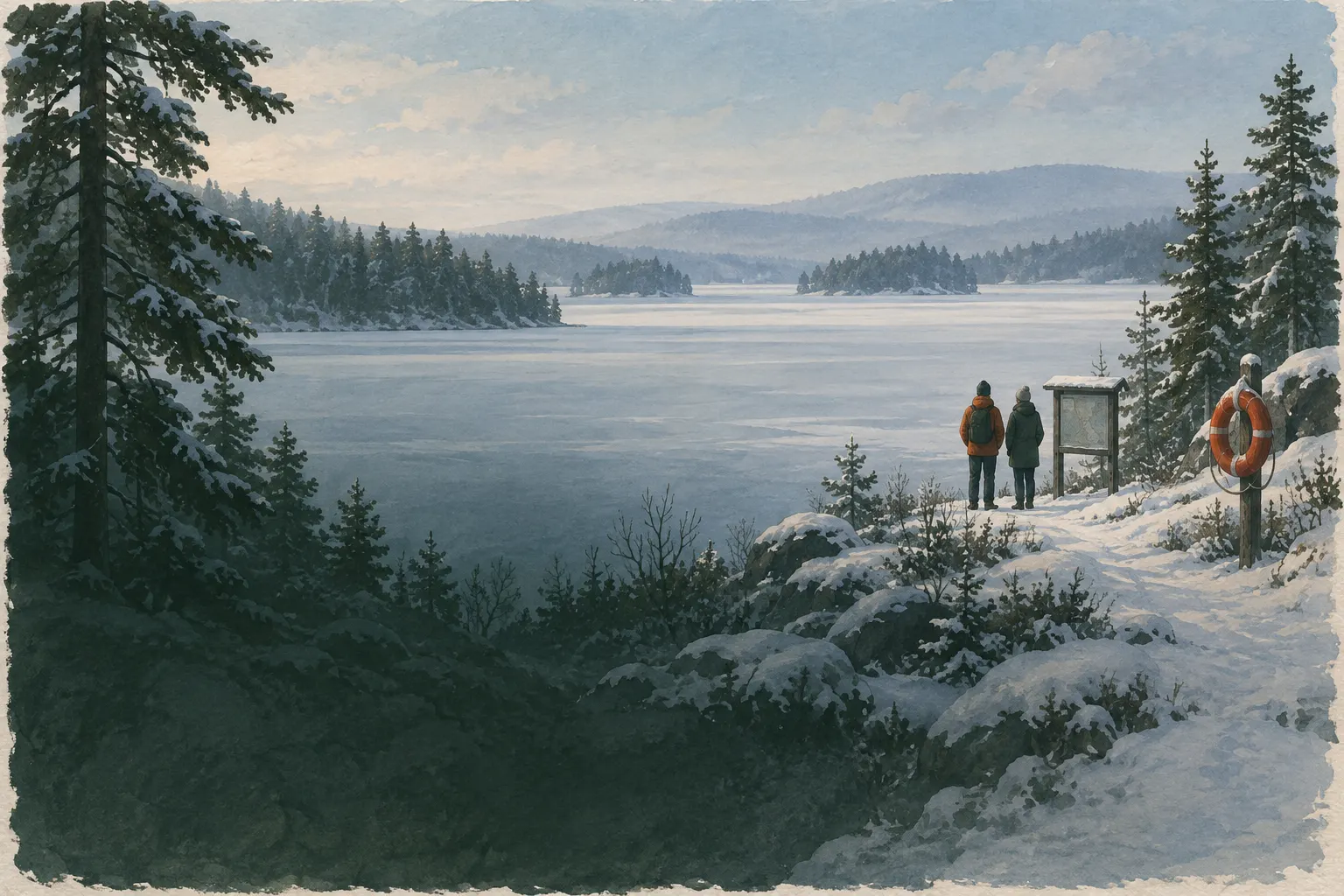
You cannot reliably tell from the outside whether ice will hold. Only walk on ice when the responsible authority has opened it – otherwise do not. If you fall through, calm comes first: settle your breathing, turn back towards where you came from, slide flat onto the ice and roll away. Helpers do not go onto the ice but call emergency services and help from the shore.
Making an emergency call: what to say, staying reachable
A good emergency call is short, calm and structured: where it happened, what happened, how many people are affected, what injuries or hazards – and then wait for questions. The local emergency number in the EU is 112. After the call, stay reachable and conserve the battery.
Recognising hypothermia and rewarming gently
Hypothermia often develops gradually – in the cold, but also in wet and windy conditions on cool days. Early signs are shivering, clumsiness and declining concentration; confusion, drowsiness or shivering that stops while the person is still cold are warning signs. Protect from further cooling, insulate, handle gently and call the emergency number (112 in the EU). This text does not replace a first-aid course.
How hypothermia develops
The body keeps its core temperature within a narrow range. If it loses more heat than it produces, it first reduces blood flow to the skin and limbs and starts to shiver. When the core temperature falls below 35 °C, this is called hypothermia: thinking, coordination and eventually consciousness decline. Recognise it early, protect from further heat loss and get help.