Basics for this situation
Recognising heat exhaustion and heatstroke and cooling
In heat and with exertion the body can overheat. Heat exhaustion shows as weakness, dizziness, headache, nausea and heavy sweating; confusion, unusual behaviour, a seizure or unconsciousness point to life-threatening heatstroke. Then call the emergency number at once (112 in the EU) and cool with every means available. This text does not replace a first-aid course.
In an emergency: stay safe, call, get help
First-aid courses teach the first minutes of an emergency in the same order every time: take in the situation, protect yourself and others, call the local emergency number (112 in the EU), have other helpers fetch an AED and stay with the casualty. This text does not replace a first-aid course.
Protection from heat and sun
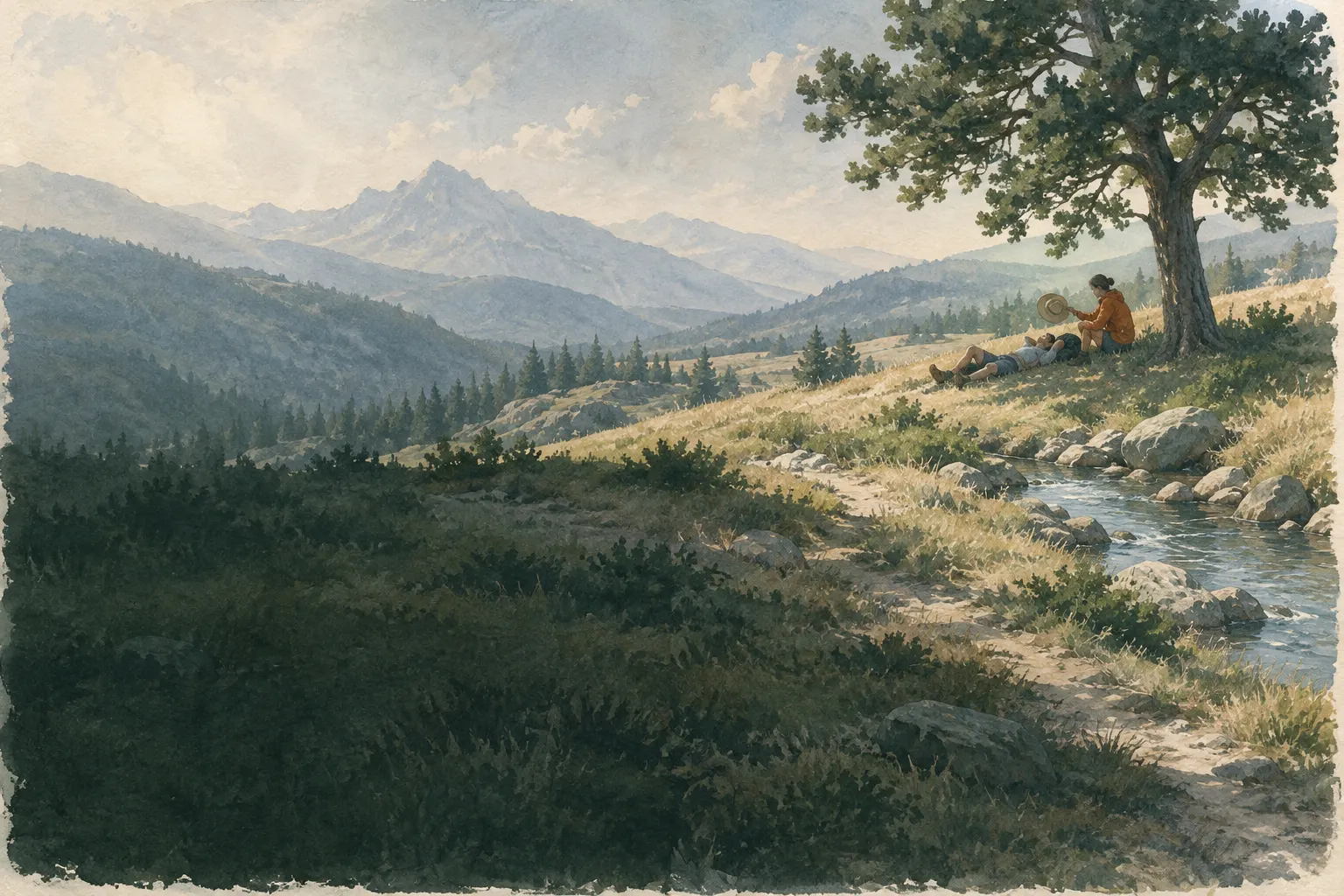
In heat, a shelter mainly protects from direct sun and hot ground. Shade with airflow, distance from heated ground and rest at midday reduce heat stress and water loss. A closed, dark tent in the sun, by contrast, can become dangerously hot.
The body's water balance and dehydration
A large part of the body is water, and the body constantly loses water through breathing, skin, sweat and urine. Thirst and concentrated urine are the signals it uses to counteract this. In heat, exertion, cold, altitude, diarrhoea or vomiting, losses can outpace replacement. This entry explains the basics – it is not a treatment guide.