Skip to content
In an emergencyAustriaEmergency numbers →
SurviveBetter
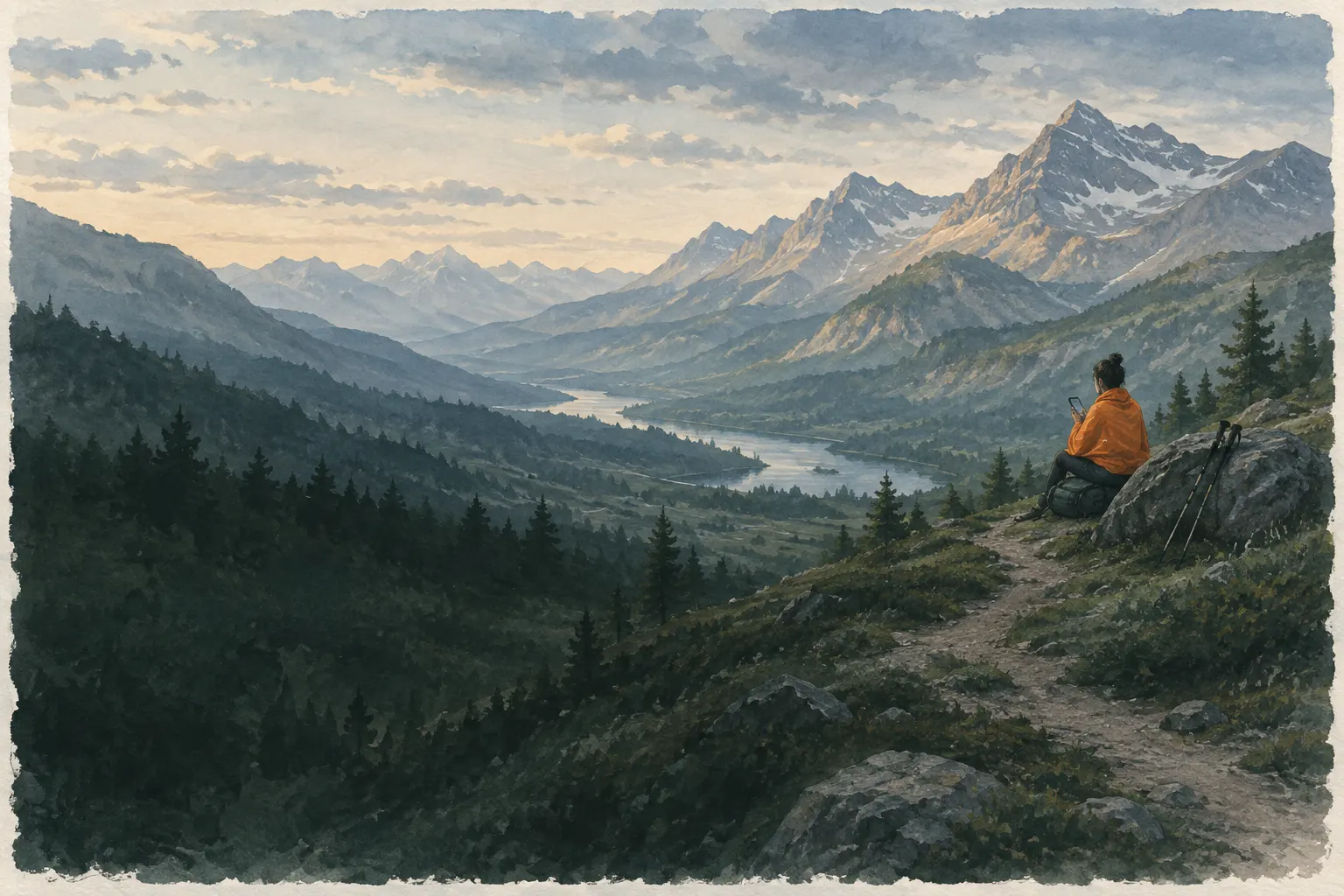
Hiker wrapped in an orange emergency blanket sitting by a mountain trail and phoning, wide alpine valley

I am out alone and have injured myself

One wrong step, a fall – and you are alone, far from help. Now calm, orderly action makes the difference.

First

  1. Get out of immediate danger or secure yourself (fall, rockfall, road, water) – but do not put weight on a badly injured limb.
  2. Emergency call: 112 works throughout Europe; in the Austrian mountains also the alpine emergency number 140. Give your location with coordinates and stay reachable.
  3. Stop severe bleeding at once with firm, direct pressure.
  4. Protect yourself from cold: put on everything, sit on your pack, mat or branches, not on the cold ground.

Call emergency services if

  • You cannot safely walk on by yourself
  • Suspected broken bone, deformity or open wound with visible bone
  • Bleeding cannot be stopped
  • After a head injury: confusion, vomiting, reduced consciousness
  • Numbness or coldness below the injury
  • Signs of hypothermia

What is happening

Most hiking injuries are minor: twisting an ankle on a root, slipping on wet rock, knocking a knee on a stone. When you are alone, though, a small thing quickly becomes serious, because nobody can fetch help, support you or keep you warm.

The pain and shock in the first moment are intense. Many try to walk on straight away – and make the injury worse or fall again. It is better first to sit down, secure yourself and assess the situation honestly: can I bear weight safely? Is it bleeding heavily? Do I have signal? How much daylight is left?

The most underestimated danger is cold. An injured person sitting or lying still produces little heat; on cold ground, in wind or wet you can cool down dangerously within hours even in summer. Insulation from below and wind protection are therefore part of first aid.

First aid stays simple in this situation: stop bleeding with pressure, keep injured limbs still and padded, stay warm and call for help. In the Austrian mountains, mountain rescue is reached via the alpine emergency number 140; throughout Europe 112 applies.

Step by step

  1. Phase 1

    In the first minutes

    • Sit or lie down where you cannot slide or fall further. Do not stay in rockfall lines or on a mountain bike trail.
    • Breathe, notice the pain, then check: bleeding? Deformity? Head injury? Numbness?
    • Stop severe bleeding at once with firm pressure – dressing, cloth, or your hand if necessary.
    • Make the emergency call: who, where (coordinates), what happened, which injuries, weather. Keep the phone reachable afterwards.
  2. Phase 2

    Treat and decide

    • Twisted ankle: keep the boot on if it supports and does not get too tight; cool with a wet cloth, elevate, rest.
    • Suspected fracture: do not straighten it, do not put weight on it; keep it still in the least painful position, pad with clothing, pack or sleeping mat.
    • Rinse wounds with clean water and cover them.
    • Decide: walk on yourself only if you can bear weight safely, the path is easy and enough light remains. When in doubt, stay and call for help.
    • If you walk: tell someone, use poles or a branch as support, short stages.
  3. Phase 3

    Waiting for help

    • Protect yourself from cold straight away: put on all your clothing, sit on your pack or mat, wrap an emergency blanket or bivvy bag around your body.
    • Make yourself visible: bright clothing on top, place your pack conspicuously, raise your arms in a Y shape when you hear aircraft.
    • Without signal: the alpine distress signal – six signals a minute (whistle, shout, light), then one minute’s pause.
    • Drink regularly and eat something if possible.
    • Moving your uninjured limbs helps you stay warm.
  4. Phase 4

    Afterwards

    • Have any injury that hurts when walking or swells checked by a doctor.
    • After a blow to the head, watch for deterioration during the following 24 hours and do not stay alone.
    • Restock your first aid kit and add what was missing.
    • Consider carrying a locator beacon or satellite messenger in future.

★ Pro tips

What experienced people do differently: proven practice from mountain rescue, fire services, lifeguards and civil protection that beginners rarely know.

  1. Don't wave with one arm

    To a helicopter crew, both arms raised in a Y means "Yes, we need help". One arm up and one down (an N) means "No help needed". A friendly one-armed wave can therefore be misread.

  2. Plan for the night even if help is coming

    Fog, wind or darkness can keep a helicopter grounded, and ground teams often need hours. So set up insulation, wind protection and light while you still have strength and daylight. If help comes sooner, all the better.

  3. Write down symptoms with the time

    Note when the accident happened and how you feel afterwards: pain, feeling in fingers and toes, dizziness, cold. If you get worse or confused later, rescuers still have the key information.

  4. Cover your head and neck

    Hat, hood or a scarf are often forgotten because all the attention is on the injury. When sitting or lying still you lose plenty of heat there. Wrap the emergency blanket so it covers neck and head too, keeping your face free.

  5. Send the key facts by text early

    After the emergency call, text a trusted person your coordinates, injury, equipment and plan. If your battery dies or the signal drops, someone still knows everything and can pass it on to rescuers.

What to watch out for

  • Getting cold

    Injured people get cold faster because they do not move and shock alters circulation. The ground draws the most heat – always put something insulating underneath.

  • Warning signs after a head injury

    Confusion, repeated vomiting, increasing headache, unequal pupils or drowsiness can indicate a serious injury – call immediately.

  • Walking on with a fracture

    A broken ankle can feel like a bad sprain. If you cannot bear full weight, or there is marked swelling or deformity, do not walk on.

  • Darkness

    Descending in the dark with an injury greatly increases the risk of falling. Better to wait in shelter and inform the rescue service.

  • Battery

    After the emergency call the phone is your link to the rescue service. Do not use it to pass time, keep it warm and switch it on only for agreed check-ins.

Common mistakes

  • Walking on straight away to “still make it”.
  • Waiting until dark to make the emergency call.
  • Staying seated on the cold ground.
  • Straightening a deformity yourself.
  • Going out alone without anyone knowing the route.
  • Not carrying an emergency blanket or headlamp.

Prepare in advance

  • Leave your route and return time, even for short solo trips.
  • Carry a small first aid kit with a pressure dressing, triangular bandage, elastic bandage, emergency blanket and plasters.
  • Know the emergency numbers: 112 in Europe, in Austria the alpine emergency number 140; install your region’s emergency app.
  • Take a first aid course and refresh it regularly.
  • Trekking poles and well-fitting boots reduce the risk of twisting an ankle.
  • In remote areas consider a personal locator beacon (PLB) or satellite messenger.

Special consideration

Older people
Older people get cold faster and more often have fractures after seemingly harmless falls. When in doubt, always call for help.
Blood-thinning medication
Anyone on blood thinners bleeds more and for longer – internally too after falls. Mention it when you call.

Sources

  • European Resuscitation Council Guidelines 2021: First Aid · European Resuscitation Council – Resuscitation (journal), 2021
  • International First Aid, Resuscitation, and Education Guidelines 2020 · International Federation of Red Cross and Red Crescent Societies (IFRC) – Global First Aid Reference Centre, 2020
  • Wilderness Medical Society Clinical Practice Guidelines for the Out-of-Hospital Evaluation and Treatment of Accidental Hypothermia: 2019 Update · Wilderness & Environmental Medicine (Wilderness Medical Society), 2019
  • International Commission for Alpine Rescue (ICAR) – recommendations and information (organisation website) · ICAR – International Commission for Alpine Rescue
  • Notrufnummern (oesterreich.gv.at) · Bundesministerium für Finanzen – Amtshelfer oesterreich.gv.at
  • 112 – the European emergency number · European Commission

Your situation

Injury
Phone signal
Weather
Time of day

Matching entries

0 rules apply

No AI decides here. Every recommendation is based on a visible rule.

Add details about your situation above to get more specific guidance.

Basics for this situation

Why: Always applies to this situation – regardless of your answers.

All rules of this situation (9)
  1. [not active] If Injury = Twisted / sprained

    Rest, cool it (e.g. a cloth soaked in stream water, never ice directly on the skin), elevate, support. Only walk on if you can bear weight safely – poles take load off.

  2. [not active] If Injury = Suspected broken bone

    If a break is suspected, do not walk on and do not try to straighten anything. Keep it still in the least painful position, pad it, keep warm and call rescue.

  3. [not active] If Injury = Bleeding wound

    Direct, firm pressure on the wound – with a dressing, cloth or clothing – and keep pressing until help arrives or the bleeding stops.

  4. [not active] If Injury = Hit head / fell

    After a blow to the head, watch for confusion, vomiting, severe headache and drowsiness – then call at once. Do not keep descending alone if you feel dizzy.

  5. [not active] If Phone signal = No signal

    Without signal: still try calling (112 uses any available network), move to a higher or more open spot only if it is risk-free, otherwise use a whistle, light and the alpine distress signal.

  6. [not active] If Phone signal = Signal available

    After the emergency call, save battery and keep the phone free for call-backs from rescuers.

  7. [not active] If Weather = Cold, wet or windy

    An injured person lying still cools down quickly. Insulation from below and wind protection now come first.

  8. [not active] If Weather = Hot

    Find or improvise shade and drink regularly.

  9. [not active] If Time of day = Dusk / night

    In the dark, light helps you be found: use your headlamp sparingly and flash it when you hear voices or a helicopter.