The desert at night: cold and darkness
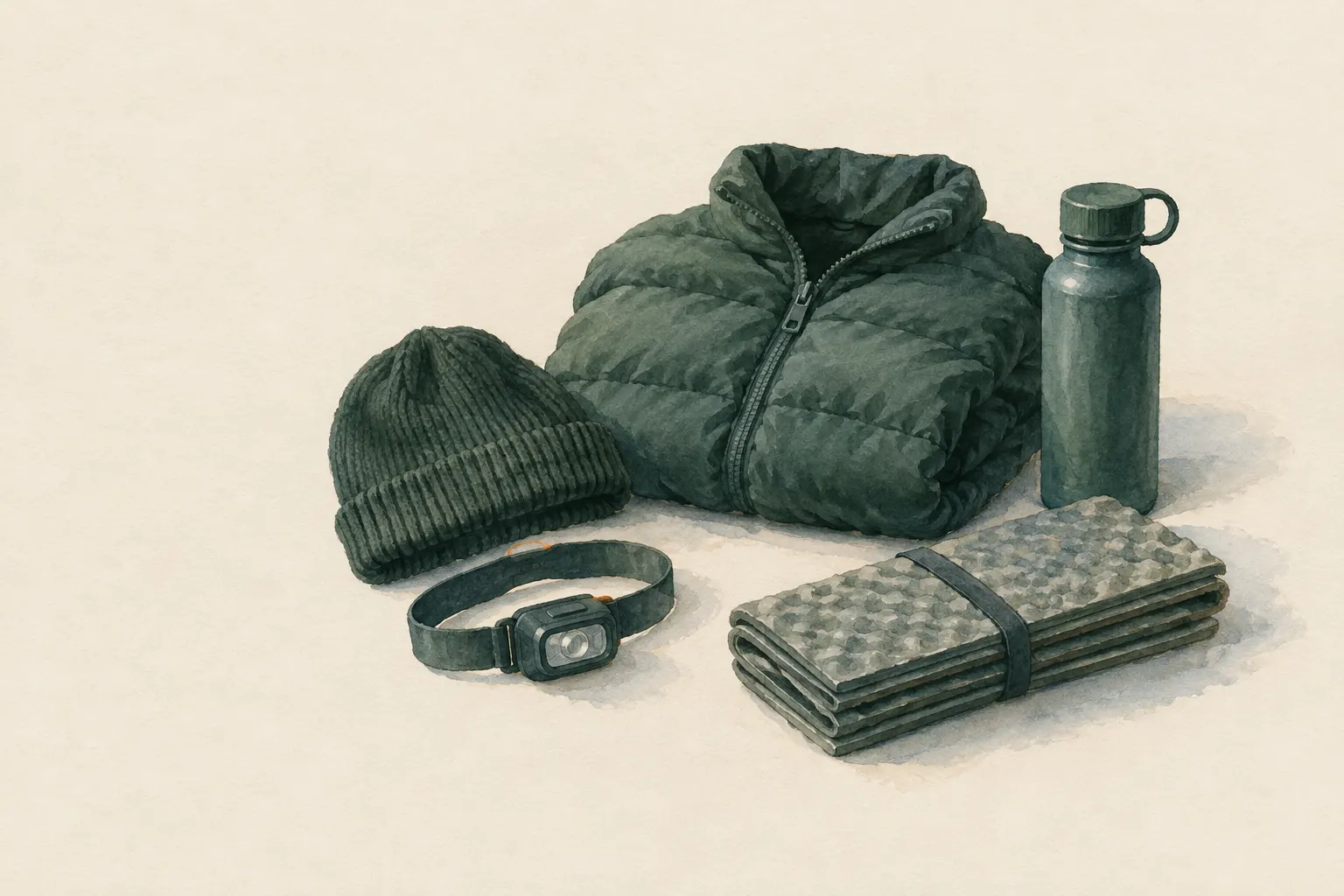
Deserts are often surprisingly cold at night: dry, clear air lets the day's heat radiate quickly into the sky. Anyone who packs only for heat will freeze. Walking at night avoids the heat but brings its own risks: trip hazards, navigation, active animals. A warm layer, ground insulation and light belong in every desert pack.
- Packing list and planning
Explained simply
Many people think of the desert only as scorching heat. But as soon as the sun goes down, it can get surprisingly cold there. The reason: above the desert there are hardly any clouds and little moisture in the air. At night clouds act like a blanket over the earth. Without that blanket, the day's warmth simply escapes into the sky.
Anyone who packs only summer clothes will therefore freeze at night – sometimes dangerously, especially if their clothing is still sweaty from the day. The ground is cold too and draws warmth from your body if you lie directly on it.
The most important point: pack for both extremes – sun protection for the day, a warm layer and something to lie on for the night. And never sleep in a dry riverbed: a thunderstorm far away can suddenly send a flood wave down it.
How it works
Every warm object gives off heat as invisible radiation – the ground, the rocks and you yourself. Water vapour and clouds in the air catch part of this radiation and send it back. In humid regions nights therefore stay milder. In dry, clear desert air this protection is missing, and the ground and air cool quickly after sunset.
That is why large differences between day and night are typical in deserts. How large they are depends strongly on region, altitude and season. High-altitude deserts and deserts in winter can even have frost at night.
Then there is conduction: if you lie on cold sand or rock, heat flows directly from your body into the ground. A sleeping pad or another insulating layer interrupts this path. In a desert night it is often more important than an extra blanket on top.
What really matters
Sweaty clothing is the hidden enemy. During the day you sweat even if you hardly notice, because the sweat evaporates quickly in the dry air. But if moisture stays in the fabric, it chills you further in the evening. So change into dry clothes before the cold sets in, or let your clothing dry while the sun is still warm.
A warm layer, a hat and a sleeping pad belong in every desert pack, even for a day trip. A vehicle breakdown or a sprained ankle can unexpectedly keep you out overnight. An emergency blanket can help additionally in an emergency but does not replace proper clothing.
The camp should be slightly raised, outside wadis and hollows and if possible sheltered from the wind. The coldest air collects in hollows at night, and wadis can turn into raging torrents during thunderstorms – even if not a single raindrop falls on you.
Travelling at night
In hot regions some people prefer to walk at night, because they sweat less and save water. That can make sense but brings its own risks: rocks, holes and drop-offs are hard to see, navigation is harder and groups lose each other more easily. Night walks therefore belong only on known routes and never alone in unfamiliar terrain.
Take a headlamp and spare batteries, plus a compass. The night sky can help you hold a direction but does not replace practised navigation. As a group, keep visual contact, agree on fixed breaks and count heads regularly.
Safety: what to watch out for
Hypothermia can happen even after a hot day. Shivering, clumsiness, slurred speech or confusion are warning signs. Then it helps to insulate the person from the ground, swap wet clothing for dry, shield them from the wind and wrap them up warmly. If their condition gets worse, call the local emergency number (112 in the EU).
Many desert animals are active at night and seek shelter in dark corners during the day. So shake out shoes, clothing and sleeping bag before using them and do not reach blindly under rocks or into crevices. This text deliberately does not identify animal species – ask locally which animals live there and how to behave.
A vehicle breakdown in arid regions is a topic of its own. In general: a vehicle is much easier to find from a distance than a single person, and it offers shade by day and wind shelter at night. Anyone planning a route leaves the way and expected arrival time with someone beforehand.
Step by step
Pack for both extremes
Plan sun protection for the day and a warm layer, hat and sleeping pad for the night.
- 1
Pack for both extremes
Plan sun protection for the day and a warm layer, hat and sleeping pad for the night.
- 2
Go into the night dry
Change or dry sweaty clothing in the evening before it gets cold.
- 3
Choose a camp
Slightly raised, outside wadis and hollows, sheltered from wind where possible.
- 4
Night walking only when planned
If walking at night to avoid the heat: known route, headlamp, spare batteries, compass, keep the group together.
Common mistakes
- Taking only light summer clothing
- Sleeping in a dry riverbed
- Putting shoes on in the morning without checking
- Walking at night without light
Quick view
Materials
Headlamp / flashlight
Sleeping pad
Emergency blanket
Tears easily once punctured; short-term shelter only.
Conductive – keep away from power lines.
Base layer
Suitable for
- Desert and steppe trips
- Vehicle breakdowns in arid regions
Not suitable for
- Solo night walks in unfamiliar terrain
Prerequisites
- Forecast for day and night temperatures
- Practice navigating in the dark
Safety
- Hypothermia is possible even after hot days, especially if clothing is sweaty. Take a warm, dry layer for the night.
- Many desert animals are active at night. Shake out shoes and clothing before putting them on, do not reach blindly under rocks.
How it works
Water vapour and clouds hold back part of the heat radiation at night. In dry, cloudless desert air this blanket is missing: ground and air cool quickly after sunset. Large differences between day and night are therefore typical. The ground also draws heat from a person lying on it by conduction.
Advantages
- Less water loss at night
- The night sky helps with orientation
Disadvantages
- Cold
- Limited visibility and trip hazards
Deep knowledge
Background
The survival manual FM 3-05.70 describes the large temperature differences between day and night in deserts and advises being equipped for both. The Wilderness Medical Society describes that hypothermia does not only occur in cold regions.
Deserts vary greatly: high-altitude or winter deserts can have frost at night.
Common mistakes
- Taking only light summer clothing
- Sleeping in a dry riverbed
- Putting shoes on in the morning without checking
- Walking at night without light
Limits and risks
- No temperatures for specific deserts
- No animal identification
Material alternatives
Derived from material properties: a substitute must have all relevant properties. Observe the notes on the substitute.
- Headlamp / flashlight
- Mobile phone (The battery drains quickly in cold and with continuous screen and GPS use.), Battery lantern / LED light
- Sleeping pad
- Dry leaves, grass or conifer boughs (Collect only where allowed; no protected plants. Check for ticks and insects.), Backpack, Dry spare clothing (Carry it in waterproof packaging – wet clothing barely insulates.), Wool blanket / duvet (Keep away from candles, stoves and heaters.), Insulated cool box (Keeps cold only for a limited time; without ice packs or ice it is not a fridge.), Sleeping bag (Do not store compressed long-term; do not pack away damp.), Newspaper and cardboard (Flammable – keep away from candles, stoves, heaters and embers.), Insulated cooking box (hay box, thermal cooker) (Never put open flame or embers inside – only the hot, closed pot.)
Results come exclusively from structured entries. No improvised instructions are generated.
Sources
Headquarters, Department of the Army (USA) (2002): FM 3-05.70 Survival
Temperature differences in deserts and camping outside dry valleys
Wilderness & Environmental Medicine (Wilderness Medical Society) (2019): Wilderness Medical Society Clinical Practice Guidelines for the Out-of-Hospital Evaluation and Treatment of Accidental Hypothermia: 2019 Update
Hypothermia also outside cold regions