Subways and tunnels: emergencies underground
A train stuck in a tunnel, smoke on the platform, a power cut in the station: underground, safety depends on staying calm and following staff instructions. The track is off-limits – power rails can be live and trains can come. Know the emergency call points and notice escape routes when you board.
- A few seconds of attention on every trip
Explained simply
Subways run in long tubes under the city. Down there it is narrow, and much of it is controlled by technology: power, light, ventilation, signals. The staff and the control centre have an overview of the whole network. You do not – you only see your carriage or your platform.
That is why the most important rule underground is: stay calm and do what the staff say. If a train stops in the tunnel, you stay inside until you are told to get off. Out in the tunnel, trains may be moving and rails may be live.
The most important thing: never step down onto the track, not even to fetch a dropped phone. Tell the staff or use the emergency call point. And if there is smoke anywhere, move away from it, follow the exit signs and do not use a lift.
How it works
Many subways and urban railways get their power from an extra rail beside the running rails or from a line overhead. This power rail can be live even when no train is coming. On top of that, trains approach quickly and almost silently in the tunnel. The track is therefore an area that only trained staff enter, after the power has been switched off.
When there is a problem, the operator plans the evacuation centrally: it switches off the power, stops other trains, opens escape routes and sends staff. This sometimes takes time, and the wait feels long. But people who open doors on their own and climb into the tunnel end up in areas that have not yet been made safe.
Smoke spreads along the tube in a tunnel, and stairs and passages are narrow. When many people want to get out at the same time, dangerous crushes can occur. Crowd science research describes how high crowd density on stairs and in narrow passages becomes dangerous – and how calm, orderly walking lowers the risk.
What really matters
A few seconds of attention on every trip are enough. When you board, glance at where the emergency intercom, fire extinguisher and door release are in the carriage. On the platform, note the exits. Exactly how the emergency brake, intercom and door release work differs between networks – the notices in the carriage explain it.
On the platform, wait behind the safety line and hold children by the hand. Secure buggies with the brake so that they do not roll towards the edge. If something has fallen onto the track, do not fetch it yourself; tell the staff or use the emergency call point.
If your train stops in a tunnel, stay calm, listen for announcements and use the emergency intercom if someone needs help, for example with a circulation problem. Stay in the train until staff instruct you to get off.
Safety: smoke, fire and evacuation
With smoke or fire, move away from the smoke, not towards it to have a look. Follow the exit signs and the staff and do not use lifts – they can get stuck or travel into the smoke. General fire safety guides such as the US emergency management agency FEMA's „Are You Ready?“ stress exactly these points. Call the local emergency number (112 in the EU) as soon as you can.
If there is an evacuation, follow the instructions and leave luggage behind. Bags and suitcases make narrow routes even narrower and trip other people up. Help one another, especially children, older people and people with disabilities. On steps and uneven ground, walk slowly and use a torch or your phone light.
To avoid crushes, do not push, do not stop on stairs, and move to the side if the crowd becomes denser. Walking calmly and steadily helps everyone get out faster.
Typical situations
If the power fails in a station, emergency lighting switches on and shows the escape routes. Escalators stop and become ordinary stairs – just with unusually high steps. Walk slowly and hold the handrail.
Some tunnels have no mobile coverage. Then emergency intercoms and call points are the way to get help. A small headlamp in your bag does no harm, but a phone light is usually enough.
Good to know
Subway networks have well-trained staff, planned procedures, emergency lighting and signage. Serious emergencies are rare. The notices of the respective operator are what counts, because technical details differ from city to city.
This text deliberately does not explain how to evacuate along the track without staff. That is not an oversight: getting out into the tunnel on your own is life-threatening, and the best help you can give is calm, consideration and passing information on via the emergency intercom.
Step by step
Get your bearings when boarding
Glance at the emergency intercom, fire extinguisher and door release in the carriage; note the exits on the platform.
- 1
Get your bearings when boarding
Glance at the emergency intercom, fire extinguisher and door release in the carriage; note the exits on the platform.
- 2
Keep back on the platform
Wait behind the safety line, hold children by the hand, park buggies parallel to the platform edge with the brake on.
- 3
Train stopped in a tunnel
Stay calm, listen for announcements, use the emergency intercom if someone needs help. Stay in the train.
- 4
During an evacuation
Follow instructions, leave luggage behind, help each other, walk slowly on steps and uneven ground. Use a torch or phone light.
- 5
Avoid crushes
Do not push, do not stop on stairs, and move to the side if the crowd becomes denser.
Common mistakes
- Stepping onto the track to retrieve a phone
- Forcing doors open in a tunnel
- Walking towards the smoke to look
- Using the lift in a fire
- Dragging luggage during an evacuation
Quick view
Materials
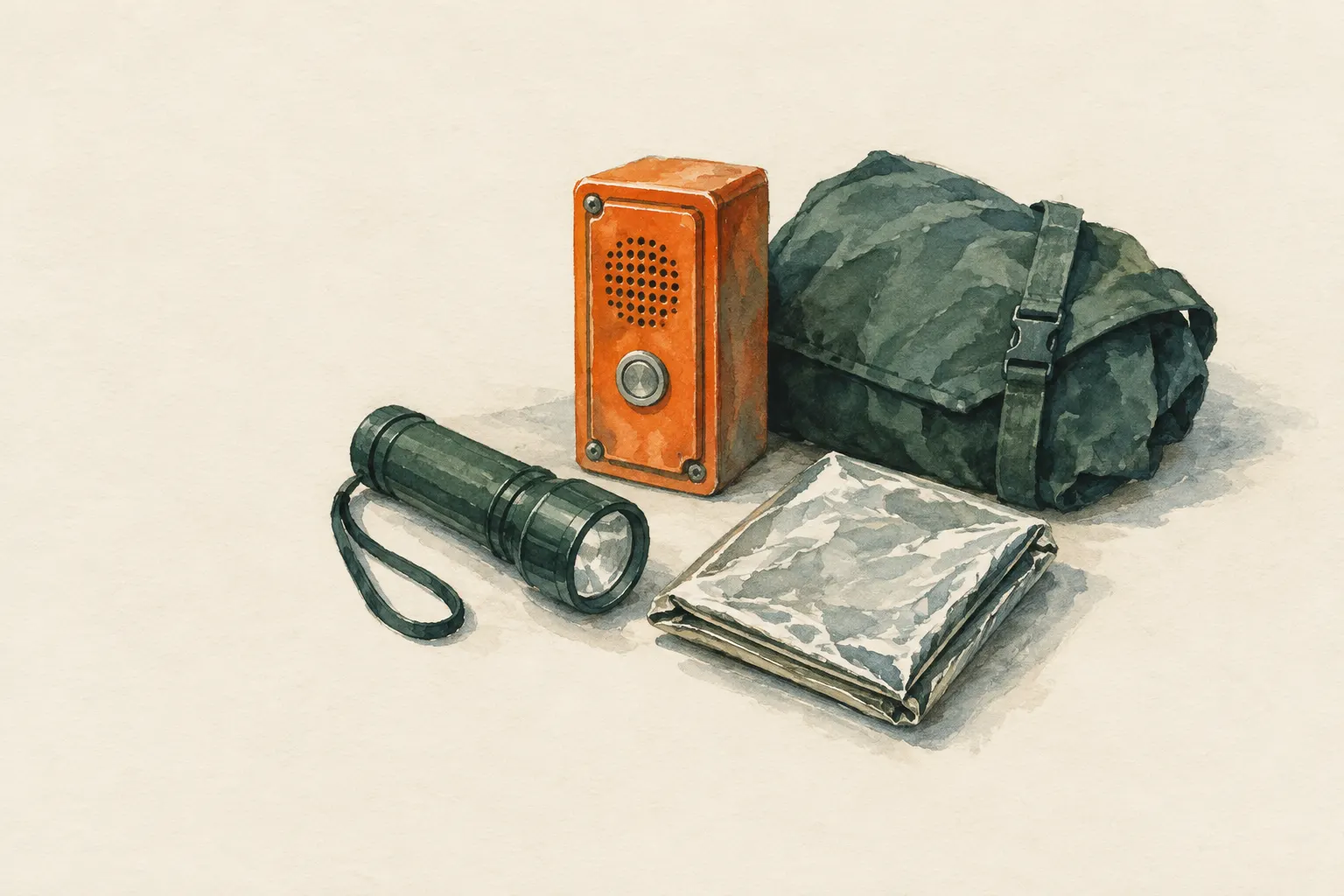
Headlamp / flashlight
Or phone light during a power cut
Suitable for
- Commuters and travellers in cities with a metro
- Families with children on public transport
Not suitable for
- Self-evacuating along the track without instruction
Prerequisites
- Knowing where emergency call points and exits are
Safety
- How the emergency brake, emergency intercom and door release work differs between networks. Read the notices in the carriage.
How it works
In a tunnel the routes are narrow, visibility is limited and smoke spreads along the tube. Transport operators therefore plan evacuations centrally: switch off power, stop trains, open escape routes. People who act on their own end up in areas that have not yet been made safe. Crowds on narrow stairs are a risk of their own – calm, orderly walking prevents crushes.
Advantages
- Well-trained staff and planned procedures
- Emergency lighting and signage
Disadvantages
- Confined spaces and many people
- No mobile coverage in some tunnels
Deep knowledge
Background
Crowd science research, for example G. Keith Still's "Introduction to Crowd Science", describes how high crowd density on stairs and in narrow passages becomes dangerous and how orderly flows reduce the risk. General fire safety advice such as in FEMA's "Are You Ready?" guide stresses moving away from smoke and not using lifts.
Technical details such as emergency brake function or power rails differ between networks; the notices of the respective transport operator are what counts.
Variants
- Power cut in the station
- Emergency lighting shows the escape routes. Escalators stop and become stairs – walk slowly and use the handrail.
Common mistakes
- Stepping onto the track to retrieve a phone
- Forcing doors open in a tunnel
- Walking towards the smoke to look
- Using the lift in a fire
- Dragging luggage during an evacuation
Limits and risks
- No network-specific rules
- No instructions for evacuating without staff
Material alternatives
Derived from material properties: a substitute must have all relevant properties. Observe the notes on the substitute.
- Headlamp / flashlight
- Mobile phone (The battery drains quickly in cold and with continuous screen and GPS use.), Battery lantern / LED light
Results come exclusively from structured entries. No improvised instructions are generated.
Sources
G. Keith Still – CRC Press (2014): Introduction to Crowd Science
Dangers of high crowd density in confined areas
U.S. Federal Emergency Management Agency (FEMA): Are You Ready? An In-Depth Guide to Citizen Preparedness
General fire safety advice: avoid smoke, no lifts
European Commission: 112 – the European emergency number
European emergency number 112