Volcanic and geothermal areas
Volcanic areas are dangerous even without an eruption: gases collect invisibly in hollows, hot ground and thin crusts over boiling water can collapse, slopes are loose. The most important rule: follow closures, alert levels and instructions from the authorities, stay on marked paths and boardwalks and leave immediately upwind if you smell gas or feel unwell.
- Information before the visit, discipline on site
Explained simply
A volcano is a place where hot material from inside the Earth comes up to the surface. Even when it is not erupting, it is not completely quiet: gases and steam rise from cracks, and in some places water or mud boils right under the ground. Such places are called geothermal areas.
Some of these gases smell of rotten eggs, others do not smell at all and are invisible. A gas such as carbon dioxide is heavier than air and collects in hollows – like water running into a puddle. Anyone who walks into such a spot can suddenly have too little air to breathe.
The most important thing: always stay on marked paths and boardwalks, respect closures and the authorities' alert levels, and on active volcanoes only go with an official guide. If you smell gas or feel strange, leave immediately, uphill and upwind.
How it works
Volcanoes release gases even between eruptions, mainly water vapour, carbon dioxide, sulphur dioxide and hydrogen sulphide. Carbon dioxide is heavier than air. When there is no wind it can collect in hollows, ditches and caves to dangerous concentrations and push out the air you need to breathe. The US Geological Survey describes this danger in its Volcano Hazards Program.
In geothermal areas hot water circulates beneath the surface. It softens the ground from below and dissolves rock. This can create a thin crust over boiling water or mud that looks solid from above. Anyone who steps on it can break through and be badly scalded.
An eruption adds further dangers: lava flows, ejected rocks, ash and mudflows in valleys. Mudflows can also occur without an eruption when heavy rain mobilises loose ash on the slopes.
Authorities, alert levels and guides
Many volcanoes are monitored around the clock by observatories. They issue alert levels, often as colours or numbers, and set up exclusion zones. What the levels mean differs from country to country. So before every visit, check the current alert level and the advice of the responsible observatory or authority, and on site follow warning apps and local media.
We strongly recommend: visit active volcanoes and craters only with licensed local guides where these are required or recommended. They know the current gas vents, the safe paths and the signs that mean it is time to turn back. Barriers are not excessive; they are based on measurements and experience.
The situation at a volcano can change quickly. A path that was open yesterday may be closed today. Follow instructions from authorities and guides immediately and without argument.
Safety: what to watch out for
Use only marked paths and boardwalks, respect barriers and hold children by the hand. Never leave the boardwalks, not even for a photo. Do not rest in hollows, ditches or caves near gas vents, especially when there is no wind. Children and dogs are at greater risk because they breathe closer to the ground, where heavy gases collect.
Hydrogen sulphide smells of rotten eggs, but at higher concentrations the sense of smell can fail. Carbon dioxide has no smell at all. So the absence of smell does not mean safety. With a pungent smell, coughing, eye irritation, breathlessness, dizziness or headache, leave immediately uphill and upwind and call the local emergency number (112 in the EU). People with asthma or heart and lung conditions are more sensitive to volcanic gases.
If someone collapses in a hollow, do not run in after them. The cause may be gas, and a helper can lose consciousness too. Call emergency services and wait for rescuers with breathing protection. In rain and when an eruption warning is in place, avoid valley floors on volcanic slopes because of possible mudflows.
Gear and materials
A dust mask can help against ash and dust but does not protect against gases. Anyone who confuses the two feels safe where they are not. Against gases, only distance, wind and higher ground help.
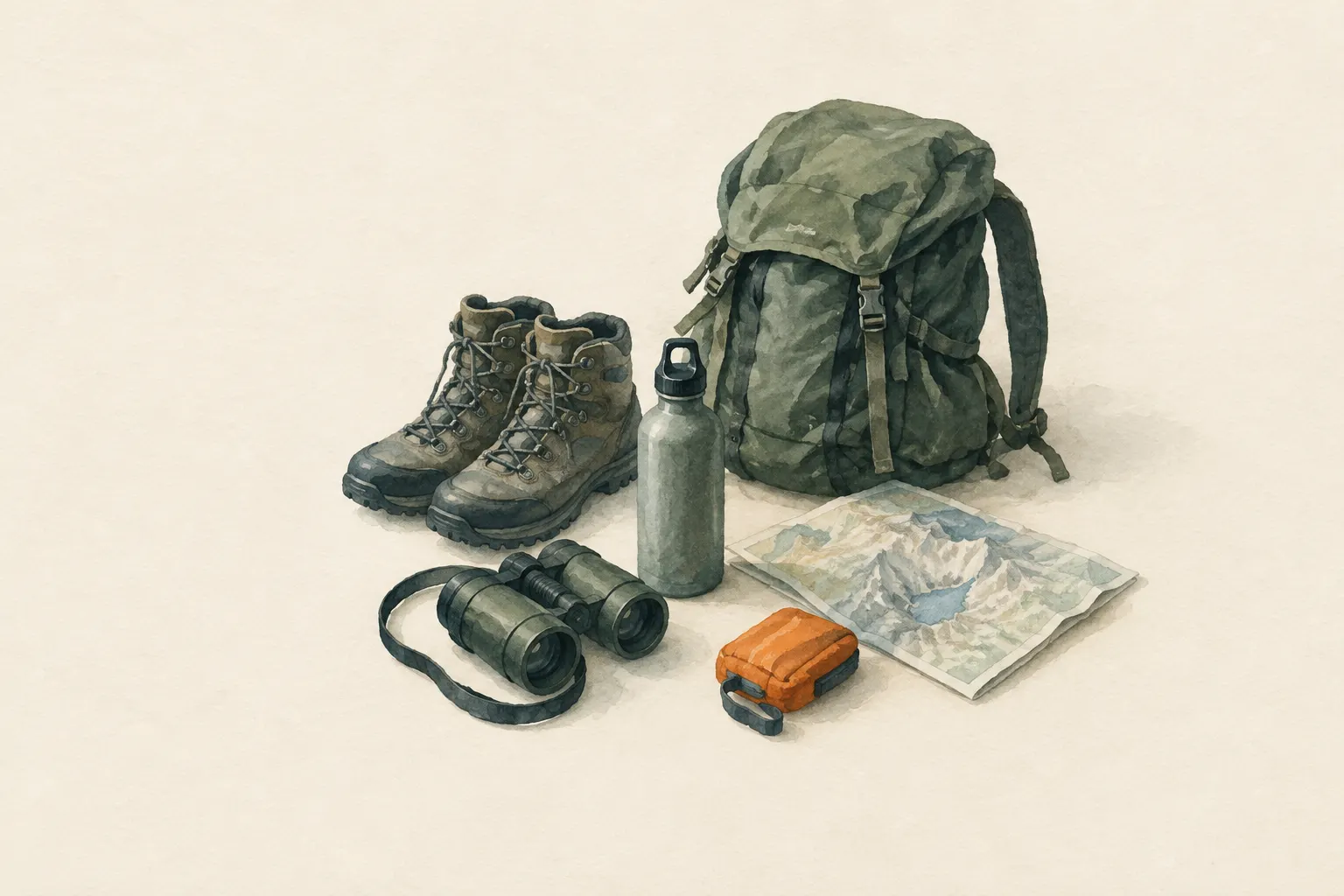
Sturdy shoes are important, because volcanic rock is often sharp and loose, and ash can be slippery. Water, sun protection and a warm layer belong in the pack too, because many volcanoes are high and exposed. What to do in ashfall in towns is covered in a separate entry on volcanic ash.
Good to know
Hazard zones at volcanoes are often well monitored and marked, and authorities issue alert levels. The International Volcanic Health Hazard Network provides information on the health effects of ash and gases. If you follow this information and stay on the paths, you can experience volcanic and geothermal areas as impressive places.
This text deliberately gives no gas concentrations or limit values and makes no eruption forecasts. That is the job of the observatories. For you, their current advice counts for more than any general rule.
Step by step
Get informed beforehand
Check the alert level, exclusion zones and advice from the responsible volcano observatory or authority; follow warning apps and local media.
- 1
Get informed beforehand
Check the alert level, exclusion zones and advice from the responsible volcano observatory or authority; follow warning apps and local media.
- 2
Stay on paths
Use only marked paths and boardwalks, respect barriers and hold children by the hand.
- 3
Avoid low spots
Do not rest in hollows, ditches or caves near gas vents, especially when there is no wind. Dogs and children are at greater risk because they are closer to the ground.
- 4
Leave at the first signs
With a pungent smell, coughing, eye irritation, breathlessness or dizziness, leave immediately uphill and upwind.
- 5
Avoid valleys in heavy rain
On volcanic slopes heavy rain can mobilise loose ash into mudflows. Avoid valley floors in rain and when an eruption warning is in place.
Common mistakes
- Thinking barriers are excessive
- Leaving the boardwalk for a photo
- Following a collapsed person into a hollow
- Taking the absence of smell as an all-clear
- Thinking a dust mask protects against gas
Quick view
Materials
Particle-filtering respirator (FFP2/N95)
Protects only against ash and dust, not against gases
Only protects with a tight fit; beards and the wrong size reduce effectiveness.
Filters particles, not gases – no protection against chemical vapours or carbon monoxide.
Suitable for
- Visits to volcanic and geothermal areas
- Travel to regions with active volcanoes
Not suitable for
- Crater climbs without a guide
- What to do in ashfall in settlements (see volcanic ash)
Prerequisites
- Check the current alert level and closures with the authorities
Safety
- Hydrogen sulphide smells of rotten eggs, but at higher concentrations the sense of smell can fail. No smell does not mean safety. People with asthma or heart and lung conditions are more sensitive to volcanic gases.
How it works
Volcanoes release gases even between eruptions – mainly water vapour, carbon dioxide, sulphur dioxide and hydrogen sulphide. Carbon dioxide is heavier than air and can collect in hollows to dangerous concentrations when there is no wind. Hot water circulates beneath geothermal fields, softening and dissolving the ground from below. Eruptions add lava flows, ejected rocks, mudflows in valleys and ash.
Advantages
- Hazard zones are often well monitored and marked
- Authorities issue alert levels
Disadvantages
- Gases invisible and sometimes odourless
- The situation can change quickly
Deep knowledge
Background
The US Geological Survey describes in its Volcano Hazards Program the main volcanic gases, their health effects and the danger of carbon dioxide accumulating in hollows. The International Volcanic Health Hazard Network provides information on the health effects of ash and gases.
Volcano observatories in many countries issue colour- or level-based alert systems; the meaning of the levels differs between countries.
Variants
- Guided crater tours
- On active volcanoes only with licensed guides where these are required or recommended – check local rules.
Common mistakes
- Thinking barriers are excessive
- Leaving the boardwalk for a photo
- Following a collapsed person into a hollow
- Taking the absence of smell as an all-clear
- Thinking a dust mask protects against gas
Limits and risks
- No gas concentrations or limit values
- No eruption forecasting
Sources
U.S. Geological Survey (USGS) – Volcano Hazards Program: Volcanic gases (Volcano Hazards Program information pages)
Volcanic gases, health effects, carbon dioxide in hollows
International Volcanic Health Hazard Network (IVHHN): The Health Hazards of Volcanic Ash – A guide for the public
Health hazards of volcanic ash
European Commission: 112 – the European emergency number
European emergency number 112