Pregnancy and emergencies: documents, routes, contacts
During pregnancy a lot in an emergency depends on medical records being at hand, the route to care being known even when there is disruption, and help being called quickly. This entry is planning only – medical questions are for the midwife or doctor.
- About an hour, update as the pregnancy progresses
Explained simply
When someone in the family is expecting a baby, it is good to have a plan for emergencies. This is not about medicine – the midwife or doctor takes care of that. It is about very practical questions: where are the important records? How do we get to the hospital if a road is closed? Whom do we call?
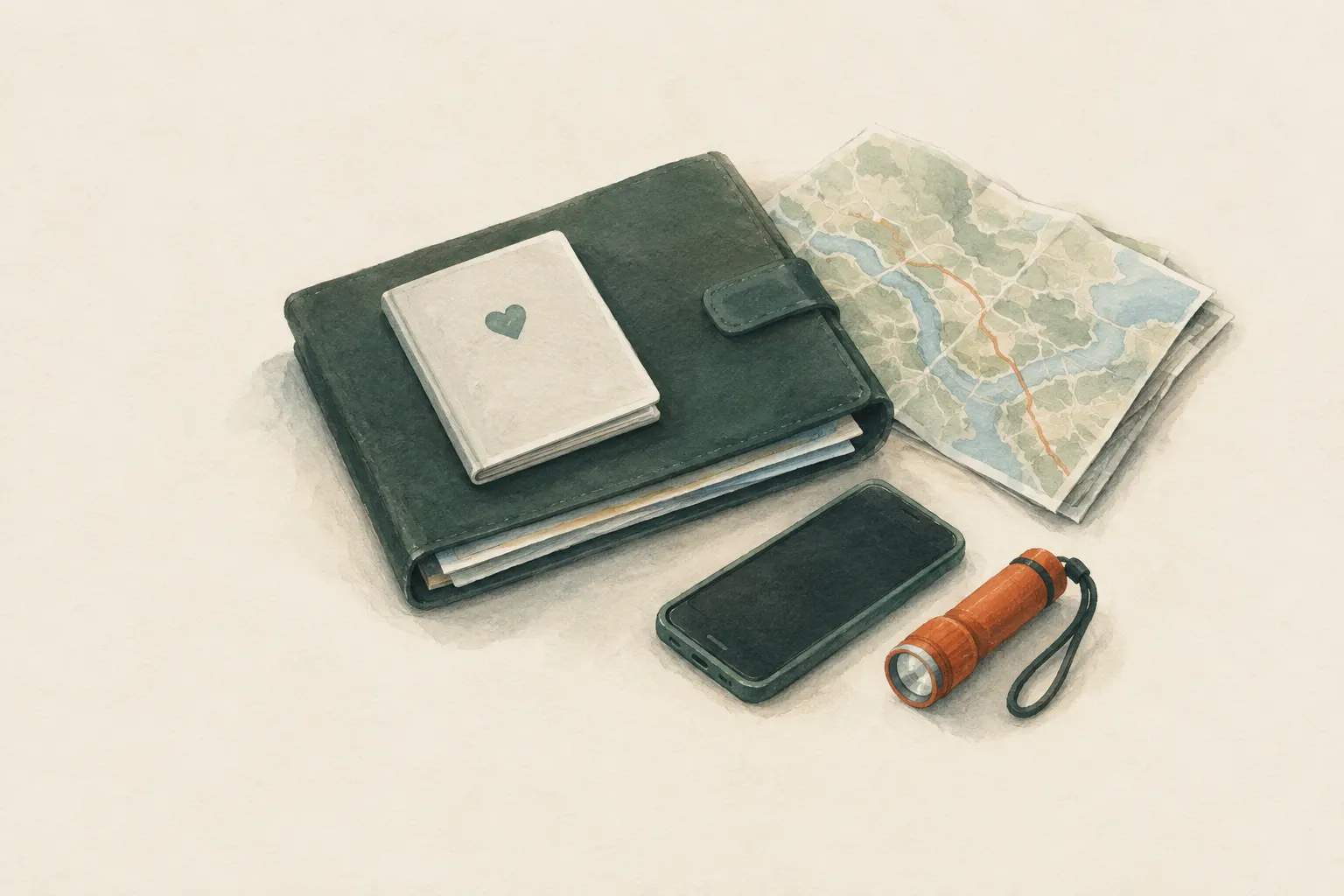
Imagine the records as a kind of ID card for the pregnancy. If helpers get them straight away, they quickly know what matters. That is why they are kept in a waterproof sleeve within reach, with a copy in the emergency folder.
The most important thing: if the pregnant person suddenly feels very unwell, call the emergency number at once (112 in the EU) – do not wait.
What this is about – and what not
This plan is pure organisation. It does not answer medical questions: which warning signs there are, what to do about symptoms or how to take care of yourself physically during an evacuation are things to discuss with your midwife or doctor. The individual advice of these professionals always comes before anything a general text can say.
Why is a plan of its own still useful? In crises routes are longer, phone networks overloaded and the usual practice may be closed. Knowing in advance where the records are, whom to call and how else to get to the hospital saves time and lets you give helpers the important information immediately.
A routine check-up is a good opportunity for the conversation. Simply ask: “What should we bear in mind in an emergency or an evacuation?” and “How do we get advice outside office hours?” Write down the answers.
Records and contacts
Important records include the pregnancy records – in Germany, for example, the maternity record book (Mutterpass) –, a list of prescribed medication, the health insurance card and the hospital's contact details. Everything goes together into a waterproof sleeve that always stays in the same place or goes along in the handbag. A copy is kept in the family's emergency folder.
The numbers of the midwife, practice, hospital and emergency services belong in the phone and also on paper. A dead battery or a lost phone are common problems in crises. A charged power bank in the go bag helps but does not replace the paper list.
In the last weeks of pregnancy the hospital bag is ready. It is not the same as the go bag, but both can stand side by side so that in an emergency you only need to grab them.
Planning routes
Know the main route to the hospital and at least one alternative. During floods, storms, snow or major roadworks, the usual route can suddenly be closed. It is worth driving the alternative route once, so it is not unfamiliar when it counts.
Also note a second facility that can be reached if the first cannot. And agree who drives if the partner is not there – such as a neighbour, a friend or a taxi. If you have no car, think about how else you can get to the hospital quickly.
If the pregnant person is acutely unwell, the right way is not to drive yourselves but to call the emergency number. Route planning is meant for situations in which the midwife or doctor says: “Please come to the hospital.”
Safety: what to watch out for
With warning signs the midwife or doctor has named, with bleeding, severe pain or if the pregnant person suddenly feels very unwell: call the local emergency number at once (112 in the EU). Do not wait to see whether it improves, and do not hesitate because networks are busy or you do not want to “be a bother”. Tell the emergency call-taker that it is a pregnancy.
When the authorities advise evacuation, leave early. The later you set off, the fuller the roads and assembly points. Tell evacuation points, emergency services and staff at a shelter that there is a pregnancy. Only those who know can take it into account.
This entry is explicitly not a guide to giving birth outside hospital. Everything medical is for professionals and the ambulance service. The dispatcher on the phone will tell you what to do until help arrives.
Good to know
The plan changes over the course of the pregnancy: at the start, records and contacts are the main focus; towards the end, the hospital bag and the question of who drives. After the birth the guidance on preparing for infants applies, and the baby's documents go into the emergency folder.
Ready.gov and the German BBK guide generally recommend taking the specific needs of every household member into account in the emergency plan and keeping documents and medication at hand. Pregnancy is a good example of this.
Step by step
Records at hand
Pregnancy records (e.g. maternity record book where one is issued), medication list, health insurance and the hospital's contact details in a waterproof sleeve; copy in the emergency folder.
- 1
Records at hand
Pregnancy records (e.g. maternity record book where one is issued), medication list, health insurance and the hospital's contact details in a waterproof sleeve; copy in the emergency folder.
- 2
Contacts
Numbers of midwife, practice, hospital and emergency services in the phone and on paper. Ask how to get advice outside office hours.
- 3
Plan routes
Know the main and an alternative route to the hospital, note a second reachable facility and agree who drives if the partner is not there.
- 4
Add to the bag
Add records, medication and important personal items to the go bag; in the last weeks have the hospital bag ready.
- 5
Ask professionals
Ask the midwife or practice what to bear in mind in an emergency or evacuation – individual advice takes precedence.
Common mistakes
- Records only in a cupboard at home
- Knowing only one route to the hospital
- Waiting with warning signs because networks are busy
- Not mentioning the pregnancy at the shelter
Quick view
Materials
Document folder (waterproof)
Pregnancy records and copies
Store securely – contains sensitive personal data.
Medication supply
Prescribed medication
Agree any stock of prescription medication with a doctor or pharmacist; observe storage instructions and expiry dates.
Mobile phone
The battery drains quickly in cold and with continuous screen and GPS use.
Do not plan on it as your only means of navigation or emergency calls.
Power bank
Do not use damaged or swollen batteries; do not charge while covered.
Suitable for
- Expectant parents
- Families with long routes to hospital
- Regions with storm or flood risk
Not suitable for
- Medical self-help or assisting at a birth – that is for professionals and the emergency services
Prerequisites
- Contact with midwife, practice or hospital
- A family emergency plan
Safety
- When evacuation is advised, leave early. Pregnant people should tell evacuation points and emergency services about the pregnancy.
How it works
In crises routes are longer, networks are overloaded and the usual practice may be closed. Knowing the records, contacts and alternative routes in advance saves time and lets you give helpers the important information immediately.
Advantages
- Faster care in an emergency
- Less stress for the family
Disadvantages
- Must be adjusted as the pregnancy progresses
Deep knowledge
Background
Ready.gov and the German BBK guide recommend considering the specific needs of every household member in the emergency plan and keeping important documents and medication at hand.
This entry deliberately gives no medical guidance; warning signs and what to do are discussed with the attending professional.
Variants
- After the birth
- After the birth the guidance on preparing for infants applies; add the baby's documents.
Common mistakes
- Records only in a cupboard at home
- Knowing only one route to the hospital
- Waiting with warning signs because networks are busy
- Not mentioning the pregnancy at the shelter
Limits and risks
- No medical advice
- No instructions for assisting at a birth
Material alternatives
Derived from material properties: a substitute must have all relevant properties. Observe the notes on the substitute.
- Document folder (waterproof)
- Tarp, Plastic sheet / large bin bag (Tears easily; never pull over the head (suffocation risk).), Emergency blanket (Tears easily once punctured; short-term shelter only.), Rain poncho (When used as a shelter, it no longer protects your body from rain.), Bivy bag (Never fully close off the face.), Tent (Do not cook or heat inside the tent (fire and carbon monoxide danger).), Heavy-duty bin bag (large) (Suffocation risk: never pull plastic bags over the head or face and keep them away from small children.), Group shelter bag (Airtight – ventilate regularly.)
- Mobile phone
- Headlamp / flashlight, Battery lantern / LED light
Results come exclusively from structured entries. No improvised instructions are generated.
Sources
Ready.gov – U.S. Federal Emergency Management Agency (FEMA): Make A Plan
Considering specific household needs, documents and medication
Bundesamt für Bevölkerungsschutz und Katastrophenhilfe (BBK), Deutschland: Ratgeber für Notfallvorsorge und richtiges Handeln in Notsituationen
Important documents and medication in the emergency bag