Humour and morale in a group: laughter, rituals, small wins
Shared laughter, small rituals and celebrating small wins hold a group together through long periods of strain. Humour must not trivialise the situation and never come at someone's expense. Deliberately looking after morale – shared meals, an end-of-day round, saying thank you – strengthens cohesion and endurance.
- A few minutes a day
Explained simply
When a hard time goes on for a long while – a long power cut, days in an emergency shelter – the mood often gets worse. Everyone is tired, irritable and a little discouraged. Then small things help surprisingly much: laughing together, eating together, telling each other in the evening what went well today.
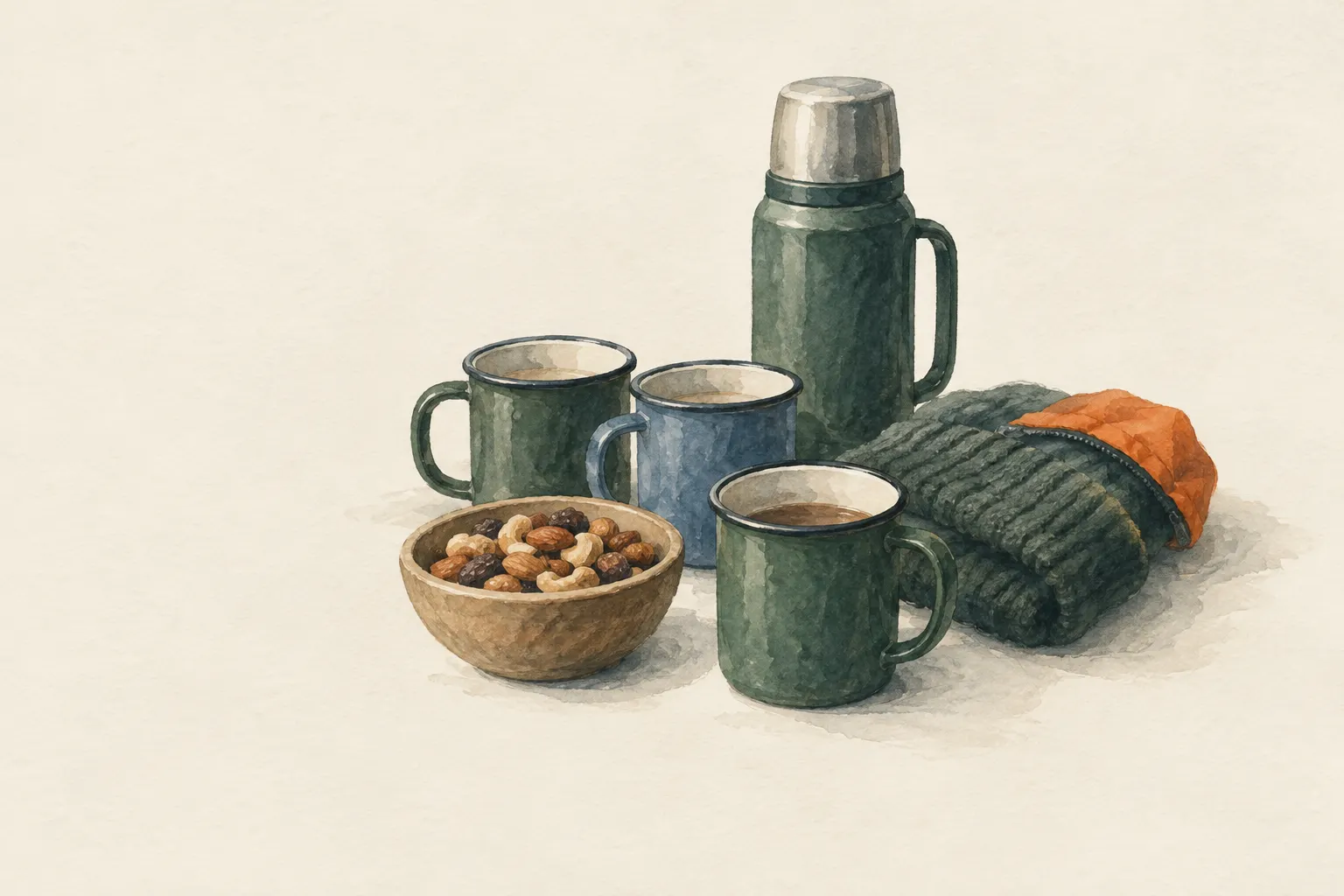
Rituals are like the handrail on a staircase: they give you something to hold on to because you know what comes next. That might be tea in the evening, a short morning round or a game after dinner.
One important rule: laugh about the situation, never about people. Jokes about injured, grieving or left-out people hurt and divide the group. And someone who is quiet or sad right now needs closeness more than a joke.
How it works
Hope and connectedness are among the factors that help people get through hard times. Morale – a group’s willingness to keep going together – depends heavily on whether individuals feel they belong and whether they believe their actions make a difference.
Rituals create predictability in a situation where much is uncertain. Laughing together can release tension and create a moment of distance from the situation; it also says: “We will get through this together.” Visible small wins counter the feeling of being unable to achieve anything.
None of this solves practical problems. But it gives a group the strength to tackle them and reduces the conflicts that arise quickly during long periods of strain.
What really matters
Fixed shared moments are the framework: a meal, tea in the evening, a short morning round with the day’s plan. Do not drop them just because there is a lot to do – if in doubt, a short version is better than none. Especially in hectic phases they give stability.
Make small wins visible. Briefly collect in the evening: what worked today? Tick off what is done and say thank you specifically, for example: “Thank you for fetching the water today.” That way everyone notices that their contribution is seen.
Plan room for lightness: games, stories, music, shared memories. Everyone can contribute something, including the quiet ones. And read the mood: not everyone is in the mood for jokes all the time, and that is fine.
When it fits – and when not
Humour and rituals require basic needs and safety to be taken care of. In acute danger or right after a loss, protection, care and support come first. Someone who has just lost a person does not need cheering up but people who are there.
Forced cheerfulness usually backfires: anyone who is ordered to be in a good mood feels their worries are not taken seriously. Gallows humour – jokes about your own bad situation – can help some people and hurt others. How humour works depends strongly on culture, group and situation. Laughing worries away instead of taking them seriously damages trust.
With children
Children benefit particularly from rituals and lightness. Songs, riddles, silly stories and games bring them joy and distract them from the adults’ tension. Small “jobs” such as torch keeper or calendar keeper give them the feeling of being important and helping.
Repetition is not a drawback but an advantage: the same goodnight song every evening gives security. Children also sense when adults only pretend that everything is fine. Honest, child-appropriate answers and laughing together go well together.
Safety: what to watch out for
Humour at the expense of injured, grieving or marginalised people hurts and divides the group. When in doubt: laugh about the situation, not about people. Pay attention to who withdraws or stops laughing along – that can be a sign that someone is not doing well. Laughter also does not automatically mean someone is coping well.
These tips are not a treatment for low mood or depression. If low mood lasts for weeks or someone feels hopeless, a family doctor, counselling service or mental health professional are the right people to talk to. With thoughts of suicide or danger to others: the local emergency number (112 in the EU) or a local crisis line.
Step by step
Introduce rituals
Fixed shared moments: a meal, tea in the evening, a short morning round with the day's plan.
- 1
Introduce rituals
Fixed shared moments: a meal, tea in the evening, a short morning round with the day's plan.
- 2
Make small wins visible
Briefly collect in the evening: what worked today? Tick off what is done, say thank you.
- 3
Room for lightness
Plan games, stories, music or memories; everyone can contribute something.
- 4
Read the mood
Not everyone is in the mood for jokes. Someone who is quiet or sad needs closeness more than jokes.
Common mistakes
- Ordering forced cheerfulness
- Jokes about those affected
- Laughing worries away instead of taking them seriously
- Dropping rituals "because there is no time right now"
Quick view
Suitable for
- Families, shared households, travel groups, emergency shelters
- Long waits, power cuts, isolation
Not suitable for
- Acute danger or fresh losses – protection and support come first
Prerequisites
- Basic needs and safety are taken care of
Safety
- Humour at the expense of injured, grieving or marginalised people hurts and divides the group. When in doubt, laugh about the situation, not about people.
- These tips do not replace psychological or medical help. If distress lasts for weeks or paralyses daily life, involve a family doctor, counselling service or mental health professional.
How it works
Hope and connectedness are among the factors that help people get through strain. Shared rituals create predictability, humour can release tension, and visible small wins show that your own actions make a difference.
Advantages
- Free
- Strengthens cohesion and endurance
Disadvantages
- Can be misunderstood
- Does not replace solving practical problems
Deep knowledge
Background
Hobfoll and colleagues (2007) name connectedness and hope among the five core elements of support after disasters. Shared rituals and activities are a simple way to strengthen both in daily life.
How humour works depends strongly on culture, group and situation; what relieves tension in one group may hurt in another.
Variants
- With children
- Songs, riddles, silly stories and small "jobs" (torch keeper, calendar keeper) give children stability and joy.
Common mistakes
- Ordering forced cheerfulness
- Jokes about those affected
- Laughing worries away instead of taking them seriously
- Dropping rituals "because there is no time right now"
Limits and risks
- Not a treatment for low mood or depression
Sources
Hobfoll, S. E. et al. – Psychiatry: Interpersonal and Biological Processes (2007): Five essential elements of immediate and mid-term mass trauma intervention: empirical evidence
Connectedness and hope as core elements