Draught-proofing and keeping heat in the home
Leaky windows, doors, letterboxes and gaps around pipes let warm air escape. Draught strips, draught excluders, heavy curtains and closing off unused rooms are simple, cheap measures – every day and especially during a heating failure. Important: never block vents for stoves and gas appliances, and keep airing regularly.
- A few hours for a flat
Explained simply
Warm air in the house is a bit like water in a bucket with holes. It slips out through every gap at the window, under the door or at the letterbox, and cold air pushes in. You feel that as a draught – a cool breath on your legs or neck. If you plug these holes, the warmth stays inside longer, especially if the heating ever fails.
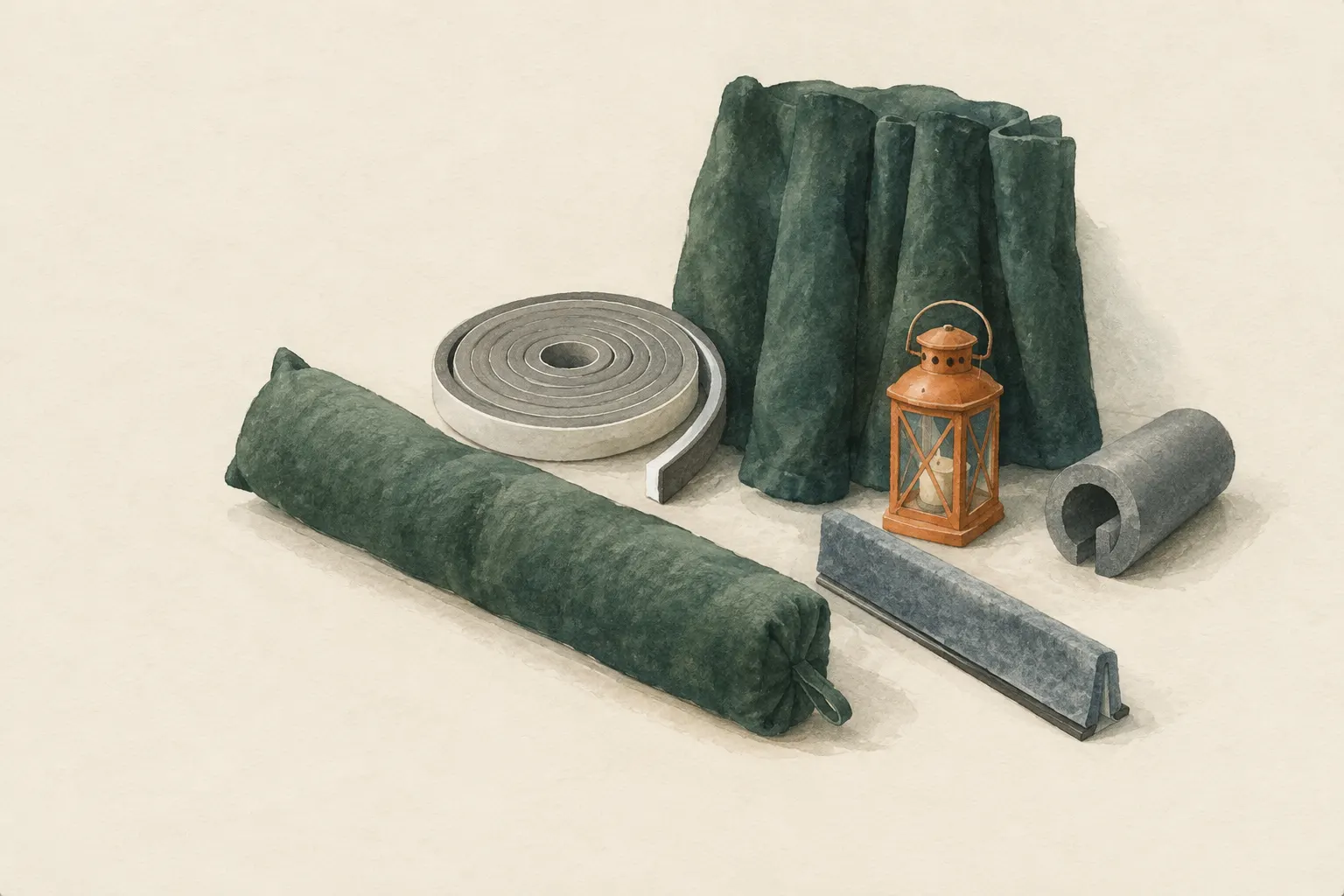
There are simple helpers for this: draught strip that you stick into the window frame, brush seals on the bottom of the door, a long fabric roll in front of the door and thick curtains that you close at night. You also close the doors to rooms you do not need.
But careful: some openings must stay open. Stoves and gas appliances need air to burn. If you tape over their vents, the dangerous gas carbon monoxide can form. And people need fresh air too – so you still air the rooms briefly and thoroughly several times a day.
How it works
A building loses heat in two ways: through the structure itself – walls, windows and roof – and through air exchange. The second is often underestimated. Warm air rises and escapes through gaps higher up, while cold air flows in lower down. Wind also pushes air through cracks on the weather side. A large share of heat loss can come from this uncontrolled air exchange.
Sealing reduces this unplanned exchange. But it does not replace deliberate airing: people constantly release moisture into the room air when breathing, cooking, showering and drying laundry. It has to get out. If it stays, it condenses on the coldest spots – window frames, outside corners, behind cupboards – and mould can grow there.
Curtains, blinds and shutters work differently: they hold a still layer of air in front of the cold glass. Still air conducts heat poorly, which is exactly why it insulates – on the same principle as a down jacket.
Safety: what to watch out for
The most important rule when sealing: vents, air bricks and air supply openings for stoves, fireplaces and gas appliances always stay clear. Many combustion appliances take their combustion air from the room. If that air runs short, the fuel burns incompletely and carbon monoxide forms – a gas you can neither see nor smell, which can kill. A stove can also push exhaust back into the room.
So before sealing, note all openings that belong to stoves or gas appliances or serve moisture control, and leave them alone. Rooms with stoves or gas appliances are only sealed more tightly after professional assessment. A carbon monoxide alarm gives extra safety.
If there is a draught at sockets or switches on outside walls, do not open them yourself to seal them – that is electrical work and belongs to a qualified electrician.
What really matters
First, find the leaks. On a windy day, slowly move a damp hand or a light feather along window frames, doors, the letterbox and pipe openings. Where it feels cool or the feather flutters, there is a leak.
Draught strip comes in different thicknesses and shapes. It has to match the gap: too thin and it does not seal, too thick and the window will no longer close properly and the frame is strained. The surface must be clean and dry for the adhesive. Brush seals or a draught excluder help under doors, and a cover with a brush or flap helps at the letterbox.
Close curtains and blinds in the evening and open them in sunshine during the day so the warmth comes in. Radiators should stay uncovered – a curtain in front of one sends the heat behind the fabric to the window. Air the rooms briefly and thoroughly several times a day with the window wide open, instead of leaving it permanently tilted.
During a heating failure
If the heating fails, sealing becomes even more important. Then you concentrate on one room that should stay warm – ideally small, with few outside walls and on the sunny side. Doors to unused rooms stay closed, and a blanket in front of the door keeps out further draughts.
Simple measures also help in the short term: film or bubble wrap on window panes, rugs or blankets on cold floors, curtains closed during the day too on windows without sun. Even in this situation, brief airing stays important, because humidity rises quickly in a small, crowded room.
Limits and good to know
Draught strip and draught excluders are small measures that do not alter the building fabric. In rented homes they are usually unproblematic; anything that changes the structure should be discussed with the landlord first. Insulating walls, roofs and facades is a separate subject: it changes how moisture moves through the building and therefore needs professional planning.
Seals age. They harden, tear or come loose. A quick check before each winter – feather or hand along the windows – shows where improvements are needed. That saves heating costs in everyday life and leaves you better prepared for an outage at the same time.
Step by step
Find leaks
On windy days feel with the hand or a feather around windows, doors, letterboxes, sockets on outside walls and pipe openings for draughts.
- 1
Find leaks
On windy days feel with the hand or a feather around windows, doors, letterboxes, sockets on outside walls and pipe openings for draughts.
- 2
Mark vents
Note all openings that belong to stoves and gas appliances or serve moisture control – these stay open.
- 3
Seal
Stick draught strip into window and door rebates, brush seals at door bottoms, draught excluders at doors, a cover for the letterbox.
- 4
Curtains and blinds
Close heavy curtains and blinds at night, open them in sunshine during the day. Do not cover radiators.
- 5
Zone rooms
During heating failure keep one room warm and close doors to unused rooms.
- 6
Keep airing
Air briefly and thoroughly several times a day instead of leaving windows tilted open.
Common mistakes
- Taping over air bricks or air supply openings
- Not airing any more after sealing
- Covering radiators with curtains
- Windows permanently tilted open
Quick view
Materials
Draught strip and draught excluder
Never seal vents for stoves, fireplaces or gas appliances.
Wool blanket / duvet
Keep away from candles, stoves and heaters.
Carbon monoxide alarm
Does not replace the rule never to run combustion devices indoors. Choose battery-powered or with battery backup.
Suitable for
- Draughty windows and doors
- Cutting heating costs
- Keeping warm during heating failure
Not suitable for
- Rooms with open-flued stoves or gas appliances without professional assessment
- Insulating walls, roofs and facades – needs professional planning
Prerequisites
- Knowledge of all stoves, gas appliances and their vents
- In rented homes: only non-structural measures without asking
Safety
- Tighter rooms hold more moisture. Keep airing briefly several times a day, otherwise mould can develop.
How it works
A large share of a building's heat loss comes from uncontrolled air exchange: warm air escapes through gaps and cold air flows in. Sealing reduces this exchange without replacing deliberate ventilation. Curtains and blinds also create a still layer of air in front of the window.
Advantages
- Cheap and effective
- More comfort
- Holds heat longer during an outage
Disadvantages
- Higher humidity if not aired
- Seals need renewing
Deep knowledge
Background
The US Department of Energy's "Air Sealing Your Home" describes finding leaks, weatherstripping and caulk, and points out that combustion appliances must keep adequate ventilation. The EPA explains the link between moisture and mould in homes.
Larger insulation work on the building envelope should be professionally planned because it changes moisture and ventilation conditions.
Variants
- Temporary in an emergency
- Blankets at doors, film or bubble wrap on windows and rugs on cold floors help short term.
Common mistakes
- Taping over air bricks or air supply openings
- Not airing any more after sealing
- Covering radiators with curtains
- Windows permanently tilted open
Limits and risks
- No insulation of building elements
- No inspection of combustion appliances
Material alternatives
Derived from material properties: a substitute must have all relevant properties. Observe the notes on the substitute.
- Wool blanket / duvet
- Sleeping pad, Dry leaves, grass or conifer boughs (Collect only where allowed; no protected plants. Check for ticks and insects.), Backpack, Dry spare clothing (Carry it in waterproof packaging – wet clothing barely insulates.), Insulated cool box (Keeps cold only for a limited time; without ice packs or ice it is not a fridge.), Sleeping bag (Do not store compressed long-term; do not pack away damp.), Newspaper and cardboard (Flammable – keep away from candles, stoves, heaters and embers.), Insulated cooking box (hay box, thermal cooker) (Never put open flame or embers inside – only the hot, closed pot.)
Results come exclusively from structured entries. No improvised instructions are generated.
Sources
U.S. Department of Energy: Air Sealing Your Home (Energy Saver)
Finding leaks, sealing, keeping ventilation for combustion appliances
U.S. Environmental Protection Agency (EPA): A Brief Guide to Mold, Moisture, and Your Home
Moisture and mould in homes