Washing laundry by hand and drying it
Without power or a washing machine, laundry can be washed in a tub or a large bucket: soak, knead or agitate with a plunger, rinse, wring and dry with good airflow. With little detergent and reusing water in a sensible order, surprisingly little water is needed. Underwear, socks and children's clothes come first.
- 30–60 minutes per load, drying 1–2 days
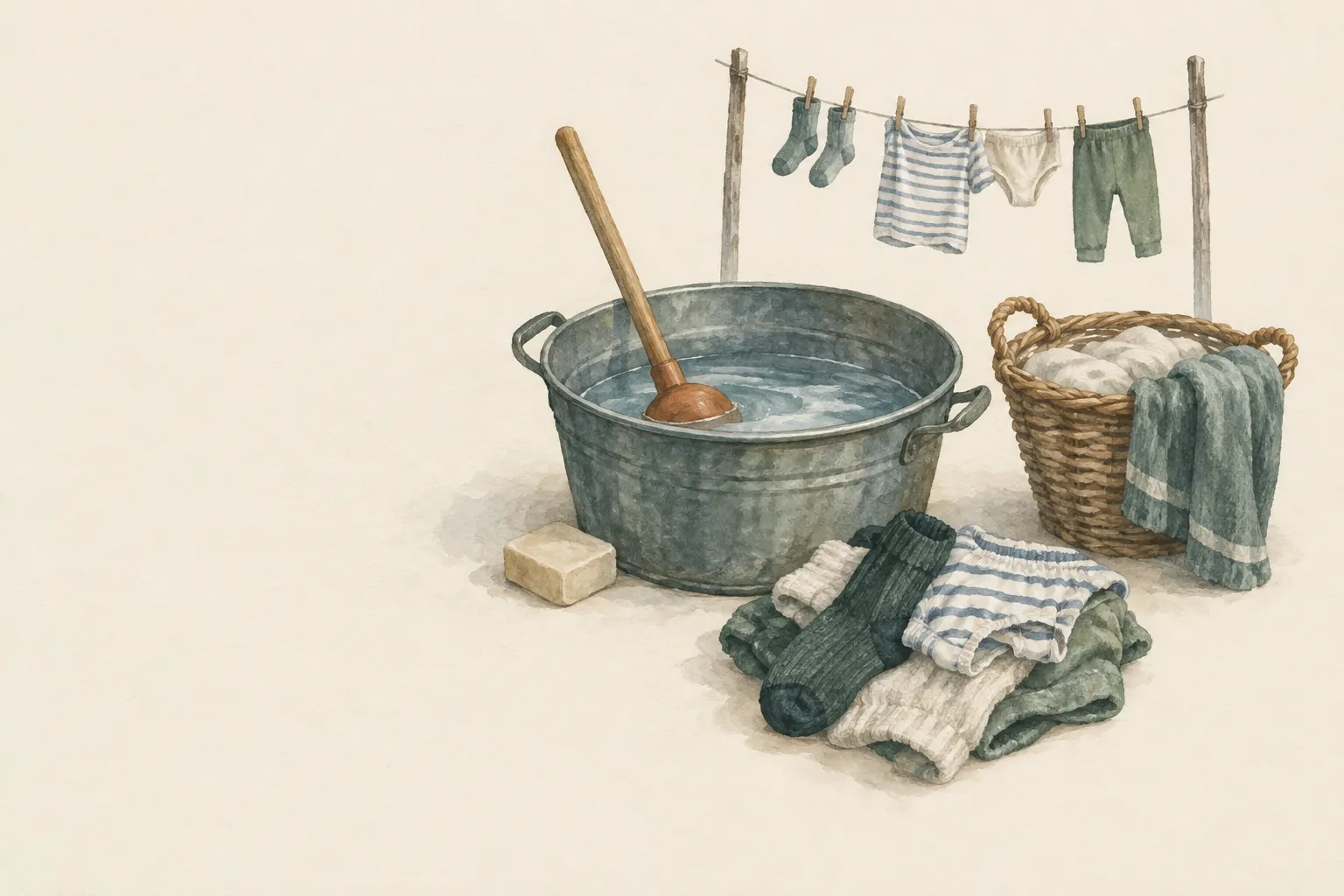
Explained simply
Before washing machines existed, every sock and every shirt was washed by hand. You can still do that today – for example when the power goes out or you are travelling. All you need is a tub or a large bucket, water, a little detergent or soap and a line for drying.
The principle is simple: soap loosens the dirt, movement pushes it out of the fabric, and clean water rinses the dirt and soap out again. First let the laundry soak for a while, then knead and squeeze it like dough, then rinse it, wring it out and hang it up with plenty of air around it. Underwear, socks and children's clothes come first, because they matter most for health.
The important thing is: drinking water is more valuable than clean laundry. If water is short, you do not use your drinking-water supply for this. And wet laundry is never hung over candles, stoves or radiant heaters – it could catch fire.
How it works
Washing relies on three things working together: detergent, movement and rinsing. Detergent and soap contain substances that cling to grease and dirt on one side and to water on the other. In this way they lift dirt off the fibres and keep it suspended in the water. Lukewarm water helps, especially with greasy dirt.
Movement is the part the drum of a washing machine normally does. Kneading, squeezing, rubbing or a dolly – a stick with a head that moves the laundry up and down in the water – press water through the fabric and carry the loosened dirt out. Soaking saves effort here, because dried-on dirt loosens beforehand.
Rinsing follows a simple principle: several small rinses remove more detergent than a single large one with the same amount of water. Each round dilutes what is left in the fabric further. That saves water – a big advantage when it is scarce.
What really matters
Sort first: lights, darks and heavily soiled items separately, so nothing runs and the cleanest things are washed first – that keeps the water usable longer. When water and energy are limited, underwear, socks, baby clothes and towels take priority. Outer clothing can often be worn longer and aired.
A little detergent is enough. Too much foam is hard to rinse out by hand and stays in the fabric, which can irritate the skin. Rub soap directly into stains. A sequence helps with rinsing: the last, almost clear rinse water of one load can serve as the first rinse for the next.
Wringing matters more than it seems: the less water remains in the fabric, the faster it dries. Roll large items in a dry towel and press them out. Then hang everything with space between items so air can get in.
Safety and hygiene: what to watch out for
When the water supply is uncertain, drinking and cooking always come first. Use water for laundry that is not needed for those. Do not pour used wash water into streams, lakes or onto vegetable beds, because detergent and dirt do not belong in waterways or food. During a water outage it can still be used, for example, to flush the toilet.
Clothing that has been in contact with floodwater, chemicals or oil can carry germs and pollutants. Handle it separately or dispose of it, touch it with gloves and clean it according to official advice. Hand washing does not replace disinfection.
Drying near a heat source is fine, but never on it or above it. Laundry over candles, stoves or radiant heaters can catch fire. Indoors, only dry with good ventilation, otherwise humidity rises and mould can form.
Gear and materials
A large tub or two buckets – one for washing, one for rinsing – are enough to start with. A dolly or a clean plunger used only for this saves your hands. A washboard helps with stubborn dirt. Rubber gloves protect your skin if you work with detergent for a long time.
Add a washing line or cord, pegs and a place with airflow. Outdoors, wind and sun dry fastest. On the move, a sealed bag or dry bag is enough: put in water and a little soap, close it, knead, rinse. Dispose of the waste water away from streams and lakes.
Good to know
Hand washing was the norm until washing machines spread and is still everyday practice in many parts of the world. It is physically tiring – bedding and towels in particular are heavy when wet. For large amounts over a long time it is therefore only a stopgap.
In emergencies, clean clothing is more than comfort. Clean, dry socks and underwear help prevent skin problems, sore spots and infections. If you have practised hand washing once – for example on holiday or on a weekend without the machine – you will know in an emergency how much water, time and energy it takes.
Step by step
Sort and prioritise
Separate lights, darks and heavily soiled items. Do underwear, socks, baby clothes and towels first.
- 1
Sort and prioritise
Separate lights, darks and heavily soiled items. Do underwear, socks, baby clothes and towels first.
- 2
Soak
Soak in lukewarm water with a little detergent for 30 minutes or longer.
- 3
Wash
Knead, rub or agitate with a clean plunger or dolly; rub stains with soap.
- 4
Rinse
Rinse in two or three small rounds of clean water until hardly any suds appear. The last rinse water can serve as the first rinse for the next load.
- 5
Wring
Wring well or roll in a towel and press. The drier it is, the faster it dries.
- 6
Dry
Hang with space and airflow, outdoors in wind and sun, indoors with a window open or near – not on – a safe heat source.
Common mistakes
- Too much detergent – hard to rinse out
- Using drinking water
- Drying laundry over candles, radiant heaters or stoves
- Leaving damp laundry folded
Quick view
Materials
Laundry tub or large lidded bucket
Soap / detergent
Rinse drinking-water containers thoroughly after cleaning.
Disposable gloves
Consider latex allergies – prefer latex-free gloves (e.g. nitrile).
Rope
Never use unknown or damaged rope for life-safety purposes.
Suitable for
- Power outages
- On the road and travelling
- Delicate textiles
Not suitable for
- Clothing contaminated with chemicals, oil or floodwater mud – handle separately or dispose; follow official advice
- Large amounts of bedding over a long period
Prerequisites
- Water not needed for drinking and cooking
- A space to dry with airflow
Safety
- Do not use drinking-water supplies for laundry when supply is uncertain. Do not pour wash water into streams or onto vegetable beds.
- Textiles that have been in floodwater can carry germs and pollutants. Wear gloves and follow official cleaning advice.
- Only dry laundry indoors with good ventilation, to limit humidity and mould.
How it works
Detergent loosens dirt and grease, movement carries it out of the fibres, rinsing removes dirt and detergent. Soaking saves effort because dirt starts to loosen. Rinsing in several small rounds instead of one large one uses less water overall.
Advantages
- Possible without power
- Saves water
- Gentle on textiles
Disadvantages
- Physically tiring
- Slow drying in cold, damp rooms
Deep knowledge
Background
Hand washing was the norm until washing machines became widespread and is everyday practice in many parts of the world. Aids like a washboard and a dolly are simple tools that need no power.
In emergencies hygiene matters to avoid skin problems and infections. Clean underwear and socks take priority over outer clothing.
Variants
- Wash bag on the move
- On the move a sealed bag or dry bag with water and a little soap is enough: close, knead, rinse. Dispose of the water away from streams and lakes.
Common mistakes
- Too much detergent – hard to rinse out
- Using drinking water
- Drying laundry over candles, radiant heaters or stoves
- Leaving damp laundry folded
Limits and risks
- No disinfection of contaminated clothing
- No figures on water per load
Material alternatives
Derived from material properties: a substitute must have all relevant properties. Observe the notes on the substitute.
- Rope
- Paracord (Not a climbing or safety rope.)
Results come exclusively from structured entries. No improvised instructions are generated.
Sources
–